
Business & Real Estate Lawyers in Charleston, SC
Navigating commercial ventures and property transactions in Charleston requires seasoned legal counsel to ensure compliance with South Carolina closing laws. Skilled business and real estate attorneys supervise property closings, draft corporate operating agreements, and resolve complex municipal zoning matters to safeguard investments. Explore our directory below to connect with top-rated Charleston business and real estate lawyers today.

Copeland, Stair Valz & Lovell, LLP - Charleston, SC
Law Offices of Donald H. Howe, LLC - Charleston, SC
Law Office of Sean M. Wilson, LLC - Charleston, SC
Clore Law - Charleston, SC

Turner, Padget, Graham & Laney, P.A. - Charleston, SC

Pritchard Law Group, LLC - Charleston, SC
McCoy Law Group, LLC - Charleston, SC
Haynsworth Sinkler Boyd PA - Charleston, SC
Lesemann and Associates LLC - Charleston, SC
Leffew Law Firm, LLC - Charleston, SC

Yarborough Applegate Law Firm - Charleston, SC
Allen Legal - Charleston, SC
Romeo Deters - Charleston, SC

Sweetgrass Law Group - Charleston, SC
Grimball & Cabaniss, LLC - Charleston, SC
Senn Legal, LLC - Charleston, SC
Henderson & Henderson, LLC - Charleston, SC
Ellis Roberts Law, LLC - Charleston, SC
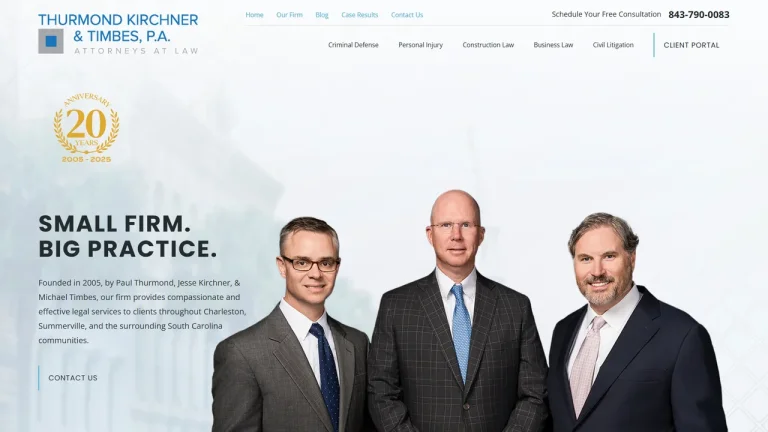
Thurmond Kirchner & Timbes, P.A. - Charleston, SC
Barnwell Whaley Patterson & Helms - Charleston, SC
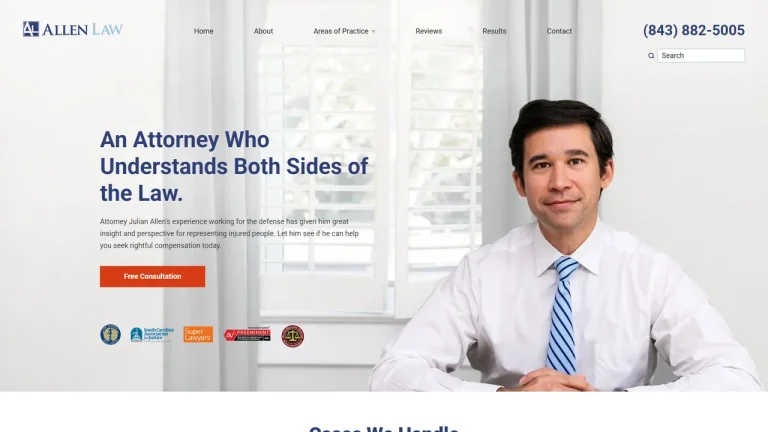
Allen Law - Charleston, SC

Duffy & Young LLC - Charleston, SC
Womble Bond Dickinson (US) LLP - Charleston, SC
Business & Real Estate Practice in Charleston, South Carolina
Commercial transactions and real estate development in Charleston involve unique statutory structures, historic preservation mandates, and strict closing procedures under South Carolina law. From commercial developments along Meeting Street and Upper King to commercial ventures in West Ashley, Daniel Island, and Mount Pleasant, commercial enterprises require robust corporate structuring and rigorous due diligence.
Litigation involving commercial real estate, corporate governance, and breach of contract is handled in the Charleston County Court of Common Pleas within the Ninth Judicial Circuit at the Charleston County Judicial Center on Broad Street. Furthermore, property conveyances, deeds, mortgages, and commercial encumbrances are maintained by the Charleston County Register of Deeds on Meeting Street. In the Historic Downtown District, development projects regularly interface with municipal boards, including the Board of Architectural Review (BAR) and the Board of Zoning Appeals (BZA).
Engaging a proficient Charleston business and real estate attorney provides essential guidance through commercial acquisitions, corporate entity formations, lease negotiations, and zoning variances while ensuring compliance with state legal precedents.
Typical Business & Real Estate Legal Fees in Charleston
| Case Scenario | Fee Structure | Estimated Cost (USD) | Key Cost Determinants |
|---|---|---|---|
| Commercial Real Estate Acquisition & Closing | Flat Fee or Percentage | $2,500 - $6,500 | Title examination depth, environmental review coordination, commercial lender requirements |
| Business Entity Formation & Governance | Flat Fee | $1,200 - $3,000 | LLC operating agreement complexity, equity vesting structures, multi-member buy-sell provisions |
| Commercial Lease Drafting & Review | Hourly or Flat Fee | $1,500 - $4,500 | Square footage, triple-net pass-through terms, tenant improvement provisions, exclusivity covenants |
| Real Estate & Title Litigation in Common Pleas | Hourly Rate ($325 - $600/hr) | $7,500 - $25,000+ | Discovery volume, quiet title actions, mechanic's lien enforcement, commercial eviction actions |
Critical Legal Deadlines & Statutes in South Carolina
Business operations and property deals in South Carolina are regulated by precise statutory timelines and established judicial rulings. Under South Carolina Supreme Court jurisprudence, the state is an attorney-closing state, meaning that real estate closings constitute the practice of law and must be supervised by a licensed South Carolina attorney who reviews title searches, explains loan documents, and oversees the disbursement of closing funds.
Contract disputes and property damage claims are subject to S.C. Code Ann. § 15-3-530, which imposes a three-year statute of limitations for actions upon a contract or for relief on the ground of fraud. Real estate recording priority is governed by S.C. Code Ann. § 30-7-10, which establishes South Carolina's race-notice recording system, protecting subsequent purchasers and lienholders only if documents are formally recorded with the Charleston County Register of Deeds. Contractors and developers must also navigate S.C. Code Ann. § 29-5-90, requiring mechanics' liens to be served and filed within 90 days of ceasing labor, followed by a strict six-month deadline to file suit to enforce under S.C. Code Ann. § 29-5-120. Limited liability company governance is codified under the South Carolina Uniform Limited Liability Company Act at S.C. Code Ann. § 33-44-101.
Magistrate Court Small Claims vs. Circuit Court Representation
Under S.C. Code Ann. § 22-3-10, the Charleston County Magistrate Courts hear civil disputes only up to a $7,500 jurisdictional limit. Magistrate courts lack equitable jurisdiction and cannot grant injunctive relief, quiet title to disputed properties, or order specific performance on commercial purchase agreements.
Real estate transactions and corporate governance disputes overwhelmingly exceed magistrate thresholds and fall within the Court of Common Pleas. In addition, South Carolina law forbids business corporations from representing themselves pro se in circuit court. Attempting commercial closings or leasing negotiations without counsel exposes businesses to title defects, unrecorded encumbrances, and severe tax consequences. A dedicated Charleston real estate and business lawyer coordinates thorough title curative actions, navigates municipal zoning hearings, and constructs durable commercial agreements.
Red Flags When Hiring a Charleston Business & Real Estate Lawyer
- Out-of-state closing agencies or non-attorney settlement services attempting to process real estate transactions without direct supervision by a licensed South Carolina attorney.
- Inexperience with Charleston's Board of Architectural Review (BAR) guidelines, historic preservation covenants, or flood zone building requirements.
- Failure to perform comprehensive title searches dating back through the standard statutory 40-year chain of title at the Charleston County Register of Deeds.
- Vague retainer terms that omit clear delineations between attorney fees, recording fees, and title insurance premiums.
Frequently Asked Questions
Does South Carolina law require an attorney to conduct real estate closings?
Yes, South Carolina Supreme Court precedent mandates that all residential and commercial real estate closings must be supervised by an active South Carolina attorney, from title review through document execution and fund disbursement.
Where are commercial deeds and mortgages recorded in Charleston?
All property deeds, mortgages, and mechanics' liens are recorded with the Charleston County Register of Deeds, located on Meeting Street in Downtown Charleston.
What is the statute of limitations for commercial contract breaches in South Carolina?
Under South Carolina statutes, actions founded upon breach of contract, property damages, or commercial disputes must be commenced within three years from the date the cause of action accrued.
What role does the Board of Architectural Review (BAR) play in Charleston property deals?
The Board of Architectural Review has authority over the exterior alterations, demolitions, and new construction on properties within Charleston's historic districts to preserve architectural integrity.
How quickly must a mechanics' lien be filed on real estate in South Carolina?
A mechanics' lien must be served and filed with the Register of Deeds within 90 days after ceasing labor or furnishing materials, and a lawsuit to enforce the lien must begin within six months.