
Estate Planning Lawyers in Charleston, SC
Consulting an experienced Charleston estate planning attorney ensures your assets, real estate, and healthcare directives are protected under South Carolina law. Local legal counsel drafts comprehensive trusts and wills that shield your family from protracted probate while securing generational wealth. Explore our verified directory below to schedule a consultation with an accomplished Charleston lawyer.

Barnwell Whaley Patterson & Helms - Charleston, SC
Evan Guthrie Law Firm - Charleston, SC

Turner, Padget, Graham & Laney, P.A. - Charleston, SC

Law Offices of Brian Robert Murphy, LLC - Charleston, SC
Grimball & Cabaniss, LLC - Charleston, SC
Henderson & Henderson, LLC - Charleston, SC
Ayers Family Law, LLC - Charleston, SC
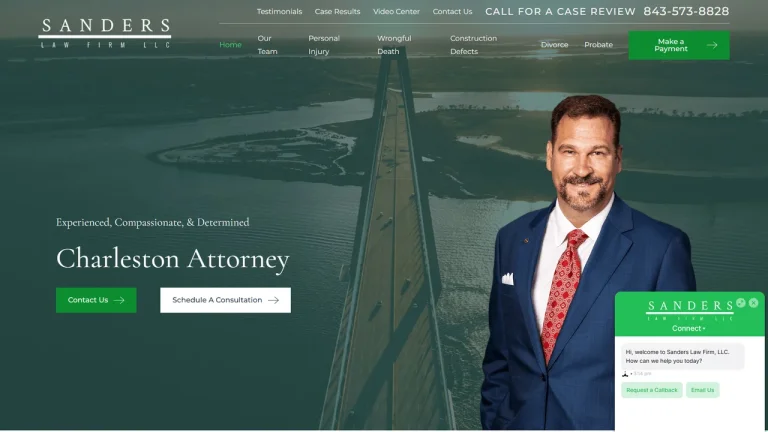
Sanders Law Firm, LLC - Charleston, SC

Peper Law Firm, P.A. - Charleston, SC

Tailored Estate Planning in Charleston and the Lowcountry
Developing a comprehensive estate plan in Charleston safeguards your family, your medical autonomy, and your hard-earned assets. Estate planning in Charleston County operates under the strict procedural framework of the South Carolina Probate Code. When instruments take effect, estate administration and probate matters are centralized at the Charleston County Judicial Center on Broad Street, situated at the historic Four Corners of Law in Downtown Charleston.
The Lowcountry presents unique estate planning dynamics, ranging from multi-generational family land holdings and coastal properties on James Island, Mount Pleasant, and Sullivan's Island to historic properties Downtown and rapidly growing commercial ventures in West Ashley. Protecting these distinct assets requires seasoned legal counsel familiar with South Carolina statutory requirements for trusts, durable powers of attorney, and real property conveyances recorded with the Charleston County Register of Deeds.
Without customized legal documents, your estate becomes vulnerable to statutory default distribution, potential conservatorship hearings, and unnecessary probate fees. An experienced Charleston estate planning attorney structures wills, revocable living trusts, and healthcare directives that minimize tax burdens, avoid probate delays, and ensure your testamentary intent is strictly honored.
Common Estate Planning Packages and Fee Structures in Charleston
| Case Scenario | Fee Structure | Estimated Cost (USD) | Key Cost Determinants |
|---|---|---|---|
| Essential Will & Incapacity Package | Flat Fee | $1,200 - $2,500 | Individual vs. married couple, minor guardian designations, power of attorney customization |
| Revocable Living Trust Comprehensive Plan | Flat Fee | $2,500 - $6,000 | Number of real estate deeds to fund, sub-trust structures, spendthrift provisions |
| High-Net-Worth & Irrevocable Asset Protection Trust | Retainer / Flat Fee | $6,000 - $16,000+ | Generational tax planning, business succession terms, coastal property shielding |
| Special Needs or Supplemental Trust Planning | Flat Fee / Hourly | $2,000 - $5,000 | Government benefit preservation requirements, trustee oversight mechanisms |
Critical Legal Deadlines & Statutes in South Carolina
South Carolina imposes rigorous statutory standards for estate planning documents to ensure validity. Under the South Carolina Probate Code, S.C. Code Ann. § 62-2-502, a valid will must be in writing, signed by the testator, and witnessed by at least two individuals who sign in the testator's presence. Utilizing a self-proving affidavit under S.C. Code Ann. § 62-2-503 permits the will to be admitted to probate in Charleston County without locating the subscribing witnesses.
Powers of attorney in South Carolina carry strict formalities under the Uniform Power of Attorney Act. Pursuant to S.C. Code Ann. § 62-8-105, a durable power of attorney must not only be notarized but must also be executed with the exact same witness formalities as a will-requiring two independent attesting witnesses. Failure to meet these dual execution requirements renders the power of attorney invalid for managing financial affairs.
Spousal protections are also strictly regulated by statute. Under S.C. Code Ann. § 62-2-201, a surviving spouse has the legal right to claim an elective share equal to one-third of the decedent's probate estate. This elective share must be formally petitioned in the Charleston County Probate Court within the statutory deadlines set forth in S.C. Code Ann. § 62-2-205, which requires filing within the earlier of eight months from death or six months from will probate.
DIY Legal Templates vs. Retaining Charleston Estate Planning Counsel
While generic internet templates offer downloadable wills and powers of attorney, executing do-it-yourself estate documents in South Carolina presents substantial hazards. Automated software rarely accommodates South Carolina's distinct statutory mandates, such as the two-witness rule for powers of attorney under S.C. Code Ann. § 62-8-105 or statutory healthcare agent designations under S.C. Code Ann. § 62-5-504. When self-prepared documents fail statutory execution standards, families face costly contested guardianship and conservatorship proceedings at the Charleston County Judicial Center.
Furthermore, an unrepresented individual who establishes a revocable living trust without legal counsel frequently fails to execute the crucial step of trust funding. Under South Carolina law, real property must be formally transferred via a recorded deed at the Charleston County Register of Deeds under S.C. Code Ann. § 62-7-101. A seasoned Charleston estate planning lawyer ensures all Lowcountry properties, financial accounts, and business interests are correctly titled, sparing your estate from unnecessary court intervention.
Red Flags to Avoid When Selecting an Estate Planning Lawyer
- High-Pressure Trust-Mill Seminars: Be cautious of firms that market one-size-fits-all revocable trust packages at community presentations without evaluating your specific estate composition or tax status.
- Failing to Assist with Real Estate Trust Funding: A revocable trust is ineffective if your Lowcountry properties are not retitled; ensure your attorney drafts and records deeds with the Charleston County Register of Deeds.
- Ignoring South Carolina Witness Formalities: Any estate plan that uses a power of attorney witnessed only by a notary without the mandatory two witnesses under S.C. Code Ann. § 62-8-105 will be rejected by financial institutions.
- Vague Fee Structures without Written Agreements: Insist on a comprehensive written engagement agreement detailing whether deed recording fees, trust asset transfer counsel, and future amendments are included in the flat quote.
Frequently Asked Questions
What is the difference between a will and a revocable living trust in Charleston?
A will takes effect only after death and must be processed through the Charleston County Probate Court before assets are distributed under S.C. Code Ann. § 62-2-502. A revocable living trust under S.C. Code Ann. § 62-7-101 takes effect immediately upon execution and funding, allowing assets to pass directly to beneficiaries privately, avoiding public probate court proceedings.
What are the legal requirements for a durable power of attorney in South Carolina?
Under S.C. Code Ann. § 62-8-105, a durable power of attorney in South Carolina must be in writing, signed by the principal, attested by two qualified witnesses with the same formalities as a will, and acknowledged before a notary public. If the power of attorney grants authority over real estate, it must be recorded with the Charleston County Register of Deeds.
Can a spouse be completely disinherited under South Carolina law?
No. Under S.C. Code Ann. § 62-2-201, South Carolina provides an elective share protecting surviving spouses, granting them the legal right to claim one-third of the decedent's probate estate unless they have executed a valid prenuptial or postnuptial waiver.
Where is the probate court located in Charleston?
The Charleston County Probate Court is located inside the Charleston County Judicial Center at 100 Broad Street, Suite 246, Charleston, SC 29401. This court has exclusive jurisdiction over probate, wills, trusts, and adult guardianships across Charleston County.
Do I need an attorney to update my out-of-state estate plan after moving to Charleston?
Yes. While an out-of-state will may be recognized if valid where executed, powers of attorney and healthcare directives frequently do not comply with South Carolina's strict witness standards under S.C. Code Ann. § 62-8-105 and S.C. Code Ann. § 62-5-504. Furthermore, newly purchased South Carolina real estate must be properly integrated into your plan.