
Slip & Fall Injury Lawyers in Charleston, SC
Retaining an experienced Charleston slip and fall lawyer ensures property owners and commercial businesses are held accountable under South Carolina premises liability law. Dedicated local counsel secures surveillance footage, documents hazardous conditions, and negotiates forcefully with insurance carriers. Explore our verified directory below to consult trusted Charleston County premises injury advocates.

Riders Law Group - Charleston, SC

Mastantuno Law Firm - Charleston, SC
Feidler Law Firm - Charleston, SC

Pflug Trial Lawyers - Charleston, SC

Duffy & Young LLC - Charleston, SC
Traywick Law Offices - Charleston, SC
Taylor Anderson Law Firm - Charleston, SC
Hughey Law Firm LLC - Charleston, SC

The Randall Law Firm - Charleston, SC

Knowles Law Firm, PC - Charleston, SC
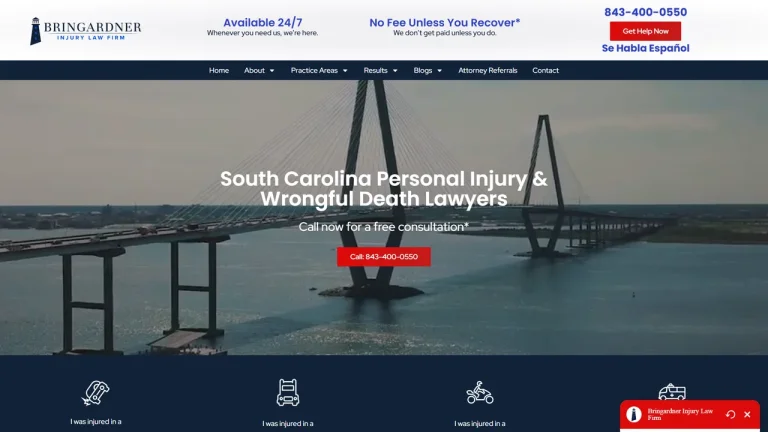
Bringardner Injury Law Firm - Charleston, SC

O'Shea Law Firm, LLC - Charleston, SC
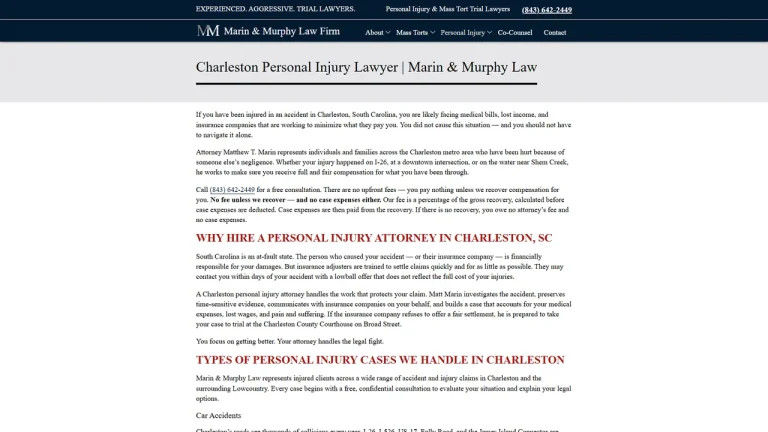
Marin, Barrett, and Murphy Law Firm Inc. - Charleston, SC

Clekis Law Firm Accident Lawyers - Charleston, SC
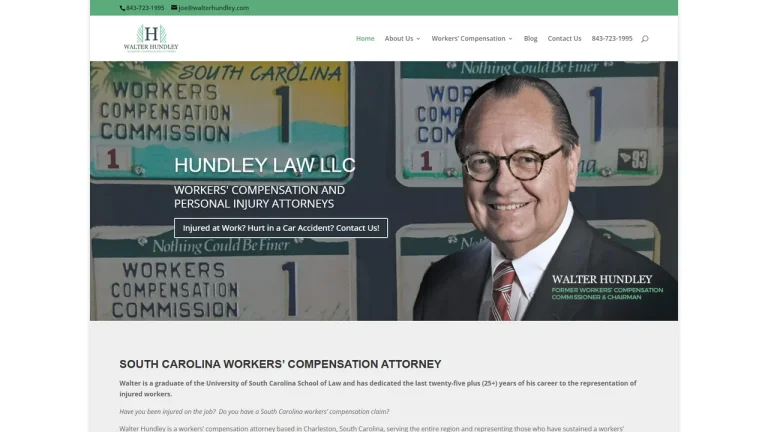
Hundley Law, LLC - Charleston, SC

Mickelsen Dalton LLC - Charleston, SC
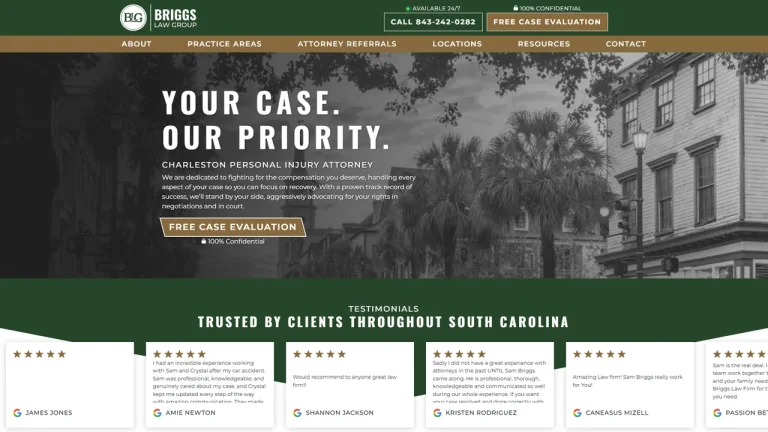
Briggs Law Group, LLC - Charleston, SC

Law Offices of Brian Robert Murphy, LLC - Charleston, SC

Parham Smith & Archenhold LLC - Charleston, SC

John W. Molony Law Firm, LLC - Charleston, SC
Crantford Meehan - Charleston, SC
Ty Robinson Personal Injury & Car Accident Law Firm - Charleston, SC

Peper Law Firm, P.A. - Charleston, SC

Premises Liability Jurisdiction in Charleston County
Slip and fall and premises liability lawsuits in Charleston are adjudicated in the Ninth Judicial Circuit Court of Common Pleas, located inside the Charleston County Judicial Center at 100 Broad Street. When commercial business operators, hospitality venues, or property management companies fail to maintain safe premises, injured visitors seek compensatory relief through the civil court system of Charleston County.
Charleston features high-traffic commercial and tourist corridors, including King Street retail shops, the historic Charleston City Market, waterfront restaurants along East Bay Street, and bustling shopping centers across West Ashley, Mount Pleasant, and North Charleston. The city's historic brick walkways, bluestone flagstones, and uneven cobblestone streets present unique premises challenges, alongside liquid spills in grocery stores, poorly lit stairwells in apartment complexes, and slick hotel pool decks. Electronic case filings and court motions are processed through the South Carolina Judicial Branch portal.
Retaining local legal counsel provides crucial advantages in premises injury cases. Experienced Charleston attorneys know how to preserve electronic surveillance video before automatic security loops overwrite footage, dispatch investigators to measure lighting and surface friction, and present compelling evidence of negligence to adjusters and juries.
Legal Fee Structures for Charleston Slip & Fall Cases
Premises liability cases in Charleston are handled on a contingency fee basis. Injured individuals pay no upfront retainer fees, and legal costs are advanced by counsel throughout the litigation process:
| Case Scenario | Fee Structure | Estimated Cost (USD) | Key Cost Determinants |
|---|---|---|---|
| Commercial Retail & Supermarket Fall | Contingency Fee (33.3% - 40%) | $0 upfront (Contingency basis) | Store surveillance video preservation, sweep logs, employee incident reports, medical lien resolution |
| Restaurant & Hospitality Floor Hazard | Contingency Fee (33.3% - 40%) | $0 upfront (Contingency basis) | Grease cleaning records, slip-resistance coefficient testing, staff witness statements, orthopedic injury scope |
| Apartment Complex & Rental Property Defect | Contingency Fee (33.3% - 40%) | $0 upfront (Contingency basis) | Building code violations, stair railing maintenance records, prior tenant notice documentation |
| Municipal Sidewalk & Public Property Injury | Contingency Fee (33.3% - 40%) | $0 upfront (Contingency basis) | South Carolina Tort Claims Act compliance, public works inspection history, municipal defect reporting |
Critical Legal Deadlines & Statutes in South Carolina
Injured parties in Charleston must observe strict statutory deadlines to maintain premises liability claims. Under S.C. Code Ann. § 15-3-530, the general statute of limitations for personal injury and premises liability actions is three years from the date of the incident. Failing to file a lawsuit within three years permanently extinguishes the right to pursue compensation.
If an injury occurs on public property maintained by a municipal or governmental body-such as a sidewalk maintained by the City of Charleston or property operated by Charleston County-the South Carolina Tort Claims Act applies. Under S.C. Code Ann. § 15-78-110, the statute of limitations is reduced to two years, unless a verified administrative claim is properly filed within one year under S.C. Code Ann. § 15-78-80, which extends the window to three years.
South Carolina applies a modified comparative negligence rule with a 51% bar. Under this legal doctrine, an injured plaintiff can recover damages only if their fault is 50% or less, with their financial recovery reduced in proportion to their percentage of fault. If the plaintiff is found to be 51% or more responsible for failing to observe an open hazard, they are barred from any financial recovery. Furthermore, joint liability rules are governed by S.C. Code Ann. § 15-38-15, limiting liability for defendants with minor shares of fault.
Charleston County Magistrate Courts vs. Circuit Court Litigation
Charleston County Magistrate Courts possess jurisdiction over small claims up to $7,500 under S.C. Code Ann. § 22-3-10. While minor property damage claims might proceed in magistrate court, serious premises liability injuries involving broken bones, spinal trauma, torn ligaments, or concussions routinely result in medical bills far exceeding the magistrate jurisdictional ceiling.
These substantial injury claims must be filed in the Ninth Judicial Circuit Court of Common Pleas at 100 Broad Street. Litigating pro se against commercial liability insurance carriers presents severe hazards. Corporate defense counsel routinely assert open and obvious hazard defenses to obtain summary judgment dismissals. A skilled premises liability attorney issues formal spoliation letters to preserve surveillance video before it is erased, retains safety engineering experts, and proves that the property owner had actual or constructive notice of the dangerous condition.
Red Flags When Hiring a Charleston Slip and Fall Lawyer
Protecting your financial recovery requires selecting an aggressive trial lawyer. Avoid attorneys who demonstrate these red flags during your consultation:
- Failing to immediately dispatch a formal spoliation of evidence letter to the property owner to secure security camera footage before video overwrites occur.
- Promising a guaranteed settlement amount before examining property maintenance records or proving whether the owner had constructive notice of the hazard.
- Pressuring you to accept a nominal settlement offer from a commercial insurance adjuster before your doctors determine whether surgery or ongoing physical therapy is needed.
- Attorneys who lack recent courtroom litigation experience inside the Charleston County Judicial Center on Broad Street.
Frequently Asked Questions
How long do I have to file a slip and fall lawsuit in Charleston?
You generally have three years from the date of the fall to file a lawsuit against private property owners under South Carolina law, but claims against governmental entities must be filed within two years.
What must be proven to win a slip and fall case in South Carolina?
You must prove that the property owner owed a duty of care, that a hazardous condition existed, that the owner knew or should have known about it through reasonable inspection, and that the condition directly caused your injury.
Can I recover damages if I was partially at fault for my fall?
Yes. South Carolina uses a modified comparative negligence system, allowing you to recover damages as long as you are 50% or less at fault, though your financial recovery is reduced by your fault percentage.
What if I fell on a historic sidewalk in Downtown Charleston?
Claims involving public sidewalks are subject to the South Carolina Tort Claims Act, which enforces a two-year filing deadline, specific administrative notice procedures, and statutory liability limits.
Do I have to pay upfront fees to hire a Charleston slip and fall lawyer?
No. Slip and fall attorneys operate on a contingency fee basis, meaning legal fees are only paid as a percentage of the financial compensation obtained through a settlement or trial verdict.