
Workers' Compensation Lawyers in Charleston, SC
Retaining an experienced Charleston workers' compensation lawyer protects your medical benefits and wage replacement rights under South Carolina labor law. Dedicated legal counsel manages disputed injury claims, appeals wrongful denials, and secures maximum impairment settlements before the state commission. Browse our verified directory below to schedule a case evaluation with trusted Charleston County workers' compensation attorneys.
Hughey Law Firm LLC - Charleston, SC
The Rembert Law Firm, LLC - Charleston, SC
Rosen Law Firm, LLC - Charleston, SC
Campbell & Associates - Charleston, SC

Waring S. Howe Law Offices - Charleston, SC

O'Shea Law Firm, LLC - Charleston, SC
Derrick Law Firm Injury Lawyers, PC - Charleston, SC

John W. Molony Law Firm, LLC - Charleston, SC
West Law LLC - Charleston, SC

Yarborough Applegate Law Firm - Charleston, SC

Alan M. Tanenbaum, P.A. - Charleston, SC
The Job Injury Law Firm - Charleston, SC
Anastopoulo Law Firm - Charleston, SC
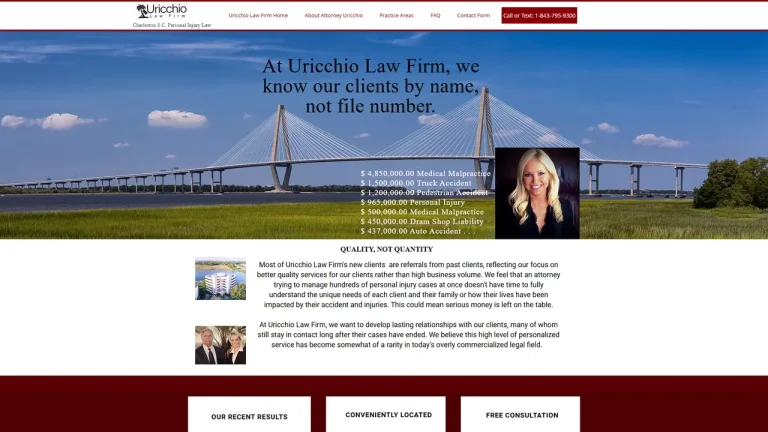
Uricchio Law Firm - Charleston, SC

McLeod Law Group, LLC - Charleston, SC

The Lokey Law Firm, LLC - Charleston, SC
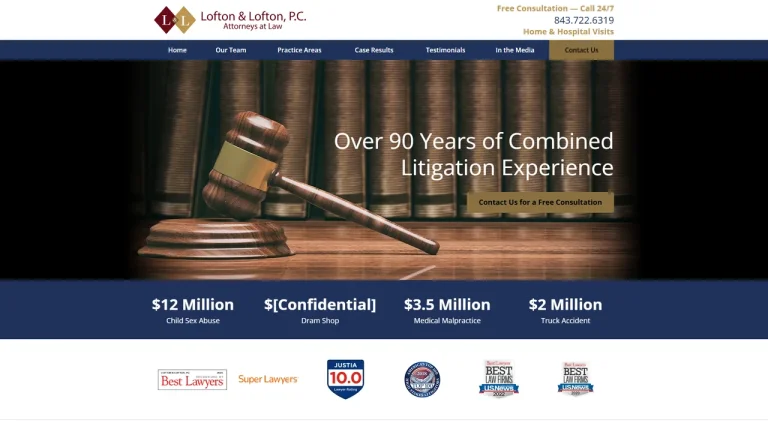
Lofton & Lofton, P.C. - Charleston, SC
Uricchio, Howe, Krell, Jacobson, Toporek & Keith, P.A. - Charleston, SC
Longshore Law Firm LLC - Charleston, SC

Peper Law Firm, P.A. - Charleston, SC

Dan M. David Attorney at Law, LLC - Charleston, SC
Law Office of Sean M. Wilson, LLC - Charleston, SC
Law Offices of Donald H. Howe, LLC - Charleston, SC

Workers' Compensation Jurisdiction in Charleston County
Workplace injury claims in Charleston are governed by South Carolina workers' compensation statutes and administered by the South Carolina Workers' Compensation Commission (SCWCC). Contested hearings for injured employees working in Charleston County are conducted locally before an assigned Single Commissioner at designated judicial hearing locations in the Charleston area, rather than requiring travel to the commission headquarters in Columbia.
Charleston hosts diverse commercial and industrial sectors, including maritime cargo operations at the Port of Charleston (encompassing the Wando Welch and North Charleston terminals), advanced aerospace and automotive manufacturing in North Charleston, commercial construction sites across Mount Pleasant and West Ashley, and healthcare positions at major hospital centers. Traumatic injuries, heavy machinery accidents, repetitive stress conditions, and toxic exposures occurring in these industries must be filed through the SCWCC using official commission forms.
Retaining a knowledgeable Charleston workers' compensation attorney ensures that your rights are safeguarded against insurance carrier tactics. Local practitioners guide injured workers through authorized medical treatment protocols, correct wage calculations, and represent clients during evidentiary commission hearings to obtain temporary wage replacement and permanent disability awards.
Legal Fee Structures for Charleston Workers' Compensation
Attorney fees in South Carolina workers' compensation matters are strictly regulated by state law and must be approved by the SCWCC. Representation is provided on a contingency fee basis, with no upfront legal fees charged to the injured employee:
| Case Scenario | Fee Structure | Estimated Cost (USD) | Key Cost Determinants |
|---|---|---|---|
| Disputed Workplace Injury & Denial Defense | Regulated Contingency (Up to 33.3%) | $0 upfront (Contingency basis) | Form 50 filing, employer surveillance footage, independent medical evaluation reports, commission hearing |
| Average Weekly Wage & Underpayment Audit | Regulated Contingency (Up to 33.3%) | $0 upfront (Contingency basis) | Four quarters of payroll history, overtime inclusion, multiple job wage aggregation, arrearage recovery |
| Repetitive Trauma & Occupational Disease Claim | Regulated Contingency (Up to 33.3%) | $0 upfront (Contingency basis) | Ergonomic job duty analysis, medical causation opinions, pre-existing degenerative condition rebuttal |
| Permanent Impairment Rating & Clincher Settlement | Regulated Contingency (Up to 33.3%) | $0 upfront (Contingency basis) | AMA Guides impairment ratings, future medical cost projections, vocational wage loss assessments |
Critical Legal Deadlines & Statutes in South Carolina
Injured workers in South Carolina must comply with strict statutory notification and filing windows. Under S.C. Code Ann. § 42-15-20, an injured worker must provide formal notice of an accident to their employer within 90 days. Failing to notify the employer within this 90-day window can result in complete forfeiture of workers' compensation benefits unless reasonable excuse is established.
To formally preserve a claim, S.C. Code Ann. § 42-15-40 dictates that a formal claim (Form 50) must be filed with the South Carolina Workers' Compensation Commission within two years from the date of the accident. In repetitive trauma claims, S.C. Code Ann. § 42-1-172 requires notice within 90 days after the employee discovered, or reasonably should have discovered, that the injury was work-related, also subject to the two-year filing bar.
Wage replacement benefits are governed by S.C. Code Ann. § 42-9-10, providing temporary total disability payments calculated at 66 2/3% of the employee average weekly wage, capped by the statewide maximum compensation rate set annually by the commission. Under S.C. Code Ann. § 42-1-540, workers' compensation acts as the exclusive remedy against employers, barring personal injury lawsuits against your employer while permitting separate third-party actions against negligent outside parties.
Magistrate Courts vs. Workers' Compensation Commission Jurisdiction
Charleston County Magistrate Courts possess small claims authority up to $7,500 under S.C. Code Ann. § 22-3-10. However, magistrate courts possess zero authority over workplace injury claims. Under South Carolina law, exclusive administrative jurisdiction over workers' compensation matters rests solely with the South Carolina Workers' Compensation Commission.
Navigating the workers' compensation system pro se leaves injured workers at a severe disadvantage against insurance claims adjusters. Insurers select the authorized treating physician, who may assign low permanent impairment ratings or prematurely release workers to full duty. Furthermore, adjusters frequently undercalculate the average weekly wage by omitting overtime or secondary employment. A dedicated workers' compensation attorney ensures medical treatment is authorized, fights wrongful benefit terminations, and negotiates lump-sum clincher settlements that fully account for lifetime medical care.
Red Flags When Hiring a Charleston Workers' Comp Lawyer
Securing rightful disability benefits requires choosing an experienced workers' compensation advocate. Watch out for these red flags during your consultation:
- Lawyers who demand upfront retainers or hourly payments, which violates South Carolina law requiring contingency fees to be regulated and approved by the SCWCC.
- Pressure to accept an insurance company early clincher settlement before you reach maximum medical improvement or obtain a formal impairment rating.
- Failing to review payroll records to ensure your average weekly wage includes all overtime, bonuses, and second-job earnings.
- Attorneys who fail to investigate potential third-party personal injury lawsuits against negligent equipment makers, subcontractors, or motorists.
Frequently Asked Questions
How long do I have to report a work injury in Charleston?
Under South Carolina law, you must report your injury to your employer within 90 days of the accident, although reporting the incident immediately is strongly advised to prevent dispute delays.
What is the deadline to file a workers' compensation claim with the state?
You have exactly two years from the date of the workplace accident to file a formal claim (Form 50) with the South Carolina Workers' Compensation Commission to preserve your rights.
Can I choose my own doctor for a workplace injury in Charleston?
In South Carolina, the employer and their workers' compensation insurer have the right to select the treating physician, though an attorney can petition the commission for a physician change if care is inadequate.
What is a clincher settlement in South Carolina workers' compensation?
A clincher is a full and final settlement agreement where the injured worker receives a lump-sum payment in exchange for closing the claim and releasing the insurer from future medical and indemnity liabilities.
Can I sue my employer in court for a workplace injury in South Carolina?
Generally no. Workers' compensation is the exclusive remedy against your direct employer, but you may pursue a civil personal injury lawsuit against negligent third parties such as outside contractors or drivers.