
Drug Crime Defense Lawyers in Columbia
Retaining a qualified Columbia drug crime defense attorney early can mean the difference between severe mandatory prison sentences and charge dismissals. Skilled local defense lawyers rigorously challenge police search warrants and negotiate diversionary dispositions through Midlands prosecutorial programs. Examine our comprehensive directory of Columbia defense lawyers below to begin your defense strategy.
McGuire Law - Columbia, SC
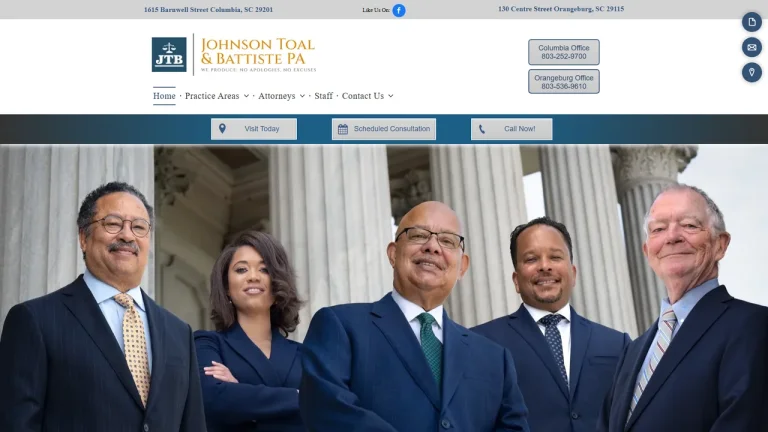
Johnson, Toal & Battiste, P.A. - Columbia, SC
Truitt Law Firm - Columbia, SC
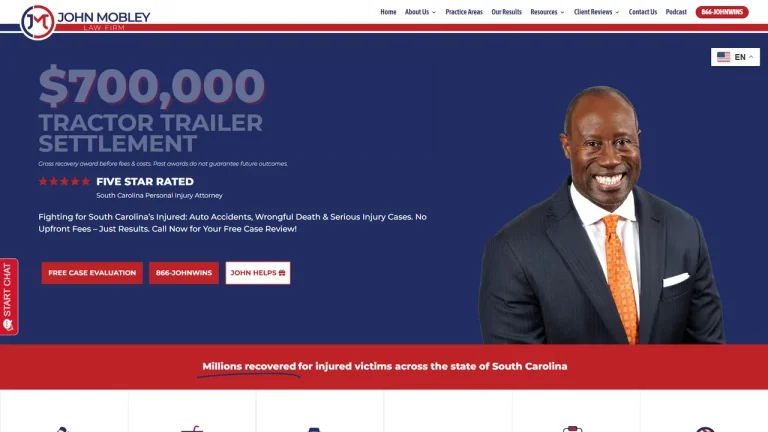
John Mobley Law Firm - Columbia, SC

Jack B. Swerling - Columbia, SC

Strom Law Firm - Columbia, SC

Burriss Ridgeway Injury Lawyers - Columbia, SC

Kendrick & Leonard, P.C. - Columbia, SC
Price Benowitz Accident Injury Lawyers, LLP - Columbia, SC

The Woods Law Firm - Columbia, SC

Sharpe & Leventis, LLC - Columbia, SC
Law Office of S. Harrison Saunders, VI, LLC - Columbia, SC

The Law Offices of Marion M. Moses, LLC - Columbia, SC
Law Offices of Lori S. Murray - Columbia, SC
The Lake Law Firm - Columbia, SC
Law Offices of S. Chris Davis - Columbia, SC
Koon Cook & Walters, LLC - Columbia, SC

O'Leary Associates, P.A. - Columbia, SC
The Rutherford Law Firm, LLC - Columbia, SC
Wes Kirkland Attorney At Law, LLC - Columbia, SC
Li Law Firm, LLC - Columbia, SC
Drug Offense Jurisdictions Across Columbia and Richland County
Facing narcotics charges in Columbia places individuals within an aggressive prosecutorial system. Controlled substance investigations are carried out by the Columbia Police Department, the Richland County Sheriff's Department Narcotics Unit, and the South Carolina State Law Enforcement Division (SLED). Arrested individuals are booked and held for initial bond proceedings at the Alvin S. Glenn Detention Center on Bluff Road.
The venue for your defense depends upon the severity and classification of the offense. Simple misdemeanor possession charges may originate at the Columbia Municipal Court on Hampton Street or within the Richland County Central Magistrate Court. In contrast, felony drug charges-including Possession with Intent to Distribute (PWID), drug manufacturing, and trafficking-fall under the jurisdiction of the Fifth Judicial Circuit Court of General Sessions at the Richland County Courthouse on Main Street.
Narcotics prosecutions in South Carolina are governed by strict statutory penalties under S.C. Code Ann. § 44-53-370. A skilled local defense attorney examines search warrant affidavits, traffic stop durations, confidential informant credibility, and laboratory chain-of-custody protocols to pursue suppression of evidence or program diversion.
Estimated Drug Defense Costs and Legal Fees in Columbia
| Case Scenario | Fee Structure | Estimated Cost (USD) | Key Cost Determinants |
|---|---|---|---|
| Simple Possession (Misdemeanor First Offense) | Flat Fee | $1,200 - $3,000 | Eligibility for conditional discharge or Pretrial Intervention (PTI), traffic stop suppression issues. |
| Possession with Intent to Distribute (PWID) | Retainer / Flat Fee | $3,500 - $7,500 | Rebutting weight thresholds, constructive vs. actual possession, proximity to school zones or parks. |
| Narcotics Trafficking (Fentanyl, Cocaine, Meth) | Substantial Retainer | $8,500 - $25,000+ | Mandatory minimum prison terms, wiretap challenges, confidential informant cross-examinations, SLED chemical lab tests. |
| Civil Asset Forfeiture Defense | Hourly or Percentage | $2,500 - $6,500 | Reclaiming seized cash or vehicles, proving legitimate source of funds against Fifth Circuit Solicitor actions. |
Critical Legal Deadlines & Statutes in South Carolina
The timeline governing South Carolina criminal defense is strict, beginning immediately upon arrest. Under S.C. Code Ann. § 17-15-10, an arrested individual must receive a bond hearing within 24 hours of booking at the Alvin S. Glenn Detention Center. A defense attorney can appear at this initial hearing to advocate for personal recognizance or reasonable surety.
The most time-sensitive statutory requirement in South Carolina drug cases involves the preliminary hearing. Under S.C. Code Ann. § 17-23-160, a defendant must file a formal written request for a preliminary hearing within 10 calendar days following the bond hearing. Missing this statutory 10-day deadline irrevocably waives the right to compel the State to prove probable cause in court.
For first-time simple possession matters, statutory diversion may be available under conditional discharge terms set by S.C. Code Ann. § 44-53-450 or Pretrial Intervention programs governed by S.C. Code Ann. § 17-22-10. In serious drug offenses, statutory weight thresholds define mandatory minimum prison sentences directly through S.C. Code Ann. § 44-53-370(e).
Navigating Pretrial Programs vs. Assertive Courtroom Defense
While magistrate courts handle civil claims under $7,500 per S.C. Code Ann. § 22-3-10, felony drug charges are prosecuted aggressively by assistant solicitors in General Sessions. Navigating these charges without legal representation places individuals at risk of mandatory minimum incarceration.
First-time offenders often qualify for diversionary programs like the Fifth Judicial Circuit Pretrial Intervention (PTI), which can result in dismissed charges and full record expungement under S.C. Code Ann. § 17-22-150. However, entering diversion waives Fourth Amendment defenses. An experienced defense lawyer first investigates whether the police stop, canine sniff, or search was unconstitutional before advising whether to accept a diversion program or pursue a suppression motion.
Red Flags to Avoid When Selecting a Drug Defense Lawyer
- Attorneys who fail to file for a preliminary hearing within the mandatory 10-day window under South Carolina law.
- Lawyers who guarantee dismissals before receiving and reviewing official SLED laboratory chemical analysis reports.
- Firms urging an immediate plea agreement without reviewing police body-worn camera footage or search warrant affidavits.
- Fee agreements that fail to define whether General Sessions court appearances, suppression hearings, or trial dates are included.
Frequently Asked Questions
How quickly must I request a preliminary hearing after a drug arrest in Columbia?
You must submit a written request for a preliminary hearing within 10 days of your bond hearing. Failing to make this written request within the statutory window waives your right to challenge whether the State has probable cause to proceed with the charge.
Can a first-offense drug charge be expunged in Richland County?
Yes. If you complete an eligible diversion program such as Pretrial Intervention (PTI) or receive a conditional discharge for simple possession, your charges can be dismissed and your record can be expunged.
What is the difference between simple possession and PWID in South Carolina?
Simple possession is having an amount for personal use. Possession with Intent to Distribute (PWID) is charged when the quantity exceeds statutory thresholds or when police allege evidence of distribution, such as baggies, scales, or large amounts of cash.
What triggers a drug trafficking charge in South Carolina?
Under South Carolina law, drug trafficking charges are triggered purely by the weight of the controlled substance found, such as 10 pounds of marijuana, 10 grams of cocaine, or 4 grams of fentanyl, regardless of intent to sell.
Where are drug felony cases heard in Columbia?
Felony drug charges are adjudicated in the Fifth Judicial Circuit Court of General Sessions, located at the Richland County Courthouse at 1701 Main Street in downtown Columbia.