
Criminal Defense Lawyers in South Carolina
Facing criminal allegations in South Carolina requires swift legal defense to safeguard your constitutional rights and freedom under strict state court rules. Experienced defense counsel can challenge prosecutor evidence, negotiate with Circuit Solicitors, and protect your future. Browse our verified directory below to consult an attorney.

Dessausure Law Firm, P.A. - Columbia, SC
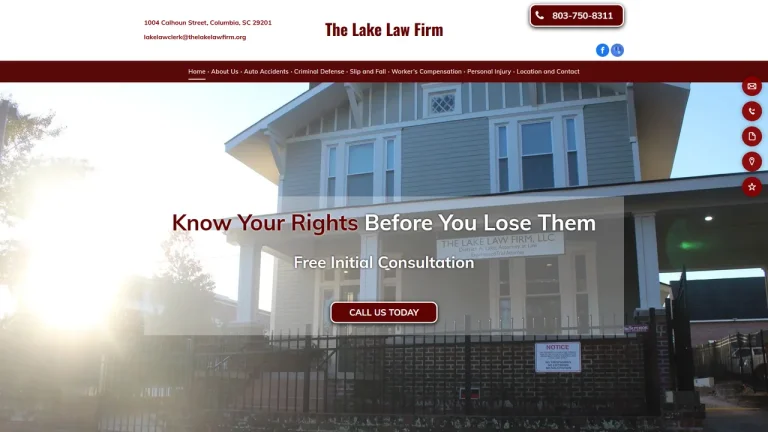
The Lake Law Firm - Columbia, SC

Latorre Law Firm - North Charleston, SC

Deaton Law Firm LLC - North Charleston, SC

Law Offices of Lori S. Murray - Columbia, SC
Jack B. Swerling - Columbia, SC

O'Leary Associates, P.A. - Columbia, SC
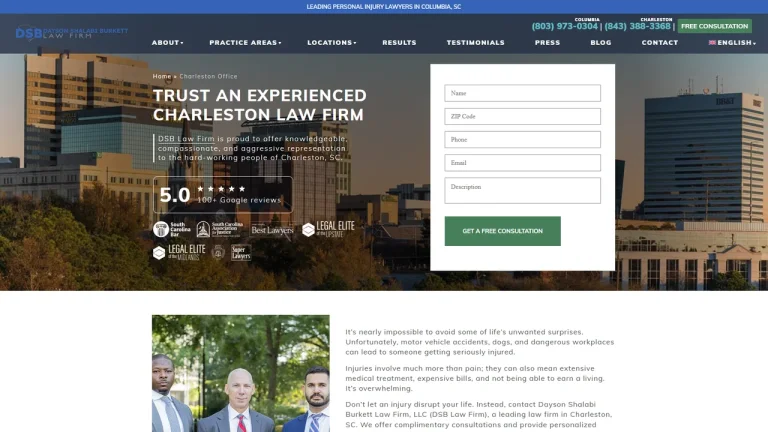
Dayson Shalabi Burkett Law Firm, LLC - Charleston, SC

The Rutherford Law Firm, LLC - Columbia, SC

Attorney Dain, LLC - Columbia, SC

Pozsik and Carpenter Law Firm - Columbia, SC
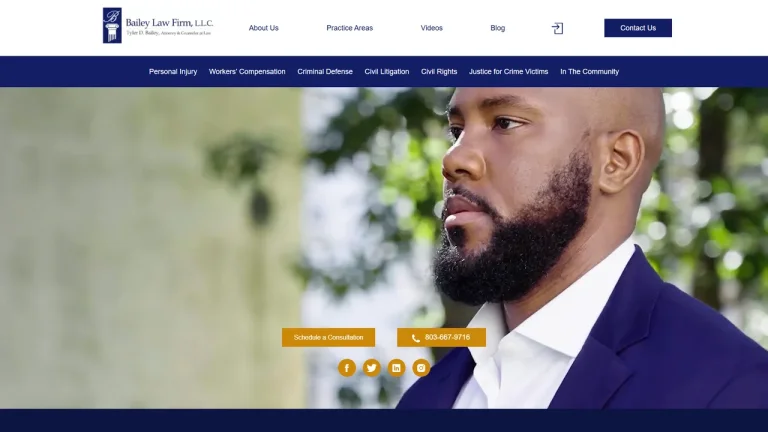
Bailey Law Firm, L.L.C. - Columbia, SC
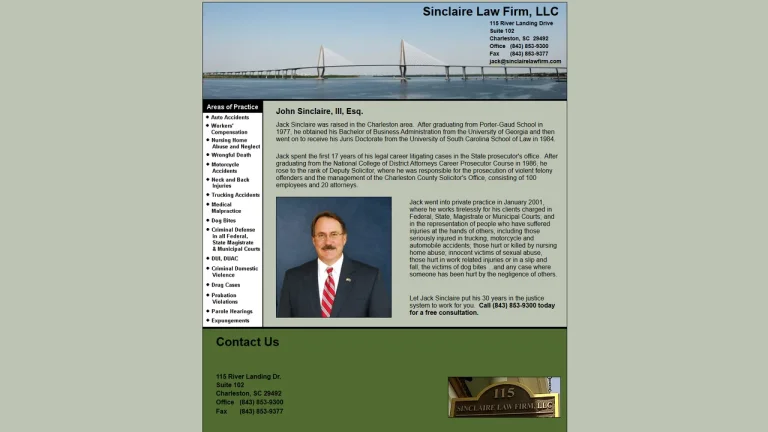
Glenn Churchill, Esq. and Jack Sinclaire, Esq. - Charleston, SC
Price Benowitz Accident Injury Lawyers, LLP - Columbia, SC

Thurmond Kirchner & Timbes, P.A. - Charleston, SC

Schiller & Hamilton Law Firm - Charleston, SC
Laree A Hensley Law Office - North Charleston, SC

Park Circle Law, LLC - North Charleston, SC
Johnson, Toal & Battiste, P.A. - Columbia, SC
Kendrick & Leonard, P.C. - Columbia, SC

Eric S. Durand, Esquire, LLC - North Charleston, SC

Pflug Trial Lawyers - Charleston, SC

Mastantuno Law Firm - Charleston, SC
Navigating South Carolina Criminal Courts and Statewide Defense
Criminal proceedings across South Carolina operate under a distinct bifurcated court system overseen by the South Carolina Judicial Branch. Minor infractions, traffic offenses, and summary misdemeanors carrying penalties of up to 30 days in jail are adjudicated in local Municipal and Magistrate Courts across counties such as Richland, Charleston, Greenville, and Horry. In contrast, serious felony offenses, violent crimes, and major drug trafficking indictments fall within the exclusive jurisdiction of the South Carolina Court of General Sessions, where sixteen elected Circuit Solicitors prosecute cases aggressively on behalf of the state.
When charged with an offense in the Palmetto State, the physical location of the incident dictates the prosecuting circuit, whether appearing before judges in Columbia, Charleston, Greenville, or Spartanburg. Federal criminal matters, such as interstate narcotics, wire fraud, or federal firearm charges, are heard separately in the United States District Court for the District of South Carolina. Navigating these regional venues requires a licensed South Carolina criminal attorney admitted to the South Carolina Bar who understands local courtroom protocols, bench temperaments, and prosecutor plea practices.
Retaining experienced counsel early in the investigative phase frequently alters the trajectory of a criminal matter. From challenging unlawful vehicle stops conducted by the South Carolina Highway Patrol to contesting evidence gathered by the State Law Enforcement Division (SLED), a skilled defense lawyer investigates procedural violations, files motions to suppress tainted evidence, and advocates for pretrial intervention or case dismissal prior to formal indictment.
South Carolina Criminal Defense Legal Fee Estimates
| Case Scenario | Fee Structure | Estimated Cost (USD) | Key Cost Determinants |
|---|---|---|---|
| Summary Offenses & Traffic (Magistrate / Municipal) | Flat Fee | $1,500 - $3,500 | Number of citations, bench trial vs plea negotiation, driver's license suspension risk. |
| First-Offense DUI / DUAC Defense | Flat Fee / Tiered Retainer | $2,500 - $6,500 | Breathalyzer refusal hearings, OMVH contested appeals, dashcam review, expert toxicologist testimony. |
| Non-Violent & Property Felonies (General Sessions) | Retainer / Stage-Based | $5,000 - $15,000 | Pretrial intervention eligibility, restitution amounts, forensic financial audits, witness depositions. |
| Major Violent Crimes & Federal Indictments | Hourly / Retainer ($350 - $650/hr) | $15,000 - $50,000+ | Grand jury defense, private investigators, ballistic analysis, multi-week jury trial preparation. |
Critical Legal Deadlines & Statutes in South Carolina
Unlike many jurisdictions, South Carolina does not maintain a general statutory time limit for prosecuting criminal offenses; under state jurisprudence, prosecutors may initiate criminal proceedings for both felonies and misdemeanors at any time, subject only to constitutional protections under S.C. Const. art. I, § 14. However, strict procedural deadlines govern the accused after an arrest is executed by municipal police departments or county sheriffs.
Under S.C. Code Ann. § 17-15-10, an arrested individual must receive a bond hearing within 24 hours of incarceration. Following the initial bond proceeding, the defendant must formally request a preliminary hearing within 10 days under S.C. Code Ann. § 17-23-160; missing this strict window forfeits the statutory opportunity to contest whether the state possesses sufficient probable cause. In driving under the influence matters governed by S.C. Code Ann. § 56-5-2930, drivers facing administrative license suspension must file a petition for a contested hearing with the Office of Motor Vehicle Hearings within 30 days to obtain a temporary alcohol license.
Magistrate Court Limits vs. Professional Criminal Defense
In South Carolina, Magistrate Courts operate with limited civil jurisdiction capped at $7,500, but their criminal authority extends to misdemeanor offenses carrying maximum statutory penalties of 30 days imprisonment or statutory fines up to $500. While defendants often contemplate self-representation in summary court for disorderly conduct or minor traffic citations, proceeding without an attorney carries long-term consequences. Even a minor conviction entered in a municipal or county magistrate court generates a permanent record maintained by the State Law Enforcement Division that can impair employment, housing, and firearm ownership.
In felony or high-misdemeanor proceedings transferred to the Court of General Sessions, self-representation is extraordinarily risky. Circuit Solicitors possess substantial resources and trial experience. A qualified criminal defense attorney evaluates opportunities for diversionary dispositions such as Pretrial Intervention under S.C. Code Ann. § 17-22-10 or conditional discharge programs, and works to secure full record expungement under S.C. Code Ann. § 17-22-910 once statutory requirements are met.
Red Flags When Hiring a South Carolina Criminal Defense Lawyer
- Guarantees of Specific Case Dismissals: Ethical rules established by the South Carolina Bar strictly prohibit attorneys from promising definite results or predetermined plea bargains before examining formal discovery.
- Pressuring for Early Guilty Pleas: Avoid lawyers who recommend accepting a prosecutor's initial plea offer during the first meeting without analyzing police body camera footage, SLED lab reports, or witness statements.
- Unclear or Undocumented Fee Agreements: Reputable attorneys supply written retainer contracts detailing whether trial costs, investigator fees, expert witness retainers, and appeal filings are covered.
- Lack of Local General Sessions Trial Experience: Choose counsel who actively practices in the specific South Carolina judicial circuit where your charges are pending and regularly appears before presiding circuit judges.
Frequently Asked Questions
What is the difference between Magistrate Court and General Sessions in South Carolina?
South Carolina Magistrate Courts handle summary-level misdemeanors and municipal ordinance violations punishable by no more than 30 days in jail or $500 fines. The Court of General Sessions has exclusive jurisdiction over serious misdemeanors and all felony charges carrying greater incarceration periods.
How quickly must I request a preliminary hearing after a South Carolina arrest?
Under state procedural law, you must formally file a written request for a preliminary hearing within 10 days of your bond hearing. Failing to request the hearing within this window forfeits your legal right to require prosecutors to establish probable cause.
Can a criminal charge be expunged from my record in South Carolina?
Yes, expungement is available for dismissed charges, successful completions of Pretrial Intervention (PTI), and certain first-offense non-violent convictions under statutory rules outlined in S.C. Code Ann. § 17-22-910 after mandatory waiting periods.
What happens if I refuse a breathalyzer test in South Carolina?
Under South Carolina implied consent laws, refusing a breath test results in an automatic administrative license suspension. You must challenge this suspension within 30 days before the Office of Motor Vehicle Hearings to seek a temporary driving permit.
Is there a statute of limitations for felony crimes in South Carolina?
No. South Carolina does not impose a general criminal statute of limitations. The state can bring felony and misdemeanor indictments at any time, subject only to constitutional protections guaranteeing a speedy trial.