
Domestic Violence Lawyers in South Dakota
Find experienced South Dakota domestic violence lawyers to defend criminal assault charges, contest protection orders, or safeguard your family under state law. Skilled attorneys protect your liberty under strict statutory deadlines, navigating pre-trial negotiations and evidentiary hearings to resolve disputes outside the courtroom. Browse our verified statewide directory below to consult an experienced South Dakota domestic violence practitioner today.

Landeen Law, P.C. - SIOUX FALLS, SD

Baloun Law, PC - SIOUX FALLS, SD

Dakota Plains Legal Services Sioux Falls, SD

East River Legal Services - Sioux Falls, SD

Schueller Law, Prof. LLC Pierre, SD
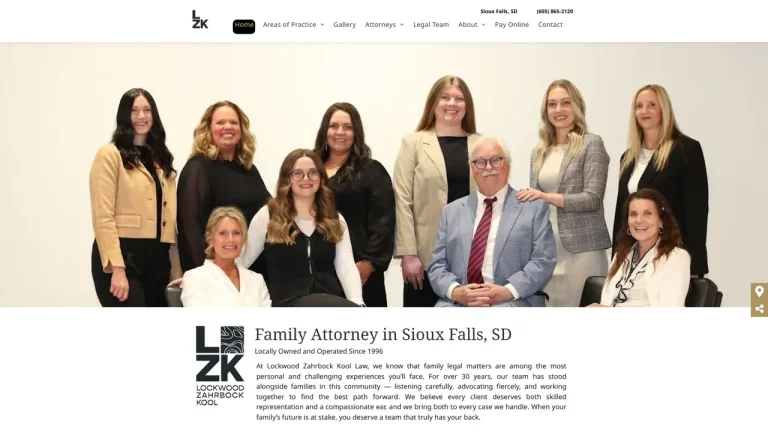
Lockwood & Zahrbock Kool Law Office, Sioux Falls, SD

Navigating South Dakota Domestic Violence and Courtroom Authority
Domestic violence proceedings in South Dakota trigger severe consequences across both criminal justice and civil family law systems. An allegation of domestic abuse sets off immediate statutory mechanisms, including mandatory arrest protocols, immediate no-contact bond conditions, and potential civil protection orders. Securing skilled legal representation is crucial whether you are seeking protection from abuse or defending against wrongful criminal accusations.
All domestic violence matters fall under the South Dakota Unified Judicial System. Criminal misdemeanor charges and initial bond appearances are conducted within Magistrate Courts, while domestic felony trials and contested protection order hearings proceed before Circuit Court judges across the state's seven judicial circuits. Primary venues include the Second Judicial Circuit at the Minnehaha County Courthouse in Sioux Falls, the Seventh Judicial Circuit at the Pennington County Courthouse in Rapid City, the Fifth Judicial Circuit in Aberdeen, and the Sixth Judicial Circuit in Pierre. Case dockets and legal motions are managed statewide via Odyssey eFileSD.
Under SDCL § 23A-3-2.1, South Dakota law enforces a mandatory arrest policy when law enforcement officers develop probable cause that domestic abuse has occurred within the preceding four hours. Furthermore, courts frequently mandate participation in the South Dakota 24/7 Sobriety Program authorized under SDCL § 1-11-17 as a condition of pretrial release. Having seasoned local counsel ensures that your constitutional due process rights are protected during every evidentiary hearing.
Fee Structures and Representation Scope for Domestic Violence Cases
| Case Scenario | Fee Structure | Estimated Cost (USD) | Key Cost Determinants |
|---|---|---|---|
| Civil Protection Order Hearing (Petitioner or Respondent) | Flat Fee or Retainer | $1,500 - $4,000 | Number of testifying witnesses, electronic text and email exhibits, cross-examination depth, concurrent divorce filings. |
| Misdemeanor Simple Assault - Domestic Abuse Defense | Flat Fee | $2,500 - $6,500 | 911 call audio analysis, police bodycam video review, witness recantations, eligibility for pre-trial diversion. |
| Felony Domestic Assault Defense (Strangulation or Repeat Offense) | Hourly Retainer | $5,000 - $16,000+ | Medical forensic testimony, prior conviction enhancement reviews, grand jury motions, Circuit Court jury trial length. |
| Violation of Protection Order or Bond Condition | Flat Fee or Retainer | $2,000 - $5,500 | Digital GPS tracking records, direct vs. indirect contact allegations, prior contempt findings, bond revocation hearings. |
Critical Legal Deadlines & Statutes in South Dakota
Strict statutory timelines govern both criminal prosecutions and civil domestic remedies in the Mount Rushmore State. Under SDCL § 25-10-1, domestic abuse is defined as physical harm, bodily injury, or the infliction of fear of imminent physical harm between family or household members. When an ex parte temporary protection order is granted under SDCL § 25-10-6, a full evidentiary hearing must be scheduled within thirty days. If granted, a permanent protection order can remain in effect for up to five years pursuant to SDCL § 25-10-5.
Criminal prosecution deadlines depend strictly on offense classification. For misdemeanor simple assault domestic violence charges, SDCL § 23A-42-4 imposes a firm one-year statute of limitations. For felony domestic violence offenses, the state must commence prosecution within seven years pursuant to SDCL § 23A-42-2.
Enhanced criminal penalties apply to repeat offenders under state law. Under SDCL § 22-18-1.2, a third or subsequent conviction for domestic simple assault within ten years elevates the offense to a Class 6 felony, carrying up to two years in the state penitentiary. Furthermore, aggravated assault involving strangulation or attempts to cause serious bodily injury is prosecuted as a Class 3 felony under SDCL § 22-18-1.1, while willful violation of an active protection order is punished under SDCL § 25-10-13.
Small Claims Limits vs. Professional Domestic Violence Representation
Understanding court jurisdictional limits is essential during domestic conflicts. The South Dakota small claims procedure in Magistrate Court is capped at $12,000 under SDCL § 15-39-45. However, small claims courts are strictly limited to minor civil debt and property disputes. Small claims courts have zero legal authority over criminal charges, bond modifications, or domestic abuse protection orders.
Exclusive jurisdiction over domestic abuse protection orders and criminal prosecutions is vested in South Dakota Magistrate Courts under SDCL § 16-12B-8 and Circuit Courts under SDCL § 16-6-12 and SDCL § 25-10-3. Attempting to handle domestic violence allegations pro se exposes individuals to severe lifelong risks. A civil protection order or domestic violence conviction leads to a permanent loss of firearm rights under federal and state statutes, creates an irreversible criminal record, and triggers adverse custody presumptions in family court.
Retaining an experienced South Dakota domestic violence attorney ensures that evidence is thoroughly challenged. Counsel evaluates police reporting errors, investigates 911 audio records, subpoenas relevant electronic communications, and presents compelling arguments during evidentiary hearings. Legal representation provides the protection necessary to safeguard your liberty, family access, and personal reputation.
Red Flags When Hiring a South Dakota Domestic Violence Lawyer
- Guaranteeing complete dismissal of charges or protection order cancellation prior to reviewing 911 recordings, witness statements, and police reports.
- Pressuring a client to enter a quick guilty plea at an initial appearance without investigating constitutional Fourth or Fifth Amendment violations.
- Overlooking the collateral domestic consequences of a plea, such as firearm forfeiture or adverse statutory custody presumptions under state family law.
- Inability to verify active licensure, good standing, and trial experience through the State Bar of South Dakota in Pierre.
Frequently Asked Questions
What defines domestic abuse under South Dakota law?
Under SDCL § 25-10-1, domestic abuse is defined as any physical harm, bodily injury, or the infliction of fear of imminent physical harm between spouses, former spouses, persons in a dating relationship, or individuals sharing a child.
How long does a domestic protection order last in South Dakota?
Pursuant to SDCL § 25-10-5, a permanent domestic abuse protection order issued after a full court hearing may remain in effect for up to five years, subject to subsequent renewal upon petition.
Can simple domestic assault charges be elevated to a felony in South Dakota?
Yes. Under SDCL § 22-18-1.2, a third or subsequent simple assault domestic conviction within a ten-year span is elevated to a Class 6 felony punishable by up to two years in the state penitentiary.
Can an alleged victim drop domestic violence charges in South Dakota?
No. Criminal charges are brought by the State of South Dakota through county State's Attorneys. While a victim's input is considered, only the prosecutor or the presiding judge has legal authority to dismiss charges.
What are the penalties for violating a protection order in South Dakota?
Under SDCL § 25-10-13, knowingly violating a protection order is a Class 1 misdemeanor punishable by up to one year in county jail, with subsequent or assaultive violations elevated to a Class 6 felony.