
Employment & Labor Lawyers in South Dakota
Consulting an experienced South Dakota employment lawyer safeguards your workplace rights under state and federal labor laws when facing wrongful termination. Dedicated legal counsel frequently resolves wage disputes and discrimination claims through structured administrative negotiation and mediation, avoiding prolonged court battles. Explore our directory below to schedule a consultation with a qualified South Dakota employment attorney.

Swier Law Firm, Prof. LLC - Sioux Falls, SD
May & Johnson PC - Sioux Falls, SD
Ogborn Mihm, LLP - Sioux Falls, SD

Disability Rights South Dakota - Pierre, SD

Woods, Fuller, Shultz & Smith, P.C. - Sioux Falls, SD

Bangs McCullen Law Firm - Sioux Falls, SD
Gunderson, Palmer, Nelson and Ashmore, LLP - Pierre, SD

Lynn, Jackson, Shultz & Lebrun, P.C. - Sioux Falls, SD
Cadwell Law Firm - Sioux Falls, SD

Evans Haigh & Arndt LLP, Sioux Falls, SD

Davenport, Evans, Hurwitz and Smith, LLP - Sioux Falls, SD
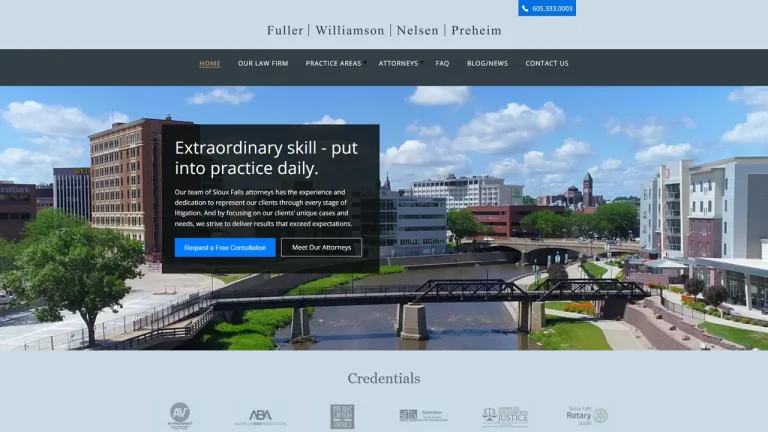
Fuller, Williamson, Nelsen & Preheim Law Firm - Sioux Falls, SD

Navigating South Dakota Employment Law & Workplace Jurisdictions
Workplace disputes disrupt careers, financial security, and organizational stability. South Dakota maintains a distinct legal landscape rooted in employment-at-will principles, balanced by state and federal protections against workplace discrimination, retaliation, and unlawful wage deprivation. Understanding how statutory exceptions apply to termination decisions, executive employment agreements, and non-compete covenants is vital for employees and employers alike throughout Minnehaha, Pennington, Lincoln, Brown, and Hughes counties.
Employment litigation and administrative filings in South Dakota move through dedicated municipal, state, and federal channels. Administrative discrimination complaints fall under the purview of the South Dakota Department of Labor and Regulation (DLR) Division of Human Rights in Pierre. When matters proceed to state trial courts, cases are heard in the South Dakota Circuit Courts, such as the Second Judicial Circuit in Sioux Falls, the Seventh Judicial Circuit in Rapid City, or the Sixth Judicial Circuit in Pierre. Federal statutory actions, such as claims arising under Title VII or the Fair Labor Standards Act, proceed through the U.S. District Court for the District of South Dakota.
Engaging knowledgeable South Dakota labor counsel ensures that contractual negotiations, severance terms, and administrative complaints are handled strategically. Experienced employment attorneys assess liability, compile workplace personnel records, and negotiate directly with opposing counsel to achieve out-of-court resolutions or prepare for robust courtroom advocacy.
South Dakota Employment Legal Fee & Representation Schedule
| Case Scenario | Fee Structure | Estimated Cost (USD) | Key Cost Determinants |
|---|---|---|---|
| Unpaid Wages & Overtime Violations | Contingency / Statutory Fee-Shift | 33.3% - 40% of recovery ($0 upfront) | Payroll record audits, FLSA liquidated damages eligibility, number of affected employees |
| Executive Severance Review & Negotiation | Hourly / Flat Rate | $750 - $2,500 | Non-compete covenant enforceability, deferred compensation packages, release waiver scopes |
| Workplace Discrimination or Retaliation | Hybrid / Contingency | 33.3% - 40% of settlement or award | DLR Division of Human Rights findings, Right-to-Sue issuance, documentation of pretextual firing |
| Circuit Court Wrongful Termination Litigation | Hourly Retainer / Contingency | $5,000 - $18,000+ | Public policy exception proof, multi-party depositions, summary judgment motions, trial duration |
Critical Legal Deadlines & Statutes in South Dakota
Employment rights in South Dakota are bound by statutory timelines and established legal standards. Under S.D. Codified Laws § 60-4-4, employment having no specified term is deemed at-will and may be terminated at the pleasure of either party. However, state common-law exceptions prohibit discharges that violate established public policy, such as firing an employee for filing a workers' compensation claim or refusing to commit an illegal act.
For allegations of discrimination based on race, color, creed, religion, sex, ancestry, disability, or national origin, complaints must be submitted to the South Dakota Division of Human Rights within 180 days of the unlawful action under S.D. Codified Laws § 20-13-31. Failure to exhaust administrative remedies within this strict timeframe permanently forfeits civil recovery under state law. In wage disputes, actions for the recovery of wages or statutory penalties must be commenced within two years pursuant to S.D. Codified Laws § 15-2-15.
Furthermore, post-employment restrictive covenants are governed strictly under S.D. Codified Laws § 53-9-11, which restricts employee non-compete agreements to a maximum duration of two years from termination and limits their enforcement to a specified geographic area where the employer conducts business.
Small Claims Limitations vs. Circuit Court Employment Litigation
In South Dakota, small claims procedures are handled within the South Dakota Magistrate Court, which maintains a jurisdictional monetary limit of $12,000 under S.D. Codified Laws § 16-12C-13. Straightforward disputes over a withheld final paycheck or unpaid earned commissions below $12,000 can often be resolved in Magistrate Court or through an administrative wage claim filed with the South Dakota Department of Labor and Regulation under S.D. Codified Laws § 60-11-9 without formal legal counsel.
However, complex employment matters involving wrongful termination, sexual harassment, retaliatory discharge, or restrictive covenants exceed the statutory authority and procedural scope of small claims proceedings. These claims demand comprehensive discovery, including corporate email retrieval, witness depositions, and statistical analyses of workplace demographics. Retaining an experienced South Dakota employment lawyer ensures access to Circuit Court remedies, statutory fee-shifting, front pay, emotional distress damages, and reinstatement orders that summary magistrate proceedings cannot deliver.
Red Flags to Avoid When Selecting South Dakota Labor Counsel
- Attorneys who guarantee specific monetary settlements before reviewing the employee personnel file and formal performance evaluations.
- Firms that fail to inform clients of the strict 180-day administrative filing deadline with the South Dakota Division of Human Rights.
- Lawyers who demand non-refundable upfront retainers for clear wage violation cases where state and federal fee-shifting statutes apply.
- Practitioners lacking courtroom trial experience in South Dakota Circuit Courts and the U.S. District Court for the District of South Dakota.
Frequently Asked Questions
What does employment-at-will mean for South Dakota workers?
Under South Dakota law, an employer can discharge an employee at any time for any reason or no reason at all, provided the termination does not violate specific statutory protections against discrimination, retaliate against protected activity, or breach an express employment contract.
Are non-compete agreements enforceable across South Dakota?
Non-compete agreements are strictly controlled under South Dakota law. They are only valid if limited to an area where the employer engages in business and cannot exceed a duration of two years following the date of termination.
How long do I have to file a discrimination complaint in South Dakota?
You have 180 days from the date the discriminatory act occurred to file a formal charge with the South Dakota Division of Human Rights to preserve your claims under state civil rights laws.
Can an employer in South Dakota withhold my final paycheck?
No. South Dakota law requires employers to pay all wages earned and unpaid by the next regular payday or within a month of separation, and unauthorized deductions from final wages are unlawful.
What remedies are available in a successful wrongful termination lawsuit?
Victims of unlawful discharge may recover back pay, front pay, compensation for lost benefits, damages for emotional distress, and in certain statutory claims, reinstatement and reasonable attorney fees.