
Financial & IP Lawyers in South Dakota
Engaging top South Dakota financial and intellectual property lawyers secures your commercial assets, banking compliance, and proprietary corporate innovations. Experienced legal counsel advises financial institutions, fintech enterprises, and business owners on regulatory compliance and patent protection while mitigating litigation risks. Explore our verified directory below to consult an established South Dakota financial and IP attorney.
Dakota Plains Legal Services Sioux Falls, SD
Pankratz & Associates - Pierre, SD

Brende & Meadors LLP - Sioux Falls, SD

Michael W. Hanson Attorney at Law - Sioux Falls, SD

Craig Law Office - Sioux Falls, SD
Larry Dean Nelson - Sioux Falls, SD
Cutler Law Firm, LLP - Sioux Falls, SD
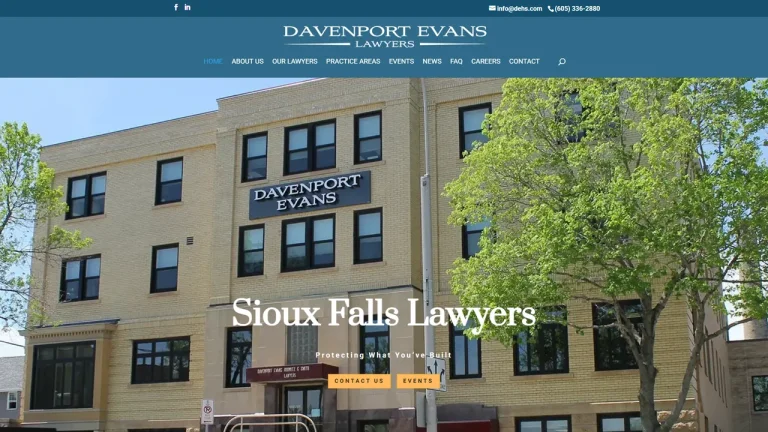
Davenport, Evans, Hurwitz and Smith, LLP - Sioux Falls, SD
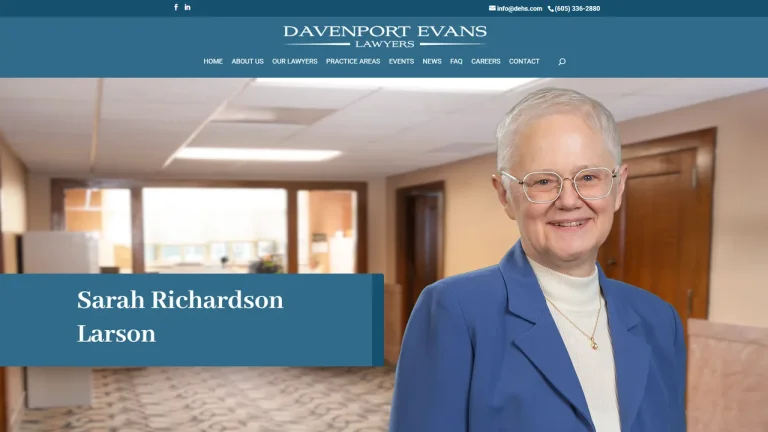
Sarah Richardson Larson - Davenport, Evans, Hurwitz & Smith, LLP - SIOUX FALLS, SD
Cadwell Law Firm - Sioux Falls, SD
Legacy Law Firm, P.C. Sioux Falls, SD
Thesenvitz & Mickelson, LLP, Sioux Falls, SD

Alan L. Malavolti, Attorney at Law - Sioux Falls, SD
Thomas A Blake Law Office - Sioux Falls, SD

Gerry & Kulm Ask, Prof. LLC - Sioux Falls, SD
Richard L. Johnson Attorney at Law - Sioux Falls, SD

Morgan and Morgan - Sioux Falls, SD

Cynthia J. Ahrendt, Attorney at Law, Sioux Falls, SD
Carlson Law Office - Pierre, SD

Kaufhold & Dix Patent Law - Sioux Falls, SD

Ronke Law, PLLC Sioux Falls, SD
Nichols and Rabuck, P.C. - Sioux Falls, SD
IpHorgan Limited - Sioux Falls, SD
Navigating South Dakota Financial Services, Banking, and Intellectual Property Law
South Dakota stands as a prominent national financial hub, renowned for its sophisticated banking statutes, progressive trust administration laws, and expanding technology sector. From chartered financial institutions and innovative fintech startups to specialized software developers and research enterprises in Sioux Falls, Rapid City, and Brookings, businesses require robust legal structures to protect their fiscal operations and proprietary intellectual property.
Financial regulation and commercial litigation within South Dakota involve oversight by the South Dakota Division of Banking and the South Dakota Department of Revenue in Pierre. Contractual enforcement, commercial disputes, and trade secret actions are litigated across the South Dakota Circuit Courts, such as the Second Judicial Circuit in Minnehaha County. Patent, federal trademark, and copyright litigation is prosecuted under exclusive federal jurisdiction in the U.S. District Court for the District of South Dakota or before the U.S. Patent and Trademark Office (USPTO).
Experienced South Dakota financial and IP attorneys provide critical strategic counsel. Whether establishing a dynasty trust, structuring private trust companies, navigating anti-money laundering compliance, securing USPTO trademark registrations, or litigating patent infringement, local counsel provides the legal safeguards necessary to protect high-value commercial assets.
South Dakota Financial & IP Legal Representation Cost Structure
| Case Scenario | Fee Structure | Estimated Cost (USD) | Key Cost Determinants |
|---|---|---|---|
| South Dakota Dynasty Trust / Asset Structuring | Flat Fee / Retainer | $3,500 - $10,000 | Directed trust drafting, trust situs selection, fiduciary allocation, wealth transfer terms |
| Federal Trademark Registration & Clearance | Flat Fee | $1,250 - $3,000 | Comprehensive USPTO clearance searches, class classifications, office action responses |
| Fintech Regulatory Compliance & Bank Partnership | Hourly Retainer | $4,500 - $12,500 | Division of Banking licensure, money transmitter audits, third-party vendor risk reviews |
| Patent or Trade Secret Infringement Litigation | Hourly / Staged Retainer | $15,000 - $50,000+ | U.S. District Court filings, preliminary injunction motions, technical expert depositions |
Critical Legal Deadlines & Statutes in South Dakota
South Dakota offers some of the most advantageous asset protection and trust laws in the nation. Under S.D. Codified Laws § 43-5-8, South Dakota has abolished the common-law rule against perpetuities, enabling the creation of perpetual dynasty trusts that protect family assets across multiple generations without statutory expiration.
For intellectual property protection, trade secrets are guarded under the South Dakota Uniform Trade Secrets Act. Pursuant to S.D. Codified Laws § 37-29-6, an action for misappropriation of a trade secret must be brought within three years after the misappropriation is discovered or should have been discovered through reasonable diligence. State trademark registrations are governed under S.D. Codified Laws § 37-6-14 and remain effective for five-year terms before renewal is required.
General commercial claims arising from written contracts, debt instruments, and financial obligations must be commenced within six years under S.D. Codified Laws § 15-2-13. At the federal level, patent infringement damages are governed by 35 U.S. Code § 286, which limits recovery to infringements committed within six years prior to the filing of the complaint.
Magistrate Court Small Claims vs. Circuit & Federal IP Litigation
In South Dakota, small claims matters within Magistrate Courts carry a jurisdictional cap of $12,000 under S.D. Codified Laws § 16-12C-13. Magistrate Courts are strictly designed for small debt recovery or straightforward property damage disputes. They possess zero authority to issue equitable injunctions, resolve complex banking compliance disputes, or adjudicate intellectual property rights.
Under 28 U.S. Code § 1338, federal district courts maintain exclusive jurisdiction over civil actions arising under federal patent, copyright, and plant variety protection statutes. Litigating trade secret theft, patent infringement, or commercial fintech contracts requires the investigative reach, forensic auditing, and preliminary injunctive relief available only through the South Dakota Circuit Courts and the U.S. District Court for the District of South Dakota. Retaining qualified financial and IP counsel ensures full protection of proprietary algorithms, brand identity, and corporate capital.
Red Flags to Avoid When Retaining South Dakota Financial & IP Counsel
- General practice attorneys who lack dedicated experience in South Dakota directed trust laws and Division of Banking regulatory frameworks.
- Firms attempting to prosecute patent applications before the USPTO without a registered patent attorney on staff.
- Attorneys who file trademark applications without first conducting comprehensive federal and common-law clearance searches.
- Practitioners who do not provide clear, written agreements detailing hourly rates, retainer requirements, and anticipated expert witness expenses.
Frequently Asked Questions
Why is South Dakota considered a premier trust and banking jurisdiction?
South Dakota maintains favorable trust and banking laws, including the abolition of the rule against perpetuities, absence of state income or capital gains taxes on trusts, robust asset protection statutes, and directed trust legislation.
What is the difference between a state and federal trademark in South Dakota?
A South Dakota state trademark protects your mark solely within state borders, whereas a federal USPTO trademark grants nationwide presumption of ownership and exclusive commercial rights across all fifty states.
How does South Dakota protect corporate trade secrets?
Under the South Dakota Uniform Trade Secrets Act, businesses can obtain injunctive relief, actual damages, and unjust enrichment awards against parties who acquire, disclose, or use proprietary trade secrets without authorization.
What is a directed trust under South Dakota law?
A directed trust separates administrative duties from investment and distribution management, allowing trust creators to appoint specialized advisors while utilizing a South Dakota corporate trustee for state situs benefits.
Where are patent and copyright lawsuits filed in South Dakota?
Because patent and copyright laws are exclusively federal, infringement lawsuits in South Dakota must be filed in the U.S. District Court for the District of South Dakota rather than state circuit courts.