
Residential Real Estate Lawyers in South Dakota
Purchasing or selling a home in South Dakota requires experienced real estate counsel to resolve title defects, boundary disputes, and disclosure issues. A dedicated property lawyer examines purchase contracts, clears unmarketable liens, and protects your home investment before closing. Browse our directory below to connect with qualified South Dakota residential real estate attorneys.
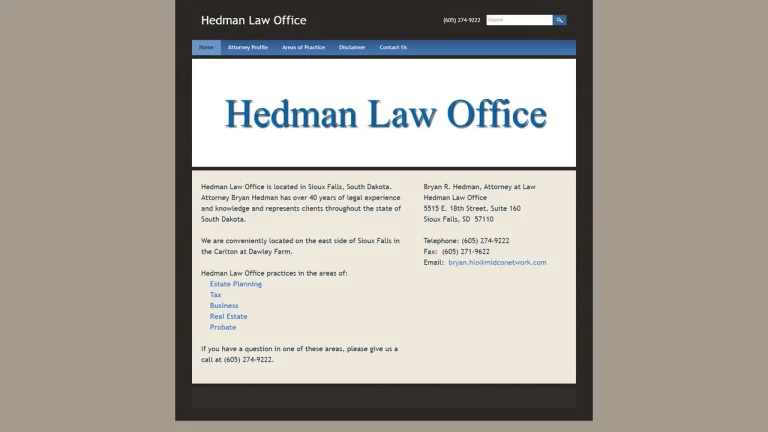
Hedman Law Office - Sioux Falls, SD

Christopherson, Anderson, Paulson & Fideler, LLP - Sioux Falls, SD

Taylor Law Firm - Sioux Falls, SD

Johnson Law Office, PLLC - Sioux Falls, SD
Wade Fischer, Attorney at Law, Pierre, SD

Alan L. Malavolti, Attorney at Law - Sioux Falls, SD

Thompson Law, PLLC Sioux Falls, SD

Residential Property Legal Guidance in South Dakota
Residential real estate ownership in South Dakota is grounded in state statutory property protections and local recording customs. Whether acquiring a single-family home in Sioux Falls, purchasing acreage in the Black Hills near Rapid City, or buying property in Aberdeen or Brookings, residential transactions require clear legal title and strict adherence to mandatory disclosure laws. When transactions become contested or clouded titles threaten ownership, legal remedies are administered through local judicial and recording authorities.
Formal land records, property deeds, and mortgage filings are maintained directly by the County Register of Deeds in each respective county, including Minnehaha, Pennington, Lincoln, and Brown counties. In the event of contract breaches, title defects, or boundary encroachment conflicts, legal actions fall under the trial jurisdiction of the South Dakota Circuit Courts within the Unified Judicial System. Circuit Judges hold the exclusive equitable authority to quiet title, enforce purchase agreements through specific performance, or partition real estate among co-owners.
Retaining a licensed South Dakota residential real estate lawyer admitted to the State Bar of South Dakota protects buyers and sellers against hidden legal pitfalls. An experienced property attorney conducts rigorous title examinations, scrutinizes purchase contingencies, reviews homeowner association restrictions, and resolves title exceptions before closing documents are signed.
South Dakota Residential Real Estate Legal Fee Guidelines
| Case Scenario | Fee Structure | Estimated Cost (USD) | Key Cost Determinants |
|---|---|---|---|
| Purchase & Sale Agreement Review and Closing | Flat Fee | $750 - $1,800 | Title commitment complexity, lender document coordination, contract contingency drafting. |
| Seller Property Condition Disclosure Disputes | Hourly / Retainer ($250 - $425/hr) | $3,500 - $12,000 | Extent of structural or water damage, evidence of intentional concealment, home inspection reports. |
| Boundary Line, Fence & Easement Conflicts | Hourly / Retainer ($275 - $450/hr) | $3,000 - $10,000 | Land surveyor reports, historical boundary usage evidence, adverse possession claims. |
| Quiet Title Action & Title Cloud Removal | Flat Fee / Stage Retainer | $2,500 - $6,500 | Number of named defendants, service by publication requirements, missing heir issues. |
Critical Legal Deadlines & Statutes in South Dakota
Residential property transactions in South Dakota are bound by statutory seller obligations and distinct limitation periods. Under S.D. Codified Laws § 43-4-38, sellers of residential real property must furnish buyers with a statutory Property Condition Disclosure Statement prior to entering into a written purchase agreement. If a seller intentionally conceals known defects or provides false disclosures, they remain liable to the buyer for actual damages sustained under S.D. Codified Laws § 43-4-42.
Actions for breach of a written residential purchase contract or warranty deed covenants are subject to the six-year statute of limitations provided in S.D. Codified Laws § 15-2-13. Where unmarketable title, old unsatisfied liens, or broken chains of conveyances impair property ownership, owners must file a quiet title lawsuit under the procedures established in S.D. Codified Laws § 21-41-1.
South Dakota maintains strict adverse possession statutes. Under S.D. Codified Laws § 15-3-1, an individual must maintain open, hostile, continuous, and exclusive possession of real property for twenty years to establish adverse ownership. Alternatively, under S.D. Codified Laws § 15-3-15, a claimant holding color of title who pays all property taxes legally assessed for ten successive years may acquire legal title. Claims involving construction improvements and residential structural defects are limited by the ten-year statute of repose under S.D. Codified Laws § 15-2A-3.
Small Claims Court vs. Circuit Court Real Estate Actions
In South Dakota, Magistrate Courts operate an informal small claims division capped at a monetary limit of $12,000. Aggrieved property buyers may occasionally use small claims court to resolve minor financial grievances, such as recovering an earnest money deposit wrongfully withheld by a seller or seeking compensation for minor undisclosed plumbing repairs beneath the $12,000 threshold.
However, Magistrate Courts are strictly prohibited from resolving questions involving title to real property, boundary determinations, or equitable remedies. If a dispute involves establishing an access easement, canceling a fraudulent deed, or quieting title against former owners, the lawsuit must be filed in South Dakota Circuit Court. A licensed real estate attorney ensures that property descriptions are surveyed accurately, title insurance policies are examined, and statutory remedies are pursued effectively.
Red Flags When Hiring a South Dakota Real Estate Lawyer
- Failing to Scrutinize Title Commitments: Beware of attorneys who rubber-stamp title policies without reviewing recorded easements, mineral reservations, or restrictive covenants.
- Unfamiliarity with South Dakota Property Condition Disclosures: Lawyers handling home sales must fully understand the mandatory disclosure provisions of SDCL § 43-4-38.
- Inadequate Experience with County Register of Deeds Practices: Recording rules and transfer fee requirements vary by county; select counsel who actively files in your local jurisdiction.
- Undisclosed Dual Representation: An attorney should not represent both the residential buyer and seller without written conflict disclosures and informed consent.
Frequently Asked Questions
Is a property condition disclosure statement mandatory in South Dakota?
Yes. Under S.D. Codified Laws § 43-4-38, sellers of residential property must provide a completed statutory disclosure statement to the buyer before a written purchase agreement is executed.
What is the statute of limitations for undisclosed home defects in South Dakota?
Claims based on intentional misrepresentation or fraud in a residential real estate disclosure must generally be brought within six years under S.D. Codified Laws § 15-2-13.
How does an owner clear a title defect in South Dakota?
Owners resolve clouds on title by filing an action to determine adverse claims, commonly known as a quiet title action, in the South Dakota Circuit Court under S.D. Codified Laws § 21-41-1.
How long does adverse possession take in South Dakota?
Under S.D. Codified Laws § 15-3-1, adverse possession requires twenty years of continuous possession, or ten years under S.D. Codified Laws § 15-3-15 if the claimant holds color of title and pays all property taxes.
Can real estate boundary disputes be decided in small claims court?
No. South Dakota Magistrate Courts and small claims divisions do not have jurisdiction to decide legal title, boundary lines, or easements; these matters must be heard in Circuit Court.