
Estate Planning Lawyers in Sioux Falls
Consulting an experienced estate planning lawyer in Sioux Falls ensures your legacy is protected under South Dakota advantageous trust and probate statutes. Dedicated legal counsel resolves complex distribution questions through strategic document structuring, preventing contentious court battles. Explore our directory below to connect with a trusted local estate planning attorney today.

Boyce Law Firm, LLP - Sioux Falls, SD
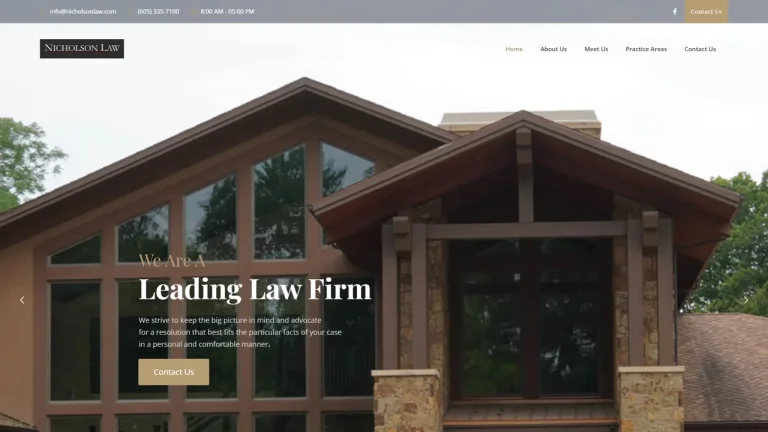
Nicholson Law - SIOUX FALLS, SD

Ronke Law, PLLC Sioux Falls, SD
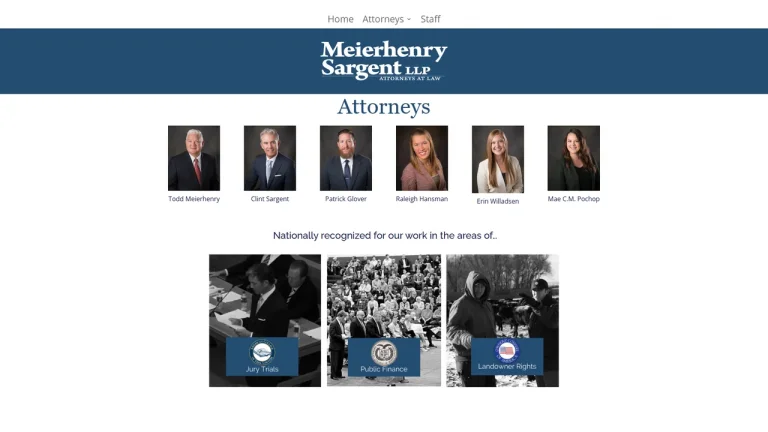
Meierhenry Sargent LLP - Sioux Falls, SD

Plan Wise Legal - Sioux Falls, SD
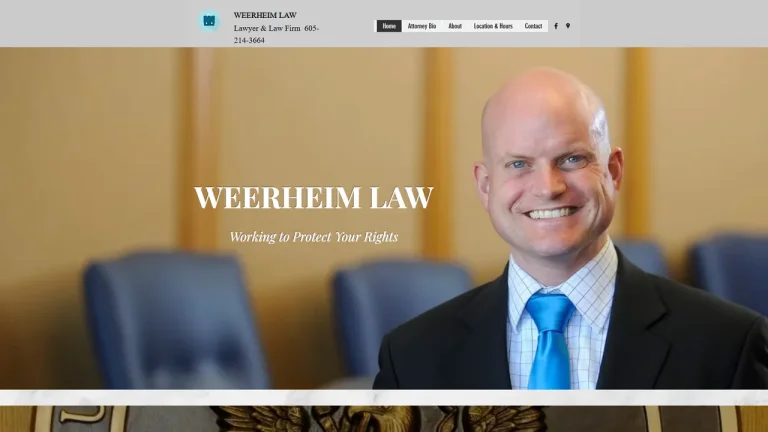
Weerheim Law Office - Sioux Falls, SD
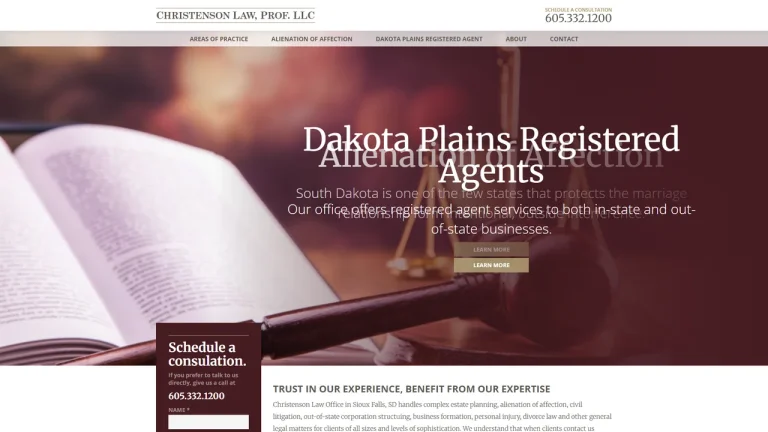
Christenson Law Office, Sioux Falls, SD
Wilson Legal Planning, Sioux Falls, SD

Estate Planning Solutions Law Firm, Prof. LLC Sioux Falls, SD

Harris Law & Co. - Sioux Falls, SD

Denevan Falon Law Firm Prof. LLC. - Sioux Falls, SD
Nasser Law Firm, P.C. Sioux Falls, SD
ELLINA LAW FIRM - Sioux Falls, SD

Prosperity Law Firm, PLLC Sioux Falls, SD

Redstone Law Firm LLP - Sioux Falls, SD

Mark R. Krogstad (Davenport Evans) - Sioux Falls, SD

Lynn, Jackson, Shultz & Lebrun, P.C. - Sioux Falls, SD
Hedman Law Office - Sioux Falls, SD
Samp Law Offices - Sioux Falls, SD

Bangs McCullen Law Firm - Sioux Falls, SD
May & Johnson PC - Sioux Falls, SD
Krystosek Law - SIOUX FALLS, SD
The Duncan Law Firm, LLP - Sioux Falls, SD

Comprehensive Estate and Trust Planning in Sioux Falls
Structuring a resilient estate plan in Sioux Falls requires in-depth mastery of South Dakota progressive statutory framework. As the primary commercial and financial engine of the region, Sioux Falls spans both Minnehaha County and Lincoln County, encompassing growing business communities, family-held agricultural lands, and multi-generational family legacies. Without meticulous legal documentation, transferring wealth can trigger unintended tax burdens, protracted probate proceedings, or contentious intra-family disputes.
South Dakota is globally recognized for its forward-thinking trust legislation, featuring favorable directed trust rules, privacy protections, and the complete elimination of the rule against perpetuities. Whether your assets include residential real estate in McKennan Park, commercial acreage along the 41st Street corridor, or significant equity in local enterprises, retaining a Sioux Falls estate planning attorney ensures your assets are structured according to state statutory provisions.
Estate and trust matters that require judicial oversight are handled within the Second Judicial Circuit Court, centered at the Minnehaha County Courthouse on North Dakota Avenue in Downtown Sioux Falls and the Lincoln County Courthouse in Canton. Aligning your estate planning vehicles with local judicial precedent ensures your testamentary intentions are honored without delay.
Estate Planning Legal Fee Structures in Sioux Falls
| Case Scenario | Fee Structure | Estimated Cost (USD) | Key Cost Determinants |
|---|---|---|---|
| Basic Will & Healthcare Directive Package | Flat Fee | $900 - $1,800 | Number of beneficiaries, guardian nominations for minor children, document customization |
| Revocable Living Trust Portfolio | Flat Fee / Retainer | $2,500 - $5,500 | Real estate deed retitling, pour-over will drafting, trust funding coordination |
| South Dakota Dynasty & Asset Protection Trust | Hourly / Retainer | $6,000 - $18,000+ | Directed trustee structuring, multi-generational wealth provisions, institutional trustee coordination |
| Farm, Ranch & Family Business Succession Plan | Hourly Rate ($275 - $500/hr) | $4,500 - $14,000 | Operating entity reorganization, buy-sell agreements, multi-generational tax minimization |
Critical Legal Deadlines & Statutes in South Dakota
Estate planning in Sioux Falls is anchored by distinct statutory standards codified within the South Dakota Codified Laws. Under the South Dakota Uniform Probate Code, a valid formal will must satisfy the execution requirements of S.D. Codified Laws § 29A-2-502, which mandates a signed writing executed in the presence of at least two competent witnesses. Testators can simplify future probate administration by executing a self-proving affidavit pursuant to S.D. Codified Laws § 29A-2-504.
South Dakota statutory framework offers distinct wealth preservation mechanisms. Under S.D. Codified Laws § 43-5-8, the rule against perpetuities is abolished, allowing testators and settlors to establish perpetual dynasty trusts that protect wealth across endless generations without forced statutory termination. Furthermore, settlors can bifurcate administrative, investment, and distribution responsibilities through directed trusts governed by S.D. Codified Laws § 55-1B-2, and seal trust records from public scrutiny through quiet trust provisions under S.D. Codified Laws § 55-2-13.
Spousal protections must also be carefully accounted for during the drafting phase. A surviving spouse in South Dakota possesses a statutory right to an elective share under S.D. Codified Laws § 29A-2-202, which scales up to 100 percent of the augmented estate based on the length of the marriage. Surviving spouses must formally file this elective share petition within nine months after the decedent death or within six months after probate opens under S.D. Codified Laws § 29A-2-205, underscoring the necessity of marital property agreements in comprehensive estate planning.
Small Claims Limitations vs. Circuit Court Trust Administration
South Dakota Magistrate Courts administer small claims proceedings restricted to minor civil actions where claims do not exceed $12,000 under S.D. Codified Laws § 16-12C-13. While individuals frequently handle small contract disputes in this forum without formal legal counsel, small claims magistrates have no legal authority to adjudicate testamentary documents, interpret complex trust agreements, or rule on fiduciary responsibilities.
Substantive trust administration, judicial decanting, trust reformation, and fiduciary challenges fall under the exclusive jurisdiction of the Second Judicial Circuit Court. In these proceedings, intricate evidentiary rules and statutory fiduciary standards apply. Attempting to draft estate instruments using online automated forms without legal counsel frequently leads to defective funding, invalid execution, and expensive court litigation that far exceeds the initial investment of retaining qualified legal counsel.
Red Flags When Selecting an Estate Planning Attorney
Safeguarding family wealth requires experienced, detail-oriented legal representation. Exercise caution if an attorney displays any of the following warning signs:
- Relying on standardized, one-size-fits-all forms that fail to utilize South Dakota unique statutory trust benefits such as directed trusts or privacy provisions.
- Failing to provide hands-on assistance with asset retitling, leaving deeds unrecorded at the Minnehaha County or Lincoln County Register of Deeds and nullifying the trust probate-avoidance capabilities.
- Concealing billing parameters or charging opaque fees for routine document modifications and trust funding correspondence.
- Lacking familiarity with regional agricultural operations, family farm transitions, or complex local commercial assets.
Frequently Asked Questions
Why is South Dakota considered a premier jurisdiction for trust planning?
South Dakota offers favorable trust legislation, including the complete abolition of the rule against perpetuities under S.D. Codified Laws § 43-5-8, robust asset protection trusts, directed trusts under S.D. Codified Laws § 55-1B-2, and statutory privacy provisions under S.D. Codified Laws § 55-2-13.
Does a revocable living trust avoid probate in Minnehaha County?
Yes. Assets properly retitled into a revocable living trust pass directly to named beneficiaries according to trust terms without requiring probate proceedings in the Second Judicial Circuit Court, saving administrative expense and preserving family privacy.
What are the legal requirements for executing a valid will in South Dakota?
Under S.D. Codified Laws § 29A-2-502, a valid formal will must be in writing, signed by the testator (or by another individual in the testator conscious presence and by their direction), and signed by at least two individuals who witnessed the signing or the testator acknowledgment.
What is the elective share of a surviving spouse in South Dakota?
Under S.D. Codified Laws § 29A-2-202, a surviving spouse has a statutory right to an elective share percentage of the augmented estate, which ranges from 3 percent after one year of marriage up to 100 percent for marriages lasting 15 years or longer.
Where are contested estate and trust disputes resolved in Sioux Falls?
Estate, will, and trust disputes in Sioux Falls are adjudicated in the Second Judicial Circuit Court, located at the Minnehaha County Courthouse at 425 North Dakota Avenue or the Lincoln County Courthouse in Canton.