
Wills Lawyers in South Dakota
Consult top-rated South Dakota wills lawyers to draft legally sound last wills, designate guardians, and protect your estate under South Dakota probate laws. Experienced local attorneys guide personal representatives through informal or formal Circuit Court probate, facilitating family agreements and preventing contentious disputes. Explore our verified statewide directory below to connect with an established South Dakota wills attorney.

Wilson Legal Planning, Sioux Falls, SD

Plan Wise Legal - Sioux Falls, SD
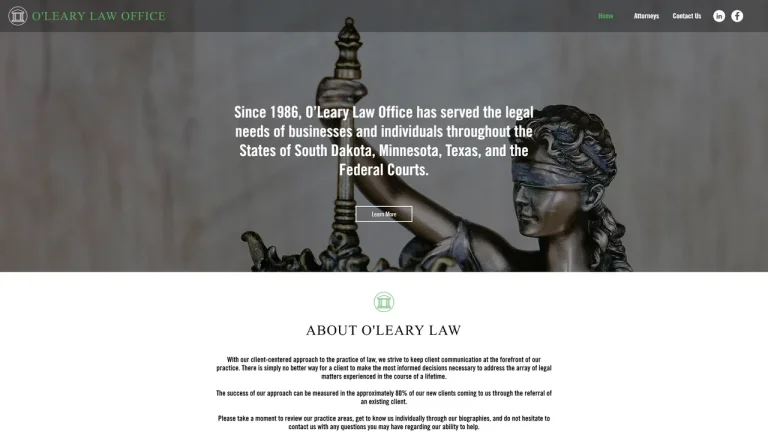
O'Leary Law Office Sioux Falls, SD

Legacy Law Firm, P.C. Sioux Falls, SD
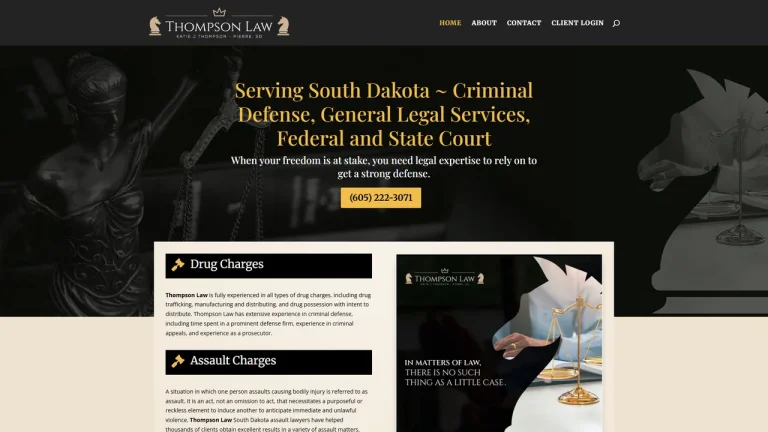
Katie J Thompson Attorney at Law - Pierre, SD
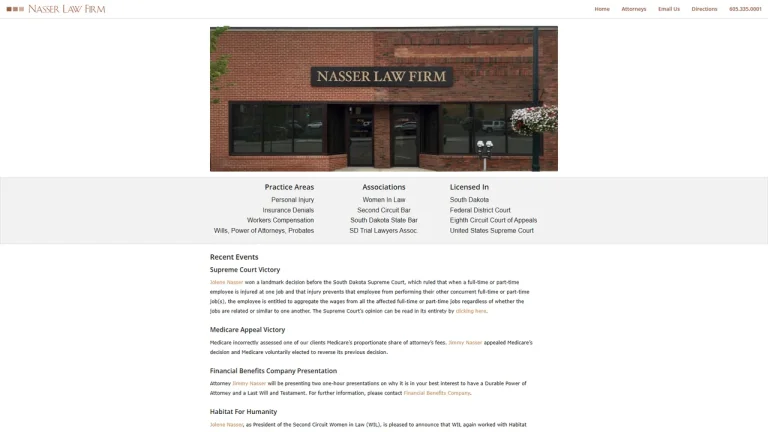
Nasser Law Firm, P.C. Sioux Falls, SD

Ronke Law, PLLC Sioux Falls, SD
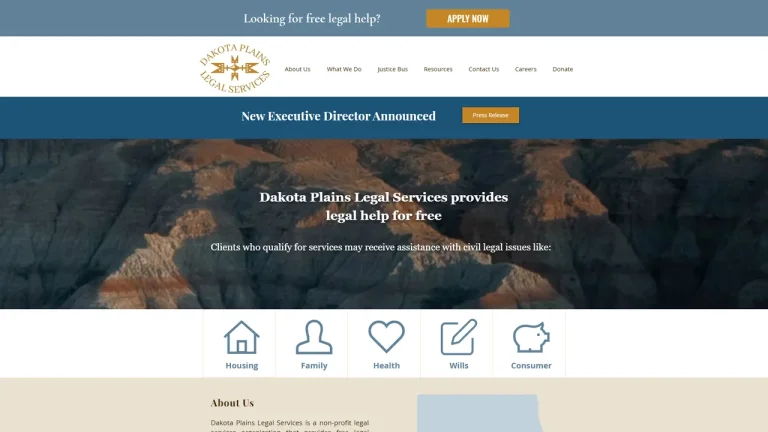
Dakota Plains Legal Services Sioux Falls, SD

The South Dakota Unified Judicial System and Circuit Court Probate Jurisdiction
Administering or drafting a last will and testament in South Dakota occurs within the state's Unified Judicial System. Unlike court structures that employ separate surrogate or probate tribunals, South Dakota vests exclusive probate authority in its Circuit Courts across seven judicial circuits pursuant to S.D. Codified Laws § 29A-1-201. Whether initiating informal probate proceedings through the Second Judicial Circuit in Sioux Falls, the Seventh Judicial Circuit in Rapid City, or the Sixth Judicial Circuit in the state capital of Pierre, local court rules require precision and adherence to Title 29A of the South Dakota Codified Laws.
A valid last will serves as the cornerstone of testamentary planning, enabling individuals to appoint a personal representative, nominate guardians for minor dependents, and dictate the orderly distribution of real and personal property. Without a validly executed instrument, assets pass under the statutory laws of intestate succession, which may direct agricultural land, family businesses, and personal holdings contrary to your personal wishes. Attorneys admitted to the State Bar of South Dakota ensure that testamentary documents comply with strict execution formalities, reducing the risk of procedural challenges.
Estate administration frequently involves balancing family relationships and resolving disputes among heirs before they escalate to contested litigation. South Dakota provides an expedited informal probate process overseen by the Clerk of Court under S.D. Codified Laws § 29A-3-301 when all parties are in agreement and the original will is self-proved. Retaining dedicated counsel ensures the personal representative adheres to fiduciary duties, provides lawful notice to interested parties, and secures formal estate discharge without incurring personal liability.
Typical South Dakota Wills and Probate Fee Structures
| Case Scenario | Fee Structure | Estimated Cost (USD) | Key Cost Determinants |
|---|---|---|---|
| Basic Last Will & Testament Package | Flat Fee Package | $650 - $1,800 | Marital status, nomination of guardians for minor children, tangible personal property memorandums, and self-proving affidavits. |
| Complex Will with Testamentary Trusts | Flat Fee or Hourly ($250 - $400/hr) | $1,800 - $4,500 | Agricultural land succession clauses, multi-generational wealth preservation, special needs trust provisions, and blended family allocations. |
| Informal Circuit Court Probate Administration | Flat Fee or Hourly ($225 - $400/hr) | $2,500 - $6,000 | Total asset valuation, statutory publication of notice to creditors, Department of Social Services clearance, and final accounting filings. |
| Contested Will Litigation & Undue Influence | Hourly Retainer ($300 - $500/hr) | $8,500 - $30,000+ | Testamentary capacity evaluations, handwriting analysis, deposition volume, and formal evidentiary hearings before the Circuit Court. |
Critical Legal Deadlines & Statutes in South Dakota Wills & Probate
South Dakota law sets strict procedural rules governing will execution and subsequent estate administration. Under S.D. Codified Laws § 29A-2-502, a valid will must be in writing, signed by the testator or in the testator's name by some other individual in the testator's conscious presence and by the testator's direction, and signed by at least two individuals within a reasonable time after witnessing the execution. Wills can be made self-proved at execution or by subsequent acknowledgment pursuant to S.D. Codified Laws § 29A-2-504, eliminating the need to locate attesting witnesses during probate.
Following appointment, a personal representative must publish a notice to creditors in an approved county newspaper once a week for three successive weeks pursuant to S.D. Codified Laws § 29A-3-801. Under S.D. Codified Laws § 29A-3-803, creditors have four months from the date of first publication to present claims against the estate; claims not filed within this statutory window are forever barred. If notice is not published, creditors have three years from the decedent's death to file claims.
Surviving spouses in South Dakota are protected against intentional or inadvertent disinheritance. Under S.D. Codified Laws § 29A-2-202, a surviving spouse has the right to claim an elective share percentage of the augmented estate, scaled from three percent up to fifty percent depending on the duration of the marriage. Additionally, formal petitions to contest a will or dispute testacy must generally be commenced within three years after the decedent's death pursuant to S.D. Codified Laws § 29A-3-108.
Small Claims Limits vs. Circuit Court in South Dakota Probate Matters
South Dakota Magistrate Courts handle minor civil disputes with a monetary cap set at $12,000 pursuant to S.D. Codified Laws § 16-12C-13 and S.D. Codified Laws § 15-39-45.1. While small claims procedures allow individuals to recover unpaid personal loans or resolve minor contractual claims without an attorney, Magistrate Courts possess zero jurisdiction over probate administration, wills, or the distribution of decedents' estates.
For modest estates, the South Dakota Uniform Probate Code provides non-judicial collection mechanisms. Under S.D. Codified Laws § 29A-3-1201, if the net value of an entire estate-less liens and encumbrances-does not exceed $100,000, successors may collect personal property via affidavit thirty days after death without opening a court probate file. Additionally, S.D. Codified Laws § 29A-3-1203 permits transfer of real property valued at $50,000 or less via affidavit filed with the county Register of Deeds after sixty days. However, when an estate exceeds these limits, holds agricultural acreage, or involves contested terms, proceeding through Circuit Court with an experienced wills attorney is necessary to secure clean title transfers and prevent fiduciary exposure.
Red Flags When Hiring a South Dakota Wills Lawyer
- Ignoring Non-Probate Asset Alignment: An attorney who drafts a will without reviewing payable-on-death designations, life insurance policies, and joint tenancy deeds risks leaving significant assets subject to unintended distribution paths.
- Omission of Self-Proving Formalities: Failure to execute a self-proving affidavit under § 29A-2-504 forces personal representatives to track down surviving witnesses years later, causing administrative delays in Circuit Court.
- Percentage-Based Fee Demands: Beware of estate practitioners who attempt to charge an arbitrary percentage of the estate's gross value rather than reasonable hourly or transparent flat fees for administrative services.
- Inexperience with Agricultural Land Succession: Drafting testamentary documents for South Dakota farms and ranches requires specialized knowledge of partition risks, leasehold interests, and entity structuring to avoid family land disputes.
Frequently Asked Questions
Are handwritten (holographic) wills legally valid in South Dakota?
Yes. Under S.D. Codified Laws § 29A-2-502, a holographic will is valid in South Dakota-whether witnessed or not-if the signature and material portions of the document are entirely in the testator's handwriting.
Does South Dakota impose an inheritance tax or state estate tax?
No. South Dakota does not impose a state-level inheritance tax or estate tax. However, federal estate tax obligations may still apply to estates exceeding federal statutory exemption thresholds.
What is the monetary limit for the South Dakota small estate affidavit?
Under S.D. Codified Laws § 29A-3-1201, successors may use an affidavit to collect personal property if the entire estate value, less liens and encumbrances, does not exceed $100,000 and at least thirty days have passed since death. A separate affidavit under S.D. Codified Laws § 29A-3-1203 covers real property valued at $50,000 or less after sixty days.
What happens if someone passes away without a will in South Dakota?
When an individual dies without a valid will, their property is distributed according to South Dakota intestate succession laws codified under S.D. Codified Laws § 29A-2-101, passing first to a surviving spouse and direct descendants before more distant relatives.
Can a spouse be completely disinherited under South Dakota law?
No. A surviving spouse is entitled to claim an elective share under S.D. Codified Laws § 29A-2-202, which grants a statutory percentage of the augmented estate ranging up to fifty percent depending on the length of the marriage, regardless of contrary terms in the will.