
Child Support Lawyers in Tennessee
Find leading Tennessee child support lawyers to calculate accurate payments under state income shares guidelines, modify existing orders, or recover arrears. Working with an experienced domestic relations attorney ensures parental incomes and parenting time credits are accurately evaluated, preventing costly financial imbalances. Explore our verified statewide directory below to consult an established Tennessee child support lawyer for your family law needs.

McKeehan Law Group, LLC - Knoxville, TN

Wise Law LLC - Nashville, TN
Legal Aid Society of Middle Tennessee and the Cumberlands - Clarksville Office - TN

Shipley & Swain PLLC - Knoxville, TN

Easter and DeVore Attorneys at Law - Nashville, TN

Law Office of Karen Cain - Nashville, TN

Miles Mason Family Law Group, PLC - Memphis, TN

Morris Family Law, PLLC - Nashville, TN
The Law Office of L. Clay White - Knoxville, TN

Landry & Azevedo - Knoxville, TN

Legal Aid of East Tennessee - Chattanooga, TN
The Law Office of Mary C. LaGrone - Nashville, TN
S L Perkins Law Group - Memphis, TN

Rubenfeld Law Office, PC - Nashville, TN
Mathis, Bates and Klinghard PLLC: Mathis Jacob P - Clarksville, TN

Law Office Of Allen E Schwartz - Knoxville, TN

Levy, Jeffrey L - Nashville, TN

Brighter Day Law - Nashville, TN
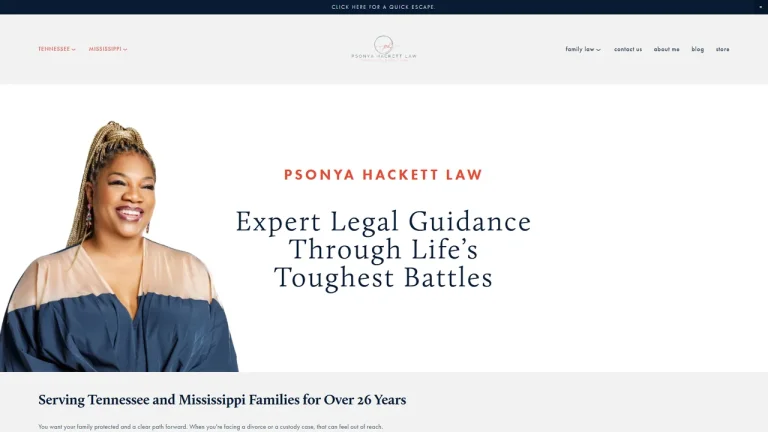
Psonya Hackett, Attorney - Memphis, TN
Law Office of Meghan A. Bodie - Knoxville, TN
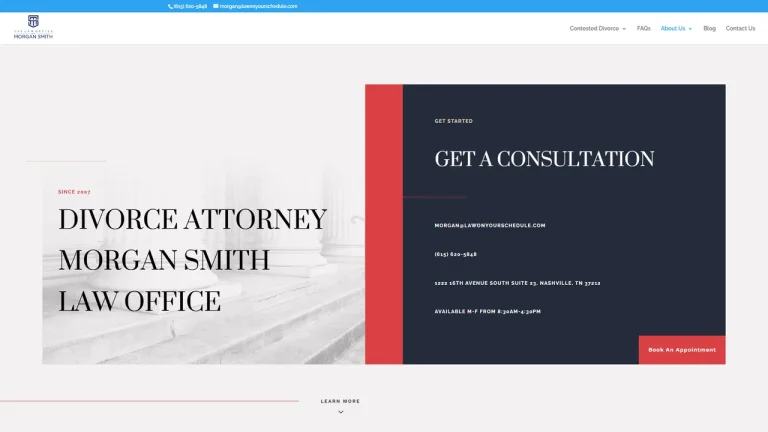
The Law Office of Morgan Smith - Nashville, TN

Cindy S. Smith, P.C., Attorneys at Law - Nashville, TN
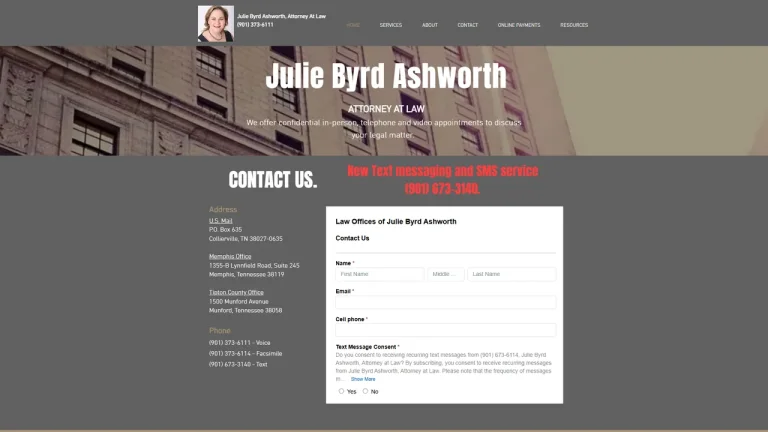
Julie Byrd Ashworth, Attorney at Law - Memphis, TN
The Law Office of Michael K. Williamson - Clarksville, TN
Navigating the Tennessee Child Support System and Judicial Jurisdictions
Child support matters across Tennessee are adjudicated within a specialized judicial infrastructure designed to protect children's economic welfare. Jurisdiction over child support is shared between Chancery Courts, Circuit Courts, and county Juvenile Courts across thirty-one judicial districts. While Chancery and Circuit Courts resolve child support issues arising from divorce actions in major metropolitan areas such as Davidson County in Nashville, Shelby County in Memphis, Knox County in Knoxville, and Hamilton County in Chattanooga, Juvenile Courts maintain exclusive original jurisdiction over paternity establishment and support orders for non-married parents.
Tennessee calculates child support utilizing the statutory Income Shares Model promulgated by the Tennessee Department of Human Services (TDHS) Child Support Services Division. This mathematical formula considers the gross monthly income of both the Primary Residential Parent (PRP) and the Alternative Residential Parent (ARP), the number of annual parenting days credited to each parent, childcare expenses, and health insurance premiums. Skilled attorneys licensed by the Tennessee Bar ensure that income determinations are accurate, especially when self-employment earnings, corporate distributions, or seasonal bonuses must be scrutinized.
Child support disputes frequently involve enforcement proceedings or petitions for modification due to income changes. Because Tennessee law strictly prohibits the retroactive reduction of accrued child support debt, seeking timely legal intervention is critical. An experienced child support attorney facilitates strategic negotiations and dispute mediation, avoiding unnecessary court friction while securing legally enforceable orders.
Common Tennessee Child Support Legal Fee Structures
| Case Scenario | Fee Structure | Estimated Cost (USD) | Key Cost Determinants |
|---|---|---|---|
| Initial Child Support Order Establishment | Flat Fee or Hourly ($250 - $400/hr) | $1,500 - $3,500 | Wage verification, parenting time schedule calculations, health insurance premium allocations, and uncontested court submissions. |
| Petition to Modify Child Support | Hourly Retainer ($250 - $450/hr) | $2,000 - $5,500 | Establishing the statutory significant variance threshold, discovery into changed financial circumstances, and mediation attendance. |
| Contempt & Arrears Enforcement Proceeding | Hourly Retainer ($275 - $475/hr) | $2,500 - $7,500 | Civil vs. criminal contempt filings, income withholding orders, tracing undisclosed assets, and purge condition hearings. |
| High-Income Deviation & Complex Income Advocacy | Hourly Retainer ($325 - $550/hr) | $4,500 - $12,500+ | Forensic income analysis for business owners, trust distributions, extraordinary educational costs, and upward deviation arguments. |
Critical Legal Deadlines & Statutes in Tennessee Child Support
Child support obligations in Tennessee are established pursuant to Tenn. Code Ann. § 36-5-101 and the Tennessee Child Support Guidelines codified under the Tennessee Rules and Regulations. Under this framework, both parents are legally obligated to support their minor children according to their relative financial capabilities until the child reaches eighteen years of age or graduates from high school with their graduating class, whichever occurs later, pursuant to Tenn. Code Ann. § 34-1-102(b).
Modifying an existing child support award requires strict adherence to statutory variance thresholds. Under Tenn. Code Ann. § 36-5-101(g) and state guidelines, a party seeking modification must prove a "significant variance"-defined generally as at least a fifteen percent difference between the current court-ordered child support obligation and the proposed obligation based on updated incomes and parenting schedules. For low-income parents, the variance threshold is reduced to seven and a half percent.
Timing is crucial when requesting a modification because Tennessee law strictly limits retroactive relief. Pursuant to Tenn. Code Ann. § 36-5-101(f)(1), child support payments become a final civil judgment on the date they are due and cannot be forgiven or modified retroactively. The court's authority to modify support begins only from the date a formal petition for modification is filed and served upon the other parent. Furthermore, failure to pay ordered child support can result in immediate contempt actions under Tenn. Code Ann. § 29-9-102, carrying penalties of up to ten days of incarceration per willful violation.
General Sessions Limits vs. Chancery and Juvenile Court Jurisdiction
Tennessee General Sessions Courts possess broad civil authority, handling small claims and general civil actions up to $25,000 pursuant to Tenn. Code Ann. § 16-15-501. While General Sessions Courts resolve standard financial disputes, they do not have independent jurisdiction over post-divorce child support calculations or paternity proceedings unless specifically designated as a county juvenile division.
Child support matters reside exclusively in Chancery, Circuit, or Juvenile Courts. Navigating the Tennessee Child Support Worksheet without experienced legal counsel carries significant long-term financial consequences. Miscalculating overnight credits, failing to challenge imputed income, or overlooking legitimate business deductions can lock an obligor or recipient into an erroneous payment schedule for years. Retaining an experienced Tennessee child support attorney ensures that self-employment taxes, recurring medical costs, and parenting time credits are accurately integrated into court submissions.
Red Flags When Hiring a Tennessee Child Support Attorney
- Promises to Forgive Past-Due Arrears: Under Tenn. Code Ann. § 36-5-101(f)(1), Tennessee courts have no authority to wipe out lawfully entered child support arrears; any lawyer promising to eliminate accrued arrears is misrepresenting state law.
- Filing Modifications Without Verifying the Variance: Filing a modification petition without first calculating whether the case meets the statutory fifteen percent significant variance requirement leads to immediate dismissal.
- Inexperience with Self-Employment Income: Beware of attorneys who simply accept tax returns at face value without examining business expense add-backs, depreciation schedules, or undistributed company earnings.
- Unfamiliarity with Juvenile Court Procedures: Procedural timelines and local rules differ significantly between Circuit or Chancery Courts and Juvenile Courts; counsel must be well-versed in your specific county court division.
Frequently Asked Questions
How is child support calculated in Tennessee?
Tennessee utilizes the Income Shares Model under Tenn. Code Ann. § 36-5-101. Both parents' gross monthly earnings are combined to determine a basic support obligation, which is then allocated between parents based on their income shares, the number of annual parenting nights, health insurance expenses, and work-related childcare costs.
What is considered a significant variance for modifying child support in Tennessee?
Under Tenn. Code Ann. § 36-5-101(g), a parent must demonstrate at least a fifteen percent difference between the current monthly support obligation and the proposed obligation calculated under updated financial and parenting time circumstances.
Can a court retroactively reduce child support arrears in Tennessee?
No. Under Tenn. Code Ann. § 36-5-101(f)(1), past-due child support payments become enforceable final judgments as they come due. A judge cannot retroactively modify or forgive accrued arrears, making it essential to file a petition to modify immediately when financial changes occur.
When does child support legally end in Tennessee?
Pursuant to Tenn. Code Ann. § 34-1-102(b), child support continues until the child reaches eighteen years of age or graduates from high school with their normal graduating class, whichever event occurs later, unless the child is disabled and qualifies for extended support.
What happens if an obligor parent willfully refuses to pay child support?
The court may hold the non-paying parent in civil or criminal contempt under Tenn. Code Ann. § 29-9-102. Penalties include wage garnishment, suspension of state driver and professional licenses, federal passport denial, and incarceration of up to ten days per violation.