
Harassment Lawyers in Tennessee
Consult skilled Tennessee harassment lawyers to stop workplace hostility, pursue protective remedies, and recover damages under state and federal civil statutes. Experienced attorneys safeguard your dignity under strict statutory filing deadlines, resolving complex claims through strategic negotiation to avoid painful court battles. Browse our verified statewide directory below to connect with a dedicated Tennessee harassment lawyer today.

Law Office of Douglas B. Janney III - Nashville, TN

Steve Wilson Firm - Memphis, TN

Bob E. Lype, Attorney at Law - Chattanooga, TN
Steiner and Steiner, LLC - Nashville, TN

Burnette, Dobson & Pinchak - Chattanooga, TN
Biesecker Dutkanych and Macer, LLC - Nashville, TN

Barrett Johnston Martin & Garrison, PLLC - Nashville, TN

Disability Rights Tennessee - Nashville, TN
Littler Mendelson P.C. - Memphis, TN

The Ebbert Law Firm - Knoxville, TN
FordHarrison LLP - Nashville, TN
R. Scott Jackson, Jr. Attorney at Law - Nashville, TN
Anderson & van Tol PLLC - Knoxville, TN
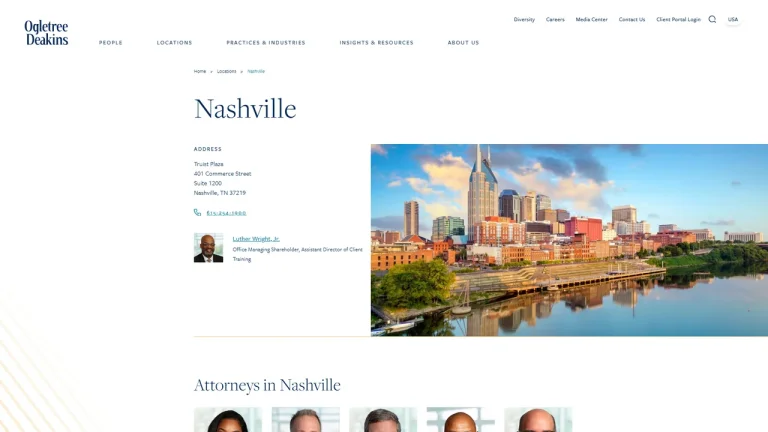
Ogletree Deakins - Nashville, TN
Law Office of Roland T. Hairston, II & Associates - Nashville, TN
Stevie Phillips Law, PLLC - Chattanooga, TN
FordHarrison LLP - Memphis, TN

Hodges, Doughty & Carson, PLLC - Knoxville, TN
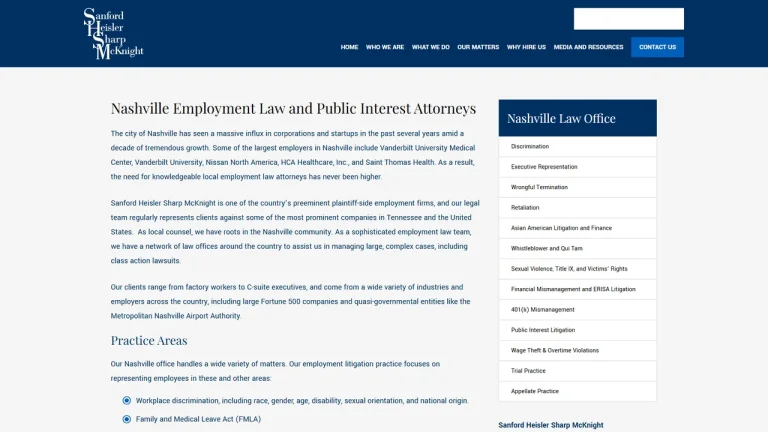
Sanford Heisler Sharp McKnight - Nashville, TN

Tennessee Law Group - Nashville, TN
Wimberly Lawson Wright Daves & Jones, PLLC - Nashville, TN
The Cassell Firm - Nashville, TN

Mikel & Hamill PLLC - Chattanooga, TN
Navigating Tennessee Harassment Laws and Courtroom Jurisdiction
Workplace harassment and unlawful sexual hostility inflict severe emotional and economic devastation on affected individuals throughout Tennessee. From corporate offices in downtown Nashville to logistics centers in Memphis and manufacturing plants in Knoxville and Chattanooga, employers are legally obligated to maintain a work environment free from pervasive hostility, quid pro quo demands, and severe verbal or physical abuse. Navigating these matters requires experienced employment legal counsel.
Civil harassment and hostile work environment lawsuits are litigated within Tennessee Chancery Courts and Circuit Courts across thirty-one judicial districts, or in federal district courts. The Davidson County Chancery Court in Nashville, the Shelby County Circuit Court in Memphis, and federal courthouses across the state regularly preside over complex harassment actions. State document filings are processed electronically through the Tennessee Odyssey e-filing system.
Establishing employer liability for workplace harassment requires demonstrating that management knew or reasonably should have known about the unlawful behavior and failed to implement prompt and effective corrective action. Retaining experienced Tennessee legal counsel ensures that internal grievance protocols, witness statements, and electronic evidence are effectively utilized to establish accountability.
Fee Structures and Scope for Tennessee Harassment Legal Actions
| Case Scenario | Fee Structure | Estimated Cost (USD) | Key Cost Determinants |
|---|---|---|---|
| Quid Pro Quo Sexual Harassment (Conditioned Employment Benefits) | Contingency Fee | 33.3% to 40% of recovery | Written electronic communications (emails/texts), managerial authority status, tangible adverse employment action proof. |
| Hostile Work Environment Litigation (Pervasive Severe Harassment) | Contingency Fee | 33.3% to 40% of gross award | Internal HR report paper trail, witness corroboration, severity and pervasiveness documentation, employer response speed. |
| Civil Protection Order & Injunction Proceedings (Stalking / Harassment) | Flat Fee or Retainer | $1,500 - $4,500 | Evidentiary hearing duration, police incident reports, subpoenaed digital phone records, protective order scope. |
| Retaliatory Discharge Following Harassment Complaint | Contingency / Hybrid | 33.3% to 40% of settlement | Timing between formal HR report and termination, pretextual performance write-ups, emotional distress evaluations. |
Critical Legal Deadlines & Statutes in Tennessee
Workplace harassment in Tennessee is actionable under the Tennessee Human Rights Act (THRA), codified at Tenn. Code Ann. § 4-21-401, which prohibits harassment linked to sex, race, religion, color, age, or national origin as unlawful discrimination. Under Tenn. Code Ann. § 4-21-311, an aggrieved individual must file a direct civil lawsuit in Chancery Court or Circuit Court within one year after the alleged harassing conduct ceases.
For administrative remedies, complaints submitted to the Tennessee Human Rights Commission must be filed within 180 days pursuant to Tenn. Code Ann. § 4-21-302. If proceeding under federal law via Title VII (42 U.S. Code § 2000e-5), workers have up to 300 days to file an EEOC charge, followed by ninety days to initiate suit once a Right to Sue notice is issued. Failing to meet these administrative or judicial filing windows bars financial recovery.
Tennessee imposes statutory damage limitations under Tenn. Code Ann. § 4-21-313, which caps non-economic compensatory awards for emotional anguish based on company size ($25,000 to $300,000), while back pay and attorney fees remain uncapped. For non-workplace harassment and stalking, victims can seek civil protective orders under Tenn. Code Ann. § 39-17-315 and Tenn. Code Ann. § 36-3-601.
Small Claims Limitations vs. Professional Harassment Representation
Understanding court jurisdictional limits is essential when seeking legal remedies for harassment. In Tennessee, county General Sessions Courts handle small claims and civil disputes capped at $25,000 pursuant to Tenn. Code Ann. § 16-15-501. However, General Sessions Courts lack subject matter jurisdiction to grant injunctions or adjudicate statutory hostile work environment claims.
Exclusive jurisdiction over THRA harassment claims resides in Tennessee Chancery Courts and Circuit Courts under Tenn. Code Ann. § 4-21-311. Attempting to pursue harassment claims pro se exposes workers to sophisticated employer defenses. Companies often assert affirmative defenses, arguing that the employer maintained an anti-harassment policy that the employee failed to use.
An experienced Tennessee harassment attorney assists in properly executing internal reporting procedures, securing digital communications, and gathering coworker testimony. Professional counsel establishes employer liability, negotiates severance or damage agreements, and represents your interests at trial to obtain complete accountability.
Red Flags When Hiring a Tennessee Harassment Lawyer
- Advising you to quit your job immediately without documenting the harassment internally or evaluating constructive discharge requirements.
- Failing to recognize that filing with the Tennessee Human Rights Commission does not toll the state court one-year statute of limitations under Tenn. Code Ann. § 4-21-311.
- Demanding non-refundable upfront cash fees for handling meritorious sexual harassment or hostile work environment claims.
- Inability to verify active licensure and clean standing with the Tennessee Supreme Court Board of Professional Responsibility in Nashville.
Frequently Asked Questions
What constitutes illegal workplace harassment under Tennessee law?
Under Tenn. Code Ann. § 4-21-401, harassment is illegal when it is based on a protected characteristic (such as sex, race, or age) and creates an intimidating, hostile, or offensive working environment that alters employment conditions.
What is the time limit to file a sexual harassment lawsuit in Tennessee?
Under Tenn. Code Ann. § 4-21-311, a civil lawsuit under the THRA must be filed in Circuit Court or Chancery Court within one year after the unlawful harassment ceases.
What is the Faragher-Ellerth defense in a Tennessee harassment case?
This legal defense allows an employer to avoid liability if they prove they exercised reasonable care to prevent and promptly correct harassment, and the employee unreasonably failed to take advantage of preventive opportunities.
Can an employer fire me for reporting sexual harassment in Tennessee?
No. Retaliating against an employee for reporting harassment or participating in an investigation is illegal under Tenn. Code Ann. § 4-21-301 and forms an independent cause of action.
Are emotional distress damages capped in Tennessee harassment cases?
Yes. Under Tenn. Code Ann. § 4-21-313, non-economic compensatory damages are subject to statutory caps between $25,000 and $300,000 depending on the employer's total workforce size.