
Immigration Lawyers in Tennessee
Connect with top Tennessee immigration lawyers to secure visas, defend against deportation, and navigate USCIS and federal immigration court procedures smoothly. Skilled legal advocates protect your status under complex statutory deadlines, resolving administrative challenges to prevent prolonged court detention. Browse our verified statewide directory below to schedule a case review with an experienced Tennessee immigration attorney.

Mwose Law Firm - Immigration Counsel - Nashville, TN

Amann Law Firm - Memphis, TN

Donati Law, PLLC Memphis - Memphis, TN

Saev Hernandez Immigration Practice, PLLC - Nashville, TN
Andrew J. Rankin, Esq. - Memphis, TN
Hernandez Immigration Law Firm - Nashville, TN
Advocates for Immigrant Rights - Memphis, TN

OMER & ASSOCIATES, PLLC - Nashville, TN
Kathy Rivas, KR Law Firm - Memphis, TN

Jennings Immigration Law Office - Knoxville, TN

Xio Camacho Law Office - Memphis, TN
Law Offices of Valerie Lopez - Memphis, TN
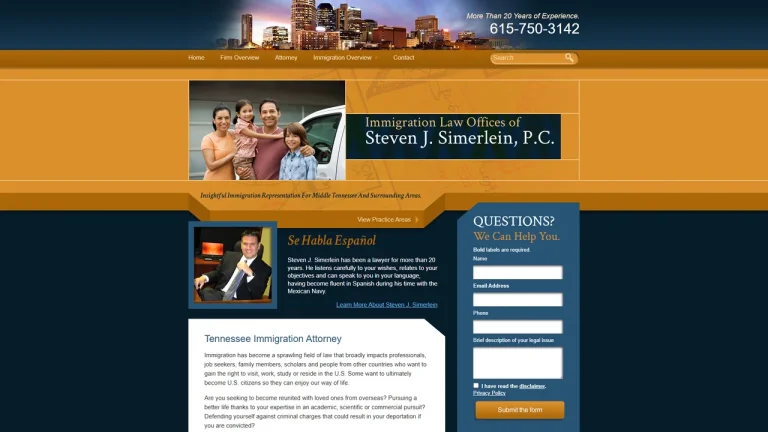
Law Offices of Steven J. Simerlein, P.C. - Nashville, TN

Law Office of Rachel Bonano, PLLC - Knoxville, TN

Chugh, LLP - Attorneys & CPAs - Nashville, TN
Immigration Law Offices of Rafael A. Velez - Nashville, TN

Shirazi Immigration Law, Inc. - Chattanooga, TN

Herrera Still, PLLC - Knoxville, TN

Heeg Law, PLLC - Nashville, TN

Brittany Thomas Faith - Chattanooga, TN

Brand Law Office - Nashville, TN
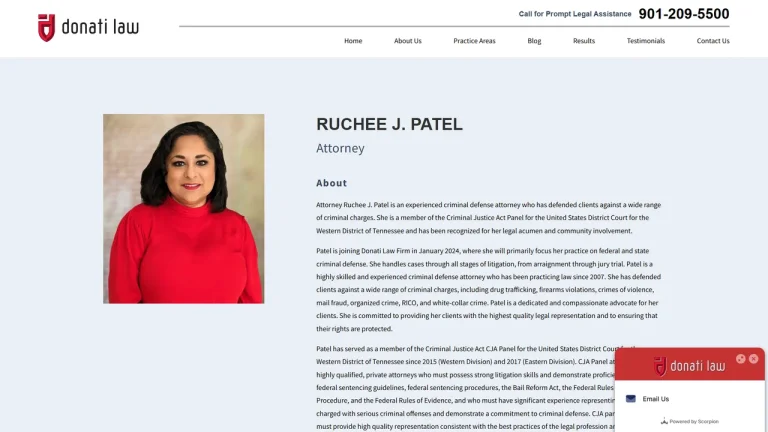
Ruchee J Patel - Attorney at Law - Memphis, TN
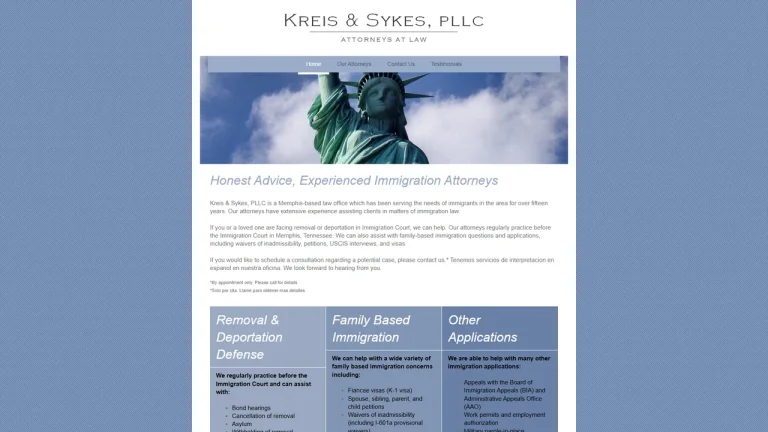
Kreis and Sykes, PLLC - Memphis, TN

Navigating Tennessee Immigration Law and Federal Agency Jurisdiction
Immigration law across Tennessee operates at the intersection of federal statutory mandates and local administrative procedures. Whether pursuing employment-based visas in the healthcare and corporate centers of Nashville, agricultural authorizations across Middle and East Tennessee, or family petitions in Memphis and Chattanooga, retaining local legal counsel provides vital protection. Navigating immigration requirements demands an attorney who understands both federal regulations and local agency practices.
While immigration is governed primarily by federal statutes, proceedings in the Volunteer State are anchored by regional federal offices. The Executive Office for Immigration Review (EOIR) operates the Memphis Immigration Court on Monroe Avenue, which holds jurisdiction over all non-detained removal proceedings originating across Tennessee. Affirmative petitions and adjustment interviews are conducted through United States Citizenship and Immigration Services (USCIS) field offices in Memphis and Nashville. Federal appeals from adverse rulings proceed to the Board of Immigration Appeals and the United States Court of Appeals for the Sixth Circuit.
Local immigration practitioners understand the evidentiary expectations of judges at the Memphis Immigration Court and the procedural nuances of Tennessee USCIS field offices. Navigating immigration proceedings with knowledgeable counsel minimizes the risk of procedural denials, status abandonment, or unexpected detention during status interviews.
Typical Fee Structures and Scope for Tennessee Immigration Cases
| Case Scenario | Fee Structure | Estimated Cost (USD) | Key Cost Determinants |
|---|---|---|---|
| Family-Based Adjustment of Status (Form I-130 & I-485) | Flat Fee | $2,500 - $6,000 | Lawful entry documentation, affidavit of support sufficiency, Request for Evidence (RFE) handling, USCIS field office interview attendance. |
| Affirmative or Defensive Asylum Application | Flat Fee or Retainer | $4,500 - $10,000+ | Country conditions reports, psychological evaluations, corroborating witness declarations, Memphis Immigration Court hearing duration. |
| Removal Defense & Cancellation of Removal (EOIR Memphis) | Hourly Retainer or Stage Flat Fee | $5,000 - $14,000+ | Prior state criminal history analysis, bond redetermination motions, exceptional hardship proof for qualifying relatives, trial preparation. |
| Employment-Based Visa Petition (H-1B, L-1, or EB Categories) | Flat Fee | $3,500 - $9,000 | Department of Labor prevailing wage determinations, PERM labor certification complexity, corporate specialty occupation evidence. |
Critical Legal Deadlines & Statutes in Tennessee
Navigating immigration proceedings requires strict adherence to federal statutory timelines. Under 8 U.S. Code § 1158, individuals seeking asylum must file their application within one year of arriving in the United States. Failing to meet this one-year statutory deadline bars asylum relief unless extraordinary circumstances or changed country conditions can be established.
Formal removal proceedings are governed by 8 U.S. Code § 1229a before the Memphis Immigration Court. Noncitizens placed in removal proceedings must respond to the Notice to Appear (NTA) and attend all scheduled master calendar and individual hearings. Under 8 U.S. Code § 1229b, nonpermanent residents facing removal may petition for cancellation of removal if they demonstrate ten years of continuous physical presence, good moral character, and exceptional and extremely unusual hardship to a qualifying United States citizen or lawful permanent resident spouse, parent, or child.
Status adjustments are governed by 8 U.S. Code § 1255. Furthermore, all noncitizens residing in Tennessee must comply with 8 U.S. Code § 1305, which mandates reporting any change of address to USCIS or the Memphis Immigration Court on Form EOIR-33 within ten days of moving. Failing to update an address can result in hearing notices being sent to an old residence, leading to an immediate in absentia removal order.
Small Claims Limitations vs. Professional Immigration Representation
Understanding the boundaries of court jurisdiction is vital for Tennessee residents. In Tennessee, county General Sessions Courts handle small claims and civil disputes capped at $25,000 pursuant to Tenn. Code Ann. § 16-15-501. However, Tennessee state and county courts possess zero legal authority or subject matter jurisdiction over immigration petitions, deportation defense, or naturalization.
Immigration matters reside entirely within federal administrative agencies and federal courts. Attempting to represent oneself before USCIS or the Memphis Immigration Court carries substantial risks. A missed court appearance triggers an automatic order of deportation without a hearing, and inadvertent errors on immigration forms can result in permanent bans for misrepresentation.
Retaining a licensed immigration attorney ensures that your rights are safeguarded throughout the legal process. Legal counsel prepares comprehensive filings, responds to government evidentiary requests, challenges deportation charges, and explores relief options such as waivers of inadmissibility, prosecutorial discretion, and temporary protected status. Experienced representation provides the strategic support necessary to achieve lawful residency.
Red Flags When Hiring a Tennessee Immigration Lawyer
- Utilizing non-attorney "notarios" or unauthorized document preparers who promise guaranteed visa approvals or fast-tracked work permits.
- Guarantees of asylum grants or permanent residency before reviewing travel history, entry documentation, and prior immigration records.
- Demanding unitemized cash payments without providing a formal written representation agreement outlining attorney fees and government filing costs.
- Inability to verify active standing with the Tennessee Supreme Court Board of Professional Responsibility or unverified authorization on the EOIR attorney registry.
Frequently Asked Questions
Where is the federal immigration court located in Tennessee?
The Executive Office for Immigration Review operates the Memphis Immigration Court located at 80 Monroe Avenue in downtown Memphis, which hears removal cases for respondents across Tennessee.
What is the deadline to apply for asylum in Tennessee?
Under 8 U.S. Code § 1158, an applicant must submit Form I-589 within one year of their arrival in the United States, absent proof of changed country conditions or extraordinary circumstances.
Can a notary public or notario represent me in immigration court in Tennessee?
No. In the United States, notaries public are not attorneys and are strictly prohibited from giving legal advice or representing individuals in immigration court. Only licensed attorneys or DOJ-accredited representatives can represent you.
What happens if I miss an immigration court hearing in Memphis?
Under 8 U.S. Code § 1229a, failing to appear for a scheduled hearing will result in the immigration judge issuing an in absentia removal order, ordering you deported in your absence.
Which agency processes affirmative green card applications in Tennessee?
Affirmative family-based and employment-based green card applications are processed by United States Citizenship and Immigration Services (USCIS), with field offices conducting interviews in Nashville and Memphis.