
Employment & Labor Lawyers in Memphis
Retaining a dedicated Memphis employment and labor lawyer protects your workplace rights against wrongful termination, retaliation, and unpaid wage violations. Experienced attorneys navigate EEOC filings, severance agreements, and federal court litigation to secure maximum compensation. Explore our verified directory below to consult an experienced Shelby County employment attorney today.
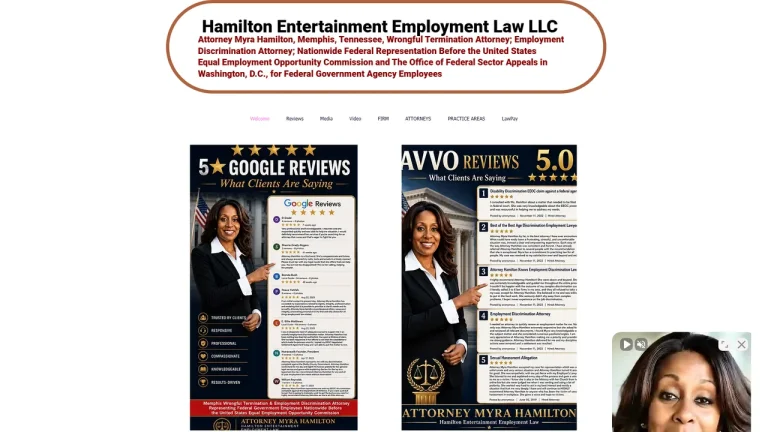
Hamilton Entertainment and Employment Law, LLC - Memphis, TN
Law Office of Craig & Lofton, P.A. - Memphis, TN

Donati Law, PLLC Memphis - Memphis, TN

Steve Wilson Firm - Memphis, TN
Farris Bobango PLC (Now Phelps Dunbar) - Memphis, TN

The Crone Law Firm, PLC - Memphis, TN
FordHarrison LLP - Memphis, TN
Punchwork - Memphis, TN
Jill Steinberg - Baker Donelson - Memphis, TN

Markowitz Law Group, P.C. - Memphis, TN

The Tansey Law Firm - Memphis, TN

Darrell J O'Neal Law Offices - Memphis, TN
Baker Donelson - Memphis, TN

Adelman Firm - Memphis, TN

Butler Snow LLP - Memphis, TN
Dinkelspiel Rasmussen and Mink PLLC - Memphis, TN

Allen, Summers, Simpson, Lillie & Gresham, PLLC - Memphis, TN

Your Company's Employment Lawyer (The Crone Law Firm) - Memphis, TN
Hall Booth Smith, P.C. - Memphis, TN

Wener and Associates, P.C. - Memphis, TN
Law Office of Walter Evans - Memphis, TN
Ross E. Webster - Attorney at Law - Memphis, TN
Edward L. Stanton III - Memphis, TN

Employment & Labor Law in the 30th Judicial District
Navigating employment disputes in Memphis requires extensive experience with both federal labor statutes and Tennessee employment laws. As a global logistics and transportation capital anchored by major air freight hubs, healthcare networks, corporate headquarters, and distribution corridors throughout Shelby County, Memphis workplaces face frequent employment conflicts.
Workplace disputes originate across corporate offices in East Memphis, healthcare campuses in Midtown, and industrial distribution centers near Memphis International Airport. Claims may be litigated in the Shelby County Chancery Court at 140 Adams Avenue or before the U.S. District Court for the Western District of Tennessee on North Main Street. Before filing federal discrimination claims, workers must exhaust administrative proceedings through the EEOC Memphis District Office on Union Avenue.
Retaining a skilled Memphis employment attorney ensures that unlawful retaliation, sexual harassment, racial discrimination, Family and Medical Leave Act (FMLA) denials, and wage violations are thoroughly documented. Local counsel provides the strategic leverage required to negotiate favorable executive severance packages or file aggressive civil complaints in court.
Typical Employment Legal Services & Fee Schedules in Memphis
| Case Scenario | Fee Structure | Estimated Cost (USD) | Key Cost Determinants |
|---|---|---|---|
| Severance Package Review & Negotiation | Flat Review Fee / Hourly ($275 - $425/hr) | $850 - $2,500 | Non-compete covenants, trade secret restrictions, executive compensation analysis. |
| EEOC / THRC Administrative Charge Filing | Hourly / Contingency Hybrid | $1,500 - $4,000 | Document review, drafting formal intake declarations, employer position statement rebuttal. |
| Wrongful Termination & Retaliation Lawsuit | Contingency Fee (33.3% - 40%) | $0 upfront ($5,000 - $25,000 advanced costs) | Deposition of corporate managers, electronic discovery, defense summary judgment motions. |
| FLSA Overtime & Wage Theft Collective Action | Court-Approved Contingency / Statutory Fee-Shifting | $0 upfront (costs deducted from recovery) | Number of affected hourly workers, electronic payroll audits, collective certification. |
Critical Legal Deadlines & Statutes in Tennessee
Employment litigation in Memphis is strictly regulated by procedural deadlines across federal and Tennessee state laws:
- Tennessee Human Rights Act Filing Deadline: Under Tenn. Code Ann. § 4-21-311, a civil action alleging workplace discrimination under state law must be filed within one year after the alleged discriminatory practice ceased.
- EEOC Charge Filing Window: Under Title VII of the Civil Rights Act of 1964 pursuant to 42 U.S. Code § 2000e-5(e)(1), employees in Tennessee must file a charge of discrimination with the EEOC within 300 days of the unlawful employment action.
- Tennessee Whistleblower Protection: Under the Tennessee Public Protection Act codified at Tenn. Code Ann. § 50-1-304, employees cannot be terminated solely for refusing to participate in or remain silent regarding illegal employer practices.
- Wage and Hour Recovery Deadlines: Lawsuits for unpaid overtime or minimum wages under the Fair Labor Standards Act must be brought within two years under 29 U.S. Code § 255(a), or within three years if the employer's violation was willful.
- Federal Right-to-Sue Window: Upon receiving a Notice of Right to Sue from the EEOC, an employee must initiate their federal civil complaint within 90 days pursuant to 42 U.S. Code § 2000e-5(f)(1).
General Sessions Civil Limits vs. Federal Employment Litigation
In Shelby County, small monetary claims up to $25,000 can be heard in General Sessions Court pursuant to Tenn. Code Ann. § 16-15-501(d)(1). While General Sessions may be appropriate for collecting a small unpaid final paycheck, complex employment discrimination, harassment, and wrongful termination claims cannot be handled in this forum.
Employment litigation requires exhaustive discovery, electronic records subpoenas, and adherence to strict statutory exhaustion requirements before the EEOC or THRC. Furthermore, employers are defended by large corporate law firms that aggressively file motions to dismiss. An experienced Memphis employment lawyer understands the nuances of Western District of Tennessee federal court practice, leveraging statutory fee-shifting provisions under Title VII and the FLSA to hold employers financially accountable.
Red Flags When Hiring a Memphis Employment Lawyer
- Missing the Strict EEOC or THRA Deadlines: Failing to file within the 180/300-day window or missing the 90-day Right-to-Sue deadline permanently destroys your legal claim.
- Promising Large Financial Verdicts Early: Legitimate attorneys cannot quantify damages without examining company personnel files, comparable wage data, and mitigation efforts.
- Demanding Large Upfront Hourly Retainers for Clear Wrongful Discharge: Established plaintiff employment firms often take strong retaliation claims on contingency or hybrid structures.
- Lack of Admission or Experience in the Western District of Tennessee: Many employment claims are removed to the federal courthouse on North Main Street; counsel must be admitted and active in federal practice.
Frequently Asked Questions
Is Tennessee an at-will employment state?
Yes. Tennessee is an employment-at-will state, meaning employers may terminate an employee for any reason or no reason at all. However, an employer cannot fire an employee for discriminatory reasons or in retaliation for engaging in legally protected whistleblowing activities.
How long do I have to file an employment discrimination claim in Memphis?
You have up to 300 days from the discriminatory incident to file a charge with the EEOC under 42 U.S. Code § 2000e-5, or one year to file a direct state civil complaint under the Tennessee Human Rights Act pursuant to Tenn. Code Ann. § 4-21-311.
What constitutes wrongful termination in Memphis?
Wrongful termination occurs when an employee is discharged in violation of statutory anti-discrimination laws, in retaliation for reporting illegal employer conduct under Tenn. Code Ann. § 50-1-304, or for taking protected leave under the Family and Medical Leave Act.
Can an employer retaliate against me for reporting illegal workplace conduct?
No. Under the Tennessee Public Protection Act (Tenn. Code Ann. § 50-1-304), employers are strictly prohibited from terminating or disciplining an employee solely because they refused to participate in or reported illegal activities.
Who pays my legal fees in a successful wage or discrimination case?
Under federal fee-shifting statutes such as Title VII and the Fair Labor Standards Act (29 U.S. Code § 216(b)), the court may order the employer to pay the plaintiff's reasonable attorney fees and litigation costs upon a successful verdict or settlement.