
Medical Malpractice Lawyers in Memphis
Securing skilled medical malpractice legal representation in Memphis protects your rights under strict Tennessee statutory deadlines. Experienced trial attorneys routinely resolve complex medical disputes through decisive pre-trial negotiation and mediation, avoiding prolonged courtroom litigation. Explore our directory below to consult verified local counsel serving Shelby County.

Songstad Law Firm - Randall Songstad - Memphis, TN

Spence Partners - Memphis, TN
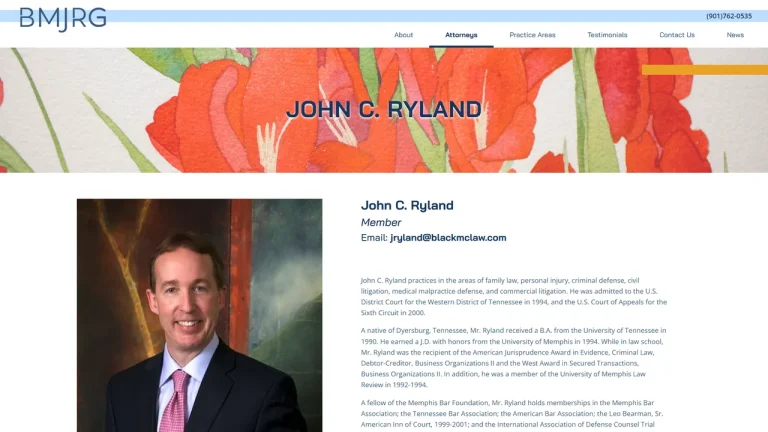
John C. Ryland - Memphis, TN

Baker Donelson - Memphis, TN

The Law Office of David E. Gordon and Elissa M. Coombs - Memphis, TN

Pfrommer & Castle Law Firm - Memphis, TN
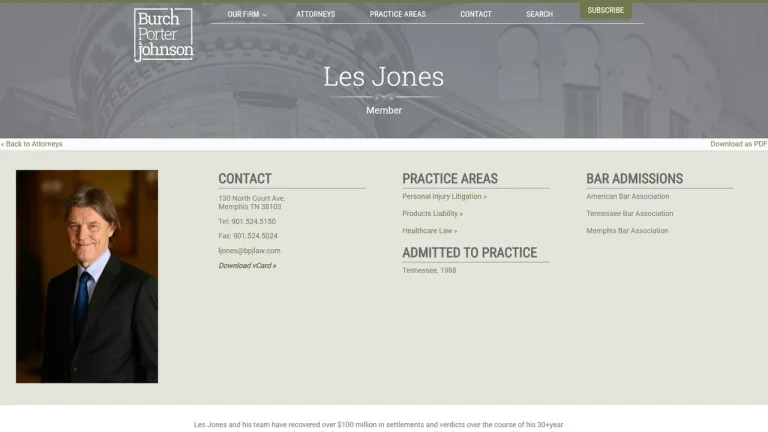
Les Jones - Burch, Porter & Johnson - Memphis, TN
Cory Watson Attorneys - Memphis, TN

Glassman Wyatt Tuttle and Cox PC - Memphis, TN

Holton Law Firm - Memphis, TN

McDonald Kuhn PLC - Memphis, TN

The Cochran Firm Mid-South - Memphis, TN

Alders and Lewellyn, PLLC - Memphis, TN

Hall Booth Smith, P.C. - Memphis, TN

Ballin, Ballin & Fishman, P.C. - Memphis, TN

Bass, Berry & Sims PLC - Memphis, TN

Hickman, Goza & Spragins, PLLC - Memphis, TN

Law Office of Handel R. Durham, Jr. - Memphis, TN

Adelman Firm - Memphis, TN
The Angelakis Law Firm - Memphis, TN

Adams and Reese LLP: Cannon F Allen, Sr. - Memphis, TN

The Wharton Law Firm - Memphis, TN

McNabb Bragorgos Burgess and Sorin PLLC - Memphis, TN

Navigating Medical Malpractice Litigation in Memphis, Tennessee
Medical negligence claims in Memphis involve high-stakes litigation against prominent healthcare networks, including Methodist Le Bonheur Healthcare, Baptist Memorial Health Care, and Regional One Health. Establishing physician or hospital liability requires an intimate command of local procedural hurdles within Shelby County courts. Injured patients must confront institutional defense legal teams equipped with substantial resources.
Healthcare liability lawsuits originating in Memphis fall under the jurisdiction of the Shelby County Circuit Court, part of the 30th Judicial District of Tennessee, situated at the Shelby County Courthouse on Adams Avenue. If federal claims or complete diversity of citizenship exist, cases may proceed before the U.S. District Court for the Western District of Tennessee located on North Main Street in Downtown Memphis.
Retaining local legal counsel based in Shelby County provides distinct strategic advantages. Experienced attorneys understand the evidentiary standards favored by local judges, maintain established relationships with qualified medical experts, and understand how to navigate the complex discovery processes necessary to hold negligent hospitals accountable.
Legal Fee Structures for Memphis Medical Malpractice Claims
| Case Scenario | Fee Structure | Estimated Cost (USD) | Key Cost Determinants |
|---|---|---|---|
| Pre-Suit Records Review & Merit Screening | Flat Fee / Retained Expense | $1,000 - $3,500 | Hospital record volume, clinical audit fees, and independent physician chart reviews. |
| Settlement via Pre-Trial Negotiation or Mediation | Standard Contingency Fee | 33.3% of recovery | Clarity of diagnostic liability, pre-trial settlement timing, and institutional insurer posture. |
| Complex Surgical Error or Catastrophic Injury Trial | Contingency Fee (Post-Filing) | 33.3% - 40% of recovery | Multi-week jury trial duration, multiple specialist depositions, and forensic economic models. |
| Specialized Expert Witness & Good Faith Certification | Advanced Litigation Expense | $7,500 - $35,000+ | Medical specialty board certifications, out-of-town expert travel, and deposition transcripts. |
Critical Legal Deadlines & Statutes in Tennessee
Tennessee enforces some of the most rigorous healthcare litigation deadlines in the nation. Under Tenn. Code Ann. § 29-26-116, claimants must file a healthcare liability lawsuit within one year from the date the injury was discovered, or through the exercise of reasonable diligence should have been discovered. The state imposes a strict three-year statute of repose from the date of the negligent act, barring virtually all actions regardless of discovery date, except in cases of fraudulent concealment or foreign objects left in the patient.
Before filing a complaint in Shelby County Circuit Court, claimants must serve a mandatory 60-day pre-suit notice on each healthcare provider under Tenn. Code Ann. § 29-26-121. Compliance with this provision extends the applicable statute of limitations by 120 days. Furthermore, Tenn. Code Ann. § 29-26-122 mandates filing a Certificate of Good Faith with the initial complaint, confirming that a licensed medical expert in a related field has executed a written statement affirming the case has legitimate merit.
Claimants must also account for statutory caps on non-economic damages under Tenn. Code Ann. § 29-39-102, which limits recovery for pain and suffering to $750,000, or up to $1,000,000 in catastrophic situations involving spinal cord paralysis, amputations, or wrongful death of a custodial parent.
Shelby County General Sessions Court vs. Circuit Court Representation
While the Shelby County General Sessions Court (Civil Division) possesses a jurisdictional threshold of up to $25,000 under Tenn. Code Ann. § 16-15-501, medical malpractice claims can virtually never be prosecuted effectively pro se in small claims proceedings. The Tennessee Health Care Liability Act strictly requires expert witness testimony to establish both the standard of care and proximate cause.
Attempting to file a pro se claim against hospital legal teams invariably results in immediate motions for summary dismissal due to non-compliance with statutory pre-suit notices or expert certification filings. Retaining a qualified Memphis medical malpractice attorney ensures strict adherence to court procedures, manages advanced litigation costs, and positions the claim for substantial recovery in the 30th Judicial District Circuit Court.
Red Flags to Avoid When Selecting a Memphis Malpractice Attorney
- Demanding substantial upfront legal retainers for representation that should traditionally operate under a contingent fee arrangement.
- Promising specific multi-million dollar outcomes during initial consultations before procuring clinical records or independent expert reviews.
- Lacking direct courtroom trial experience in the Shelby County Courthouse or the Western District of Tennessee.
- Reluctance to invest financial capital in independent expert witnesses required under the Tennessee Health Care Liability Act.
Frequently Asked Questions
What is the statute of limitations for medical malpractice in Memphis, Tennessee?
Under Tennessee law, a healthcare liability lawsuit must generally be initiated within one year from the date the injury was discovered. However, an overall three-year statute of repose sets an absolute deadline from the date the negligent treatment occurred, subject to limited exceptions for foreign objects or fraudulent concealment.
What is a Certificate of Good Faith under Tennessee law?
A Certificate of Good Faith is a mandatory document that must accompany a medical malpractice complaint filed in Tennessee courts. It certifies that the plaintiff or their attorney consulted a qualified medical expert who reviewed the medical records and concluded there is a good-faith basis to maintain the action.
Are non-economic damages capped in Memphis medical malpractice lawsuits?
Yes, Tennessee law caps non-economic damages, such as pain and suffering or mental anguish, at $750,000 per occurrence. This limit may increase to $1,000,000 in cases involving catastrophic injuries, such as severe spinal trauma, multiple amputations, or the death of a parent with minor children.
What is the mandatory 60-day pre-suit notice requirement?
Before filing a medical malpractice lawsuit in Shelby County, the claimant must give written notice of the potential claim to every healthcare provider involved at least 60 days in advance. Properly executing this statutory notice extends the applicable statute of limitations by 120 days.
How do medical malpractice attorneys in Memphis charge for their services?
Most Memphis medical negligence attorneys work on a contingency fee basis. This means the attorney advances all litigation expenses and charges no upfront legal fees, collecting an agreed-upon percentage of the recovery only if the case results in a successful settlement or court verdict.