
Wage & Hour Lawyers in Memphis
Retaining a skilled Memphis wage and hour lawyer protects your earnings and overtime rights under the Fair Labor Standards Act and Tennessee wage statutes. Dedicated legal counsel navigates complex payroll audits, resolves misclassification claims, and recovers unpaid compensation through negotiations or collective actions to minimize workplace friction. Explore our verified directory below to schedule a case review with an employment attorney in Shelby County today.
Fisher Phillips LLP - Memphis, TN
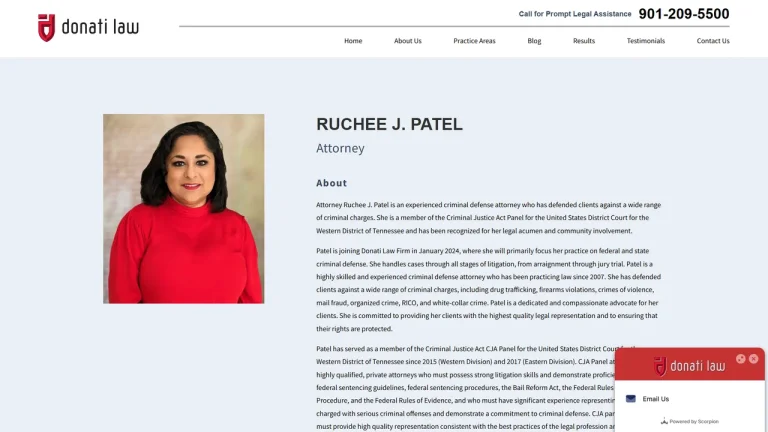
Ruchee J Patel - Attorney at Law - Memphis, TN

Donati Law, PLLC Memphis - Memphis, TN
Punchwork - Memphis, TN

Ogletree Deakins - Memphis, TN

Ross E. Webster - Attorney at Law - Memphis, TN
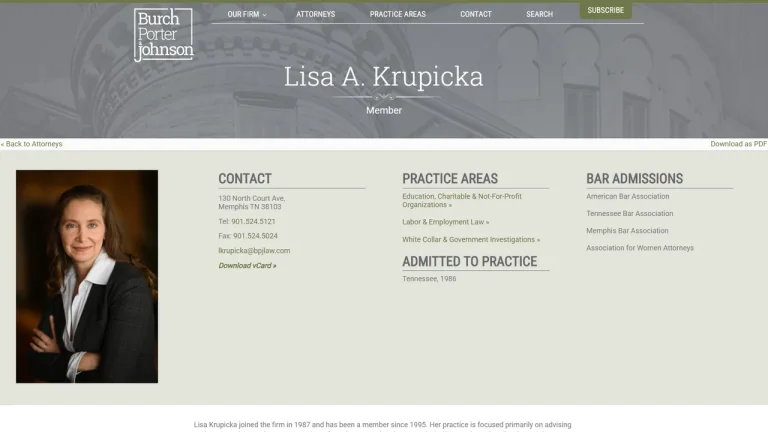
Lisa A. Krupicka - Memphis, TN

Norwood & Atchley - Memphis, TN

Your Company's Employment Lawyer (The Crone Law Firm) - Memphis, TN

Johnson & Bennett, PLLC - Memphis, TN

Allen, Summers, Simpson, Lillie & Gresham, PLLC - Memphis, TN

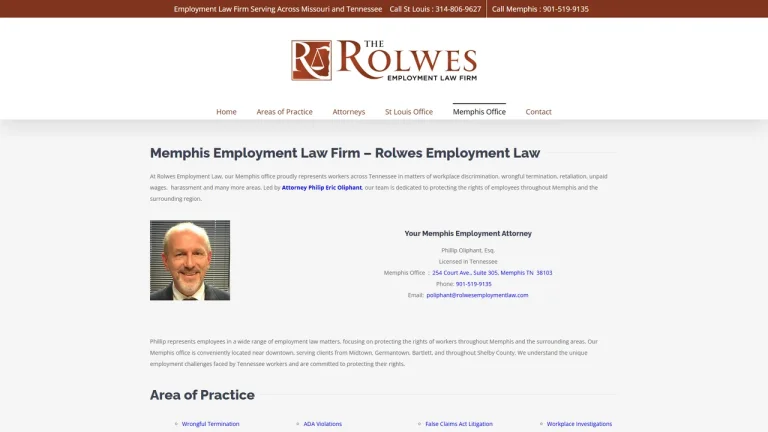
The Rolwes Employment Law Firm - Memphis, TN
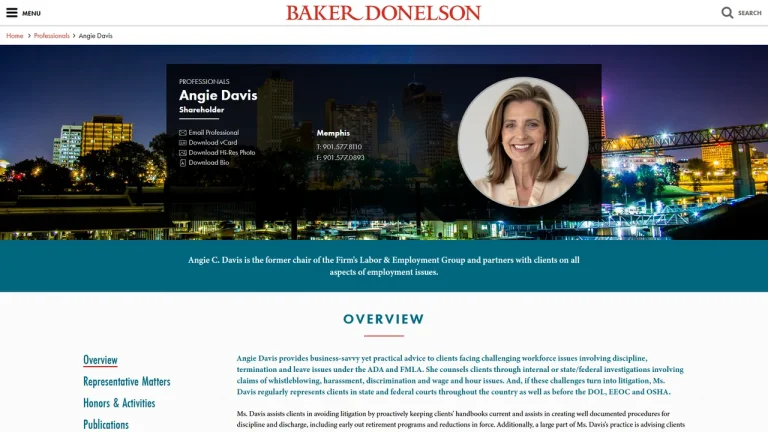
Angie C. Davis - Attorney at Law - Memphis, TN

The Tansey Law Firm - Memphis, TN

Littler Mendelson P.C. - Memphis, TN

The Crone Law Firm, PLC - Memphis, TN
FordHarrison LLP - Memphis, TN
Enforcing Fair Pay and Overtime Standards in Memphis and Shelby County
As a premier international logistics center, manufacturing corridor, and hospitality hub, Memphis employs tens of thousands of workers across freight terminals, distribution warehouses, healthcare networks, and dining establishments. Unfortunately, systemic payroll errors-such as unpaid pre-shift work, off-the-clock duties, misclassification of hourly workers as exempt managers or independent contractors, and withheld tip pools-remain widespread across Shelby County.
Wage and hour lawsuits originating in Memphis frequently proceed under federal jurisdiction before the U.S. District Court for the Western District of Tennessee at the Clifford Davis and Odell Horton Federal Building on North Main Street. State-level wage claims, breach of employment agreements, and final paycheck disputes are litigated in the 30th Judicial District of Tennessee at the Shelby County Courthouse on Adams Avenue.
Enlisting a local Memphis wage and hour attorney ensures that electronic timecards, dispatch logs, payroll records, and scanner badge swipes are promptly preserved. Experienced counsel understands how to structure individual claims or multi-plaintiff collective actions against regional employers, ensuring workers recover every dollar owed.
Legal Fee Structures for Memphis Wage & Hour Claims
| Case Scenario | Fee Structure | Estimated Cost (USD) | Key Cost Determinants |
|---|---|---|---|
| Individual Unpaid Overtime / Off-the-Clock Claim | Contingency Fee | 33.3% of recovery ($0 upfront) | Timecard audit clarity, employer payroll records, liquidated damages eligibility |
| Independent Contractor Misclassification | Contingency Fee | 33.3% - 40% of recovery | Degree of behavioral control, 1099 documentation, unpaid overtime volume |
| Tipped Employee Minimum Wage & Tip-Pool Violation | Contingency Fee | 33.3% - 40% of recovery | Tip credit compliance, manager participation in tip pool, hours worked |
| Multi-Plaintiff Collective Action / Federal Trial | Statutory Fee-Shifting / Contingency | Court-awarded fees or 40% | Scope of class certification, electronic discovery, deposition volume |
Critical Legal Deadlines & Statutes in Tennessee
Primary wage and overtime protections in Memphis are governed by the federal Fair Labor Standards Act (FLSA). Under 29 U.S. Code § 207, non-exempt employees must receive overtime compensation at one and one-half times their regular hourly rate for all hours worked in excess of 40 in a workweek. Under 29 U.S. Code § 216(b), prevailing employees are entitled to recover 100 percent liquidated damages (double damages) plus mandatory reasonable attorney fees.
Statutory deadlines to file wage claims are governed by 29 U.S. Code § 255(a). Claimants have a standard two-year statute of limitations from the date unpaid wages were earned. However, if the employer's violation was willful-meaning the company knew or showed reckless disregard for whether its pay practices violated federal law-the limitations period extends to three years.
Under Tennessee state law, the Tennessee Wage Regulation Act, codified at Tenn. Code Ann. § 50-2-103, governs regular paydays, unlawful wage deductions, and mandates that terminated employees receive their final paycheck no later than the next regular payday or within 21 days following separation. Breach of express wage contracts carries a six-year limitations period under Tenn. Code Ann. § 28-3-109(a)(3).
Small Claims Limits vs. Professional Representation in Memphis
The Shelby County General Sessions Court exercises jurisdiction over small claims matters up to $25,000 under Tenn. Code Ann. § 16-15-501. For an isolated dispute over a final paycheck or a single missed wage payment within this dollar limit, filing a pro se warrant in General Sessions Court can provide an affordable, straightforward remedy.
However, systemic wage theft involving off-the-clock warehouse shifts, automatic meal break deductions, or misclassified salaried positions rapidly accumulates substantial back pay and matching statutory liquidated damages that surpass the $25,000 cap. Proving wage claims requires federal electronic discovery protocols, subpoenas of enterprise time-tracking software, and resistance to corporate arbitration motions. Working with an attorney in the U.S. District Court in Memphis ensures that your statutory right to double damages and employer-paid attorney fees under 29 U.S. Code § 216(b) is fully enforced.
Red Flags & Hiring Considerations in Wage & Hour Litigation
- Demanding large upfront retainers from hourly workers when the FLSA specifically provides mandatory fee-shifting and contingency models.
- Failure to warn employees that the statute of limitations under 29 U.S. Code § 255(a) continues to run every day until a lawsuit or collective action opt-in notice is formally filed.
- Lack of trial experience in the U.S. District Court for the Western District of Tennessee in handling collective action conditional certifications.
- Inability to conduct detailed forensic audits of time-tracking software, badge swipes, and payroll paystubs to calculate accurate regular rate overtime figures.
Frequently Asked Questions
How is overtime calculated under the Fair Labor Standards Act?
Under 29 U.S. Code § 207, non-exempt employees must receive one and one-half times their regular hourly rate for all hours worked beyond 40 in a single designated workweek.
How long do I have to file an unpaid wage or overtime lawsuit in Memphis?
Under 29 U.S. Code § 255(a), you have two years from the payday the wages were withheld, extending to three years if the employer's violation was willful.
Can I recover additional money beyond my unpaid back wages?
Yes. Under 29 U.S. Code § 216(b), employees can recover 100 percent liquidated damages matching their unpaid wages, effectively doubling their recovery, along with attorney fees.
When must an employer in Tennessee issue a final paycheck?
Under Tenn. Code Ann. § 50-2-103, employers must pay all wages due no later than the next regular payday or within 21 days following separation, whichever occurs later.
Can my employer retaliate against me for reporting unpaid wages or overtime?
No. Retaliating against an employee for asserting wage rights or participating in an FLSA proceeding is strictly unlawful and creates grounds for a separate retaliation lawsuit.