
Business & Real Estate Lawyers in Nashville
Engaging a skilled business and real estate lawyer in Nashville safeguards your commercial transactions and real property assets across Davidson County. Experienced counsel can draft ironclad agreements and resolve contractual conflicts through pre-litigation negotiation to avoid expensive court intervention. Explore our directory below to schedule an initial consultation today.

Baumgardner & Spata, LLP - Nashville, TN

Schaffer Law Firm PLLC - Nashville, TN

Carroll Law Office - Debora Carroll - Nashville, TN
Collins Legal, PLC - Nashville, TN
Stites and Harbison, PLLC - Nashville, TN

Trammell Love Law Firm - Nashville, TN
SoBro Law Group, PLLC - Nashville, TN
Evans, Jones & Reynolds - Nashville, TN

Exo Legal PLLC - Nashville, TN

Rogers Law (Cole Rogers) - Nashville, TN
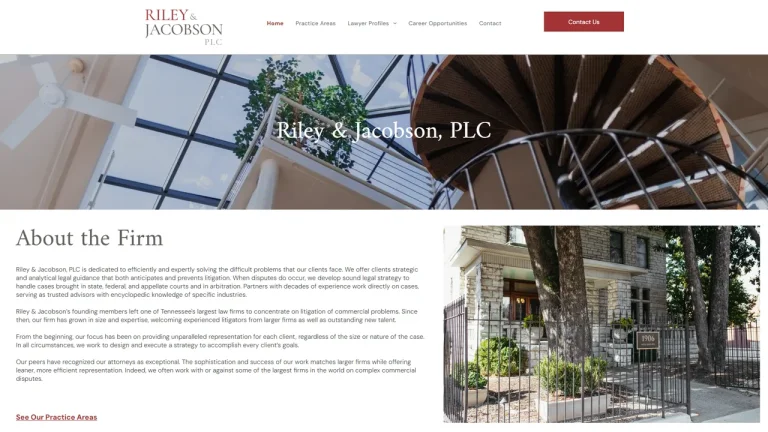
Riley & Jacobson, PLC - Nashville, TN

Shute Law PLLC - Nashville, TN
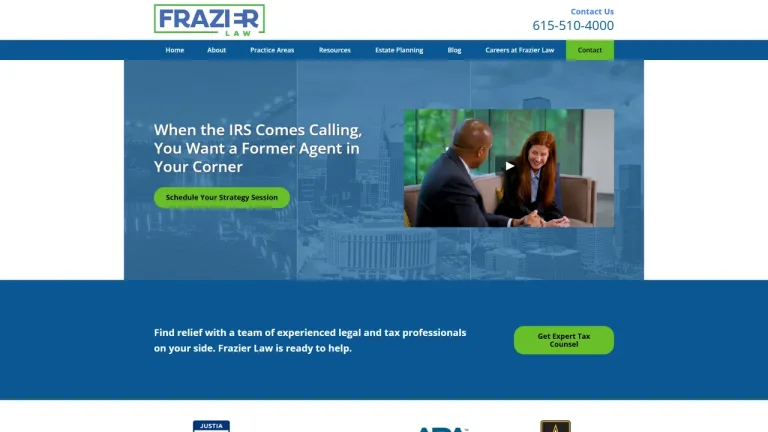
Frazier Law - Nashville, TN
Bankers Title & Escrow Co - Nashville, TN

Lieff Cabraser Heimann and Bernstein, LLP - Nashville, TN
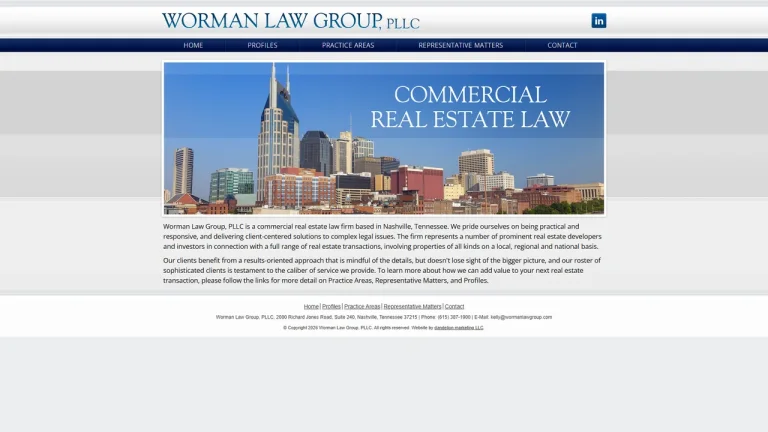
Worman Law Group, PLLC - Nashville, TN
Law Offices of Barry J. Gammons - Nashville, TN

Wilkins & Ivey - Nashville, TN

E. Andrew Norwood - Nashville, TN
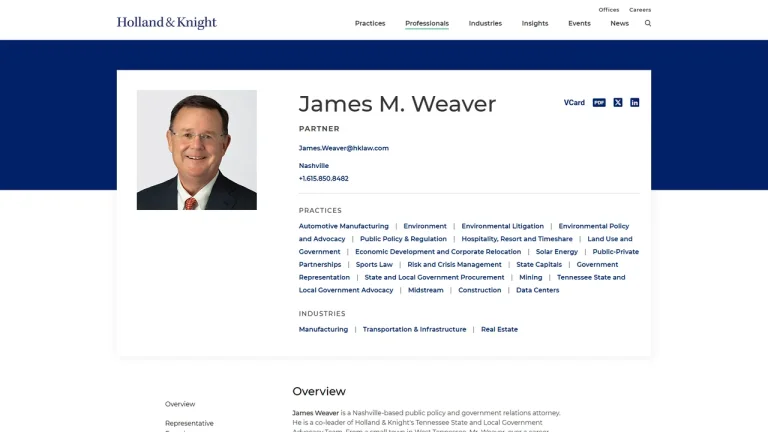
James M. Weaver (Holland & Knight) - Nashville, TN

Ames Davis - Nashville, TN

Whiskey Ghost Entertainment - Nashville, TN

Bass, Berry & Sims PLC - Nashville, TN
Business Governance and Real Property Law in Nashville
Nashville's commercial growth and active property market require experienced legal counsel for commercial transactions, entity structuring, and property disputes. Business and real estate matters within Davidson County fall under the jurisdiction of the 20th Judicial District of Tennessee, where equitable remedies, commercial actions, and title disputes are adjudicated within the Davidson County Chancery Court at the Historic Metro Courthouse in Downtown Nashville. The Chancery Court also hosts the specialized Business Court Docket, designed to resolve complex commercial disputes efficiently.
Commercial development and leasing in Nashville require careful coordination with municipal entities, including the Metropolitan Government of Nashville and Davidson County Planning Department, the Metro Codes Administration, and the Board of Zoning Appeals (BZA). Whether securing Specific Plan (SP) zoning approvals in Midtown, negotiating retail lease agreements in The Gulch or SoBro, or structuring partnership equity for corporate headquarters in Downtown Nashville or MetroCenter, experienced local counsel helps ensure compliance with municipal regulations and Tennessee statutes.
Engaging a business and real estate attorney early minimizes legal exposure and protects your investment. Experienced transactional counsel structures operating agreements, commercial leases, and asset purchases to reduce liability and prevent costly litigation. When conflicts arise-such as breach of fiduciary duty, partnership dissolutions, commercial landlord-tenant disputes, or title defects-local litigators provide strategic representation to resolve matters effectively through negotiation or court action.
Commercial Scenarios and Fee Structures in Nashville
| Case Scenario | Fee Structure | Estimated Cost (USD) | Key Cost Determinants |
|---|---|---|---|
| Entity Formation & Governance (LLC, Corp, Partnership) | Flat Fee | $1,200 - $3,500 | Number of equity members, custom buy-sell provisions, capital call structures |
| Commercial Lease Review and Negotiation | Flat Fee or Hourly | $1,500 - $4,500 ($300 - $550/hr) | Square footage, tenant improvements, CAM audit terms, personal guarantee clauses |
| Commercial Real Estate Acquisition Due Diligence | Hourly Rate or Project Fee | $3,500 - $9,500+ | Title curative actions, ALTA survey analysis, zoning verifications, Phase I review |
| Commercial Contract & Partnership Chancery Litigation | Hourly Rate with Retainer | $7,500 - $25,000+ ($350 - $650/hr) | Injunctive relief motions, volume of e-discovery, business valuation, trial duration |
Critical Legal Deadlines & Statutes in Tennessee
Tennessee establishes clear statutes of limitations governing commercial and property disputes. Under Tenn. Code Ann. § 28-3-109, actions on contracts-including commercial lease defaults, promissory notes, and breach of business agreements-must be commenced within six years from the date the cause of action accrued. Failing to bring suit within this six-year timeframe bars your claim under Tennessee law.
Real property torts and physical property damage claims carry a shorter filing deadline. Pursuant to Tenn. Code Ann. § 28-3-105, lawsuits for injuries to personal or real property, such as trespass or property destruction, must be filed within three years. Sales contracts involving transactions in goods governed by the Tennessee Uniform Commercial Code must be initiated within four years from the date of the breach under Tenn. Code Ann. § 47-2-725.
Construction professionals, contractors, and real estate developers must comply with strict statutory deadlines regarding mechanics' and materialmen's liens. Under Tenn. Code Ann. § 66-11-115, remote contractors must deliver notice of lien within 90 days of completing work, and actions to enforce an established lien must be formally instituted within 90 days of recordation pursuant to Tenn. Code Ann. § 66-11-126. Missing these filing deadlines forfeits lien rights against the subject property.
General Sessions Resolution vs. Chancery Court Commercial Litigation
Minor commercial monetary disputes in Nashville may be heard in the Metropolitan Nashville Davidson County General Sessions Court, which has a jurisdictional limit of $25,000 under Tenn. Code Ann. § 16-15-501. Simple account collection actions, small vendor payment defaults, and basic security deposit disagreements often utilize this forum due to lower filing fees and faster hearing dates.
However, Tennessee law restricts corporate entities from appearing in court pro se. Under established Tennessee Supreme Court authority, corporations, limited liability companies, and partnerships must be represented by a licensed attorney in civil litigation, even in General Sessions Court. Complex disputes involving title defects, commercial property evictions, specific performance, injunctive relief, or damages exceeding $25,000 must be filed in the Davidson County Chancery Court or Circuit Court, where procedural rules require comprehensive legal representation.
Red Flags to Avoid When Retaining Nashville Commercial Counsel
- Using Generic Templates Lacking Tennessee Compliance: Avoid practitioners who rely on standardized out-of-state contract forms that do not reflect Tennessee statutes, indemnity restrictions, or local real property recording requirements.
- Undisclosed Dual Representation in Property Deals: Dual representation of both the buyer and seller or landlord and tenant creates inherent conflicts of interest. Ensure your attorney represents your commercial interests exclusively.
- Unfamiliarity with Metro Nashville Land Use Codes: Land development and zoning reclassifications in Davidson County require direct experience with the Metro Planning Commission and Board of Zoning Appeals. Counsel lacking local zoning knowledge can cause severe project delays.
- Ambiguous Invoicing on Retainer Replenishment: Retain counsel who provides clear billing statements detailing attorney hours, paralegal billing rates, electronic filing costs, and title search disbursements.
Frequently Asked Questions
What is the statute of limitations for breach of contract in Tennessee?
Under Tenn. Code Ann. § 28-3-109, breach of contract lawsuits must be filed within six years from the date the breach occurred. For sales of goods governed by the Uniform Commercial Code, the filing deadline is four years under Tenn. Code Ann. § 47-2-725.
Can a corporation represent itself in a Nashville civil lawsuit?
No. Under Tennessee law and rules enforced by the Tennessee Supreme Court, legal entities such as corporations, LLCs, and limited partnerships cannot proceed pro se. They must be represented by an attorney licensed by the Supreme Court of Tennessee in all civil proceedings.
What is the role of the Davidson County Chancery Business Court?
The Business Court Docket within the Davidson County Chancery Court is a specialized judicial division designed to handle complex business and commercial litigation, focusing on shareholder actions, commercial transactions, and intellectual property disputes.
What are the statutory deadlines for filing a mechanics' lien in Nashville?
Under Tenn. Code Ann. § 66-11-115, remote contractors must serve a notice of lien within 90 days of completing improvements. A lawsuit to enforce the lien must be filed within 90 days of recording the notice pursuant to Tenn. Code Ann. § 66-11-126.
Why is local counsel important for Metro Nashville zoning approvals?
Local counsel understands the municipal processes of the Metropolitan Nashville Planning Commission and the Board of Zoning Appeals (BZA), helping developers and property owners secure variances and navigate Specific Plan (SP) zoning requirements efficiently.