
Drug Crime Defense Lawyers in Nashville
Retaining an aggressive Nashville drug crime defense lawyer safeguards your constitutional rights and future under the Tennessee Drug Control Act. Experienced criminal defense counsel routinely challenges unlawful vehicle searches and negotiates statutory diversion, avoiding life-altering convictions. Explore our directory below to consult verified local defense attorneys.
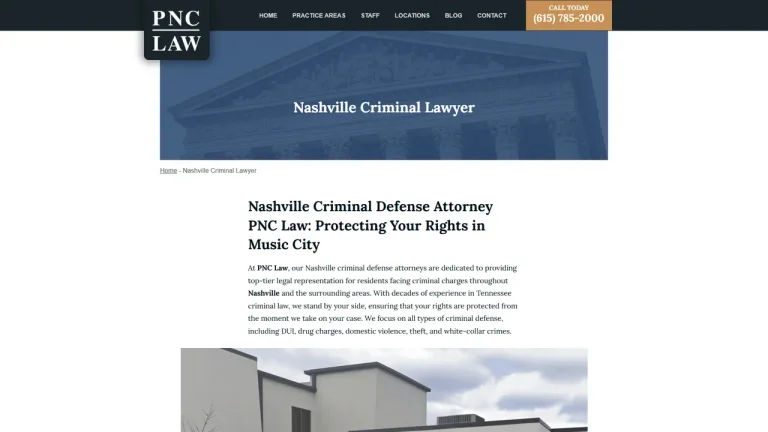
Nashville Criminal Defense Attorney PNC Law - Nashville, TN

Easter and DeVore Attorneys at Law - Nashville, TN

Kevin S. Key, Attorney at Law - Nashville, TN

Law Office of Lyell Sloan - Nashville, TN
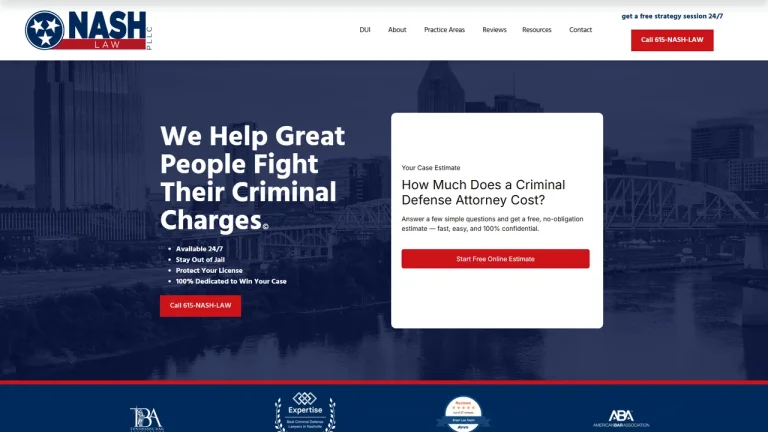
615-NASH-LAW - Nashville, TN

Jodie A. Bell, Attorney At Law - Nashville, TN
McNally Law - Nashville, TN

Provenzano Law - Nashville, TN

The Law Office of Kimberly S. Hodde - Nashville, TN

Chappell Cynthia C - Nashville, TN

Byron Pugh Legal - Nashville, TN

Raybin & Weissman Personal Injury Lawyers - Nashville, TN

Shipman & Crim, Attorneys at Law - Nashville, TN

Michael & Associates - Nashville, TN

Law Offices of Tillman W. Payne - Nashville, TN

Sherwood Boutique Litigation, PLC - Nashville, TN

Freeman and Fuson - Nashville, TN
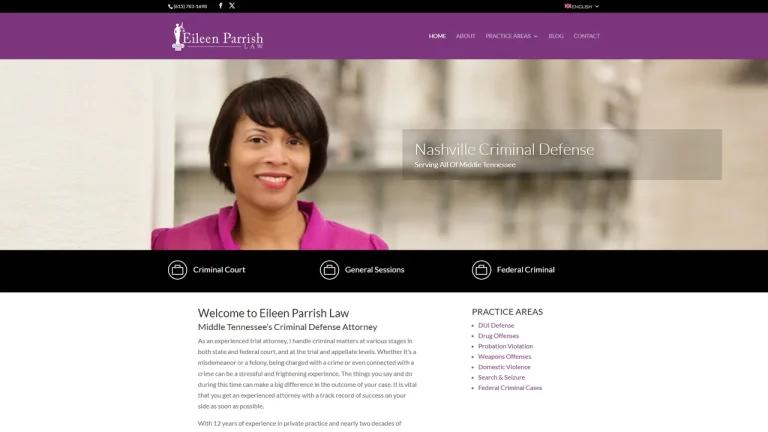
Eileen Parrish Law - Nashville, TN

Sluder Law, PLLC - Nashville, TN

W. Stover Law, PLC - Nashville, TN

Robinson, Reagan & Young, PLLC - Nashville, TN
Dunham & Jones, Attorneys at Law, P.C. - Nashville, TN
Crystal R. Cole, Attorney at Law - Nashville, TN

Controlled Substance Defense in Nashville and Davidson County
Drug crime prosecutions in Nashville are aggressively pursued by the 20th Judicial District Attorney General's Office. Whether arising from targeted traffic stops along Interstate 24, Interstate 40, or Briley Parkway, or from street-level investigations in Downtown Nashville, East Nashville, Antioch, or Madison, controlled substance charges carry severe statutory consequences across Davidson County.
Arrestees in Nashville are initially booked into the Downtown Detention Center and appear before the Metropolitan Nashville & Davidson County General Sessions Court, located in the Justice A.A. Birch Building at 408 2nd Avenue North. General Sessions judges preside over bond hearings, misdemeanor trials, and preliminary hearings for felony offenses. When prosecutors secure a grand jury indictment for felony drug distribution or conspiracy, the case transfers to the Davidson County Criminal Court, also housed within the Birch Building.
An astute Nashville drug defense lawyer scrutinizes the actions of the Metropolitan Nashville Police Department (MNPD) and the Tennessee Bureau of Investigation (TBI). Dedicated defense counsel analyzes whether police had lawful reasonable suspicion for the initial stop, challenges warrantless search procedures under the Tennessee Constitution, and aggressively advocates for judicial diversion programs that preserve a clean criminal record.
Drug Defense Legal Fee Schedule
| Case Scenario | Fee Structure | Estimated Cost (USD) | Key Cost Determinants |
|---|---|---|---|
| Misdemeanor Simple Possession (Casual Exchange) | Flat Legal Fee | $2,000 - $4,500 | First-offender eligibility under § 40-35-313 judicial diversion, TBI laboratory chemical test review, General Sessions negotiations |
| Felony Schedule II Possession with Intent to Resell | Staged Retainer | $5,000 - $12,500 | Cell phone search warrant challenge, weight and packaging evidence, confidential informant reliability, mandatory minimums |
| Major Felony Drug Trafficking / Conspiracy | Retainer / Trial Fee | $12,000 - $30,000 | Multi-agency task force wiretaps, federal cross-designation risks, Criminal Court jury trial in the Birch Building |
| General Sessions Preliminary Hearing Defense | Flat Legal Fee | $1,500 - $3,500 | Cross-examination of arresting MNPD detectives, establishing lack of probable cause to bind case over to grand jury |
Critical Legal Deadlines & Statutes in Tennessee
Controlled substance offenses in Tennessee are governed by the Tennessee Drug Control Act of 1989, codified at Tenn. Code Ann. § 39-17-401 through Tenn. Code Ann. § 39-17-438. Simple possession or casual exchange of a controlled substance is prosecuted as a Class A misdemeanor under Tenn. Code Ann. § 39-17-418. Manufacturing, delivering, selling, or possessing with intent to sell a controlled substance is a felony under Tenn. Code Ann. § 39-17-417, categorized by statutory drug schedules.
For defendants detained in custody following a warrantless arrest, Tennessee Rule of Criminal Procedure 5.1 guarantees the right to a preliminary examination in General Sessions Court within fourteen calendar days of the initial appearance. If released on bond, the hearing must occur within thirty days. Crucially, eligible first-time offenders must seek statutory judicial diversion under Tenn. Code Ann. § 40-35-313 prior to the entry of an unadjudicated guilty plea, allowing the complete dismissal and expungement of charges upon successful completion of probation.
If law enforcement officers seize cash, vehicles, or personal property during a drug investigation under Tenn. Code Ann. § 40-33-201, a strict civil asset forfeiture deadline applies. The property owner must file a formal Petition for Hearing with the Tennessee Department of Safety and Homeland Security within thirty calendar days of receiving the Notice of Property Seizure under Tenn. Code Ann. § 40-33-206, or all seized property is permanently forfeited by default.
Small Claims Limits vs. Criminal Court Defense
While the Davidson County General Sessions Court civil division exercises small claims jurisdiction up to $25,000 pursuant to Tenn. Code Ann. § 16-15-501, civil small claims courts have zero legal authority over criminal charges. Controlled substance offenses carry immediate exposure to county jail or state prison sentences, loss of driver's licenses, and permanent felony records that destroy employment prospects.
Attempting to handle a drug charge without private defense counsel leaves defendants vulnerable to aggressive prosecution by the District Attorney's Office. Article I, Section 7 of the Tennessee Constitution provides even greater protections against unreasonable searches and seizures than the federal constitution. An experienced Nashville criminal defense attorney files motions to suppress illegally obtained evidence, cross-examines drug recognition evaluators, and utilizes statutory diversion pathways to avoid a conviction.
Red Flags When Hiring a Nashville Drug Defense Lawyer
- Lawyers who waive the preliminary hearing in General Sessions Court without receiving a substantial plea concession or clear evidentiary advantage from the prosecutor.
- Attorneys promising guaranteed case dismissals before reviewing the official Tennessee Bureau of Investigation (TBI) forensic laboratory analysis report.
- Firms failing to file a timely petition to contest seized funds or vehicles within the rigid thirty-day forfeiture deadline under Tenn. Code Ann. § 40-33-206.
- Lawyers unaware of how to structure conditional guilty pleas under Tenn. Code Ann. § 40-35-313 to protect the client's eligibility for total record expungement.
Frequently Asked Questions
What is judicial diversion under Tennessee Code Annotated § 40-35-313?
Under Tenn. Code Ann. § 40-35-313, qualified first-time offenders who plead guilty can have the adjudication of guilt deferred by the judge, leading to a complete dismissal and expungement of the charge upon successful completion of probation.
Can police search my vehicle in Nashville during a routine traffic stop?
Under Article I, Section 7 of the Tennessee Constitution, police cannot search your vehicle without a search warrant, your voluntary consent, or clear probable cause; unconstitutionally prolonged traffic stops can lead to complete suppression of seized narcotics.
Where are drug crime hearings held in Nashville?
Drug charges in Nashville are heard at the Justice A.A. Birch Building, located at 408 2nd Avenue North, with initial hearings in General Sessions Court and felony trials in the Davidson County Criminal Court.
What is the deadline to contest seized property or money in Tennessee?
Under Tenn. Code Ann. § 40-33-206, you have exactly thirty calendar days from receiving the Notice of Property Seizure to file a formal claim with the Tennessee Department of Safety and Homeland Security to contest civil asset forfeiture.
What is the difference between simple possession and possession with intent to sell?
Simple possession under Tenn. Code Ann. § 39-17-418 is a misdemeanor based on personal use, while possession with intent under Tenn. Code Ann. § 39-17-417 is a felony based on factors such as weight, scales, baggies, and large amounts of cash.