
Employment & Labor Lawyers in Nashville
Navigating workplace disputes in Nashville requires skilled legal counsel to assert your employee rights under Tennessee and federal law. Dedicated employment lawyers frequently resolve severance negotiations and wage claims out of court while avoiding protracted litigation. Browse our verified directory below to schedule a case review with trusted Davidson County employment attorneys.

Bass, Berry & Sims PLC - Nashville, TN
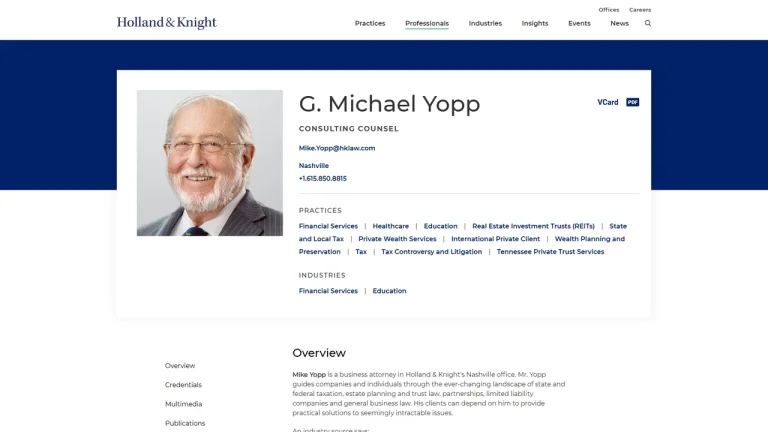
G. Michael Yopp (Holland & Knight) - Nashville, TN

Law Office of Roland T. Hairston, II & Associates - Nashville, TN

Attorney Troy Bowlin (The Bowlin Law Firm) - Nashville, TN

Frank Steiner Law, PC - Nashville, TN
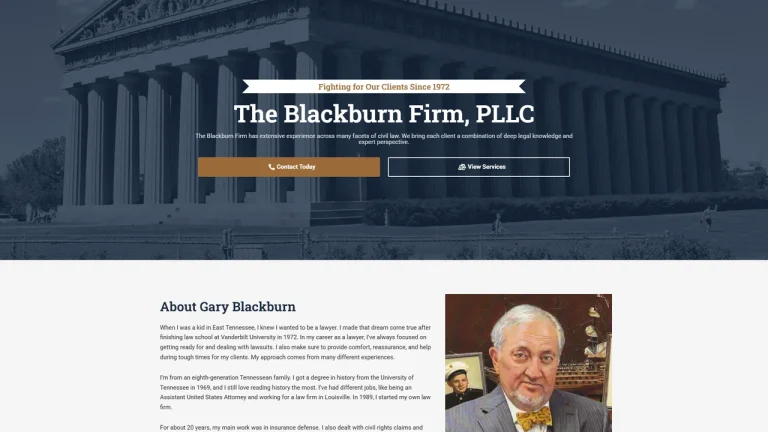
The Blackburn Firm, PLLC - Nashville, TN

Dodson Parker Behm & Capparella - Nashville, TN

Cotney - Attorneys & Consultants - Nashville, TN

Maynard Nexsen PC - Nashville, TN

Adams & Reese - Nashville, TN

Disability Rights Tennessee - Nashville, TN

Chugh, LLP - Attorneys & CPAs - Nashville, TN

Beth E. Vessel - Nashville, TN
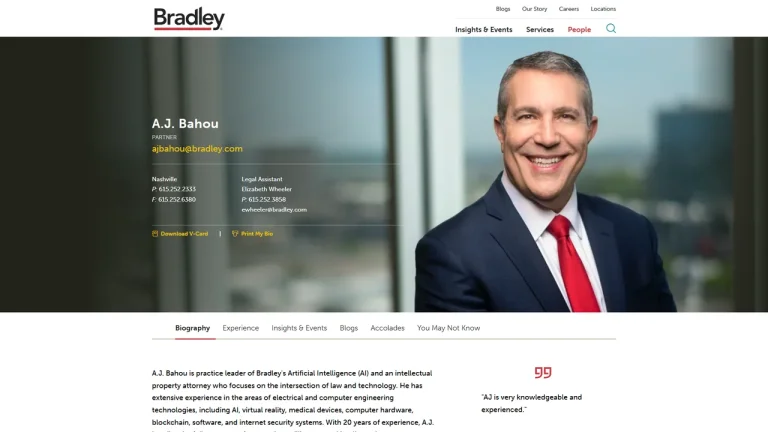
Bahou Law, PLLC - Nashville, TN

Gullett Sanford Robinson & Martin PLLC - Nashville, TN
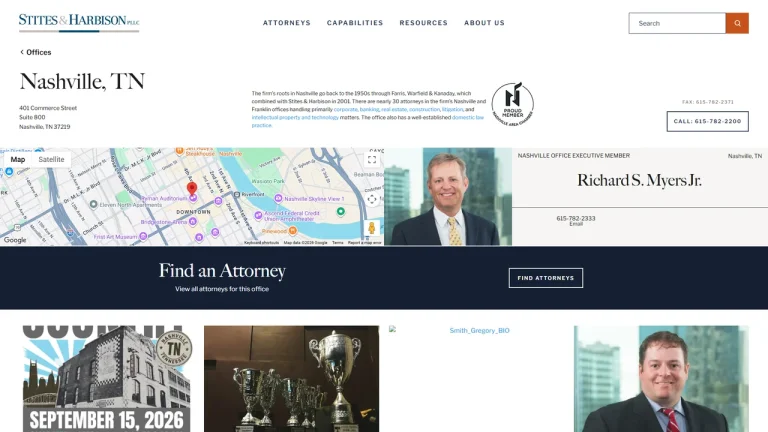
Stites and Harbison, PLLC - Nashville, TN

Thompson Burton PLLC - Nashville, TN
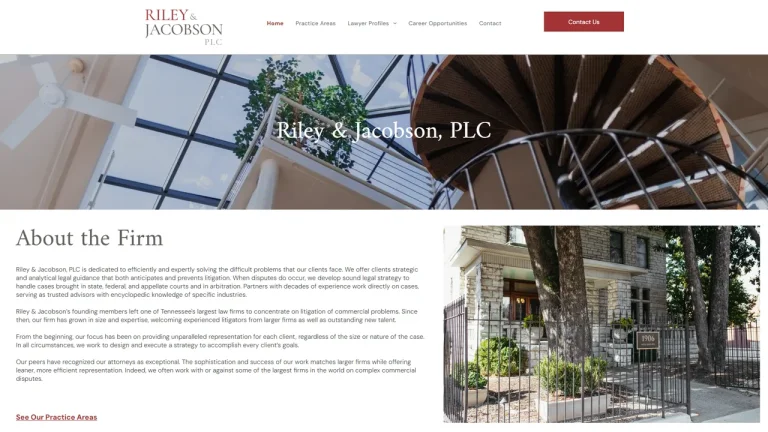
Riley & Jacobson, PLC - Nashville, TN

Wyatt, Tarrant and Combs, LLP - Nashville, TN

Klein Solomon Mills, PLLC - Nashville, TN

James A. Crumlin, Jr., Attorney - Bone McAllester Norton - Nashville, TN

Lewis Thomason, P.C. - Nashville, TN

Rickard Masker, PLC - Nashville, TN

Protecting Workplace Rights Across Nashville and Davidson County
Tennessee is recognized as an employment-at-will state, meaning employers maintain broad discretion over workplace staffing. However, that discretion ends when termination, demotion, or harassment violates statutory anti-discrimination protections, whistleblower enactments, or wage mandates. Workers in Nashville facing wrongful discharge, retaliation, or restrictive covenants require knowledgeable local legal advocacy.
Employment disputes in Nashville proceed through distinctive federal and state venues depending on the statutory claim. State-law actions, such as claims under the Tennessee Human Rights Act or non-compete enforcement, are adjudicated in the Davidson County Chancery Court at the Historic Metro Courthouse. Federal claims involving Title VII, the Americans with Disabilities Act, or the Fair Labor Standards Act are litigated in the U.S. District Court for the Middle District of Tennessee at the Fred D. Thompson U.S. Courthouse on Church Street.
Local employment attorneys represent executives, healthcare workers, hospitality staff, and corporate employees across Downtown Nashville, Music Row, West End, and MetroCenter, ensuring claims satisfy preliminary administrative prerequisites before key statutes of limitations elapse.
Nashville Employment & Labor Legal Fee Structures
Fee structures in Nashville employment matters depend on whether the dispute involves contract review, unpaid overtime claims, or full-scale wrongful termination litigation. Standard billing models include:
| Case Scenario | Fee Structure | Estimated Cost (USD) | Key Cost Determinants |
|---|---|---|---|
| Executive Severance & Non-Compete Review | Flat Fee or Hourly ($325 - $500/hr) | $650 - $2,000 | Review of restrictive covenants, geographic radius clauses under Tennessee law, release negotiation. |
| Wage & Hour / Unpaid Overtime (FLSA) | Contingency (33% - 40%) or Statutory Fee | $0 Upfront (Contingency) | Off-the-clock records, misclassification audits, statutory fee-shifting recovery from employer. |
| Discrimination & Retaliation Administrative Filing | Hourly ($300 - $475/hr) or Hybrid | $2,500 - $6,500 | Drafting formal charges with THRC or EEOC Nashville Area Office, position statement rebuttals. |
| Federal Employment Litigation & Trial | Retainer + Hourly or Contingency (35% - 40%) | $10,000 - $30,000+ | Depositions, summary judgment motions in Middle District of Tennessee, jury trial representation. |
Critical Legal Deadlines & Statutes in Tennessee
Workplace claims in Nashville are governed by unforgiving filing deadlines. Missing an administrative or statutory window terminates an employee's legal recourse permanently:
- Tennessee Human Rights Act (THRA) Filing Deadline: Under Tenn. Code Ann. § 4-21-302, administrative complaints alleging employment discrimination must be filed with the Tennessee Human Rights Commission within one hundred and eighty days of the discriminatory act.
- Direct Court Filings Under the THRA: An employee electing to bypass the administrative process and file directly in Chancery Court must initiate litigation within one year under Tenn. Code Ann. § 4-21-311.
- Tennessee Public Protection Act (TPPA / Whistleblower): Claims alleging retaliatory discharge under Tenn. Code Ann. § 50-1-304 must be filed within one year from termination pursuant to Tenn. Code Ann. § 28-3-104.
- Federal EEOC Charge Deadline: Because Tennessee has a state administrative agency (THRC), employees filing federal discrimination charges under Title VII or the ADA have three hundred days from the alleged discriminatory event to file with the EEOC Nashville Area Office.
- Unpaid Wages and Overtime: Claims under the federal Fair Labor Standards Act must be initiated within two years for standard violations, or three years if the employer's wage violation was willful under 29 U.S. Code § 255.
Small Claims Court vs. Retained Employment Counsel
In Tennessee, monetary claims up to $25,000 may be brought before the Metropolitan General Sessions Court under Tenn. Code Ann. § 16-15-501. For straightforward, uncontested final wage check disputes or unpaid commissions where damages fall below this cap, an employee may file a civil warrant pro se without retaining an attorney.
However, complex employment controversies-including workplace discrimination, sexual harassment, unlawful retaliation, or disputes over non-compete agreements-are fundamentally ill-suited for General Sessions Court. These actions involve intricate evidentiary standards and must typically be adjudicated in the Davidson County Chancery Court or the U.S. District Court for the Middle District of Tennessee.
Navigating prerequisite administrative charges before the Tennessee Human Rights Commission or securing a Right to Sue notice from the EEOC requires meticulous legal preparation. An experienced employment lawyer ensures exhaustive discovery, protects against aggressive defense tactics, and leverages statutory fee-shifting provisions to hold employers accountable.
Red Flags When Selecting an Employment Attorney
Retaining the right legal advocate is crucial for protecting your workplace rights and career trajectory. Beware of these critical warning signs:
- Premature Multi-Million Dollar Settlement Promises: Be skeptical of attorneys who promise astronomical payouts before analyzing personnel records, employer position statements, or economic damages.
- Neglecting Administrative Exhaustion: Inexperienced lawyers who file directly in court without first fulfilling EEOC or THRC charge requirements risk immediate dismissal of federal claims.
- Lack of Middle District Federal Experience: Many employment cases in Nashville are removed to the U.S. District Court for the Middle District of Tennessee; counsel must be actively admitted and fluent in federal local rules.
- Unclear Litigation Cost Allocation: Ensure your retainer specifies whether discovery expenses, court transcription fees, and expert witness charges are deducted from settlement proceeds or billed upfront.
Frequently Asked Questions
What is the deadline to file a discrimination complaint in Nashville?
Employees have 180 days to file a state discrimination complaint with the Tennessee Human Rights Commission under Tenn. Code Ann. § 4-21-302, or up to 300 days to file a federal claim with the EEOC. Direct civil lawsuits under the THRA must be filed within one year under Tenn. Code Ann. § 4-21-311.
Does Tennessee protect whistleblowers who report illegal employer activities?
Yes, under the Tennessee Public Protection Act codified in Tenn. Code Ann. § 50-1-304, employers cannot discharge an employee solely for refusing to participate in, or remain silent about, illegal activities. Claims must be brought within one year under Tenn. Code Ann. § 28-3-104.
Can an employer enforce a non-compete agreement in Nashville?
Tennessee courts enforce non-compete agreements only if they protect legitimate business interests and remain reasonable in geographic scope and time duration. Overly broad covenants are routinely challenged or modified in the Davidson County Chancery Court.
Which courts hear employment lawsuits in Davidson County?
State employment lawsuits are heard in the Davidson County Chancery Court at the Historic Metro Courthouse, while federal claims under Title VII, the ADA, and the FLSA are litigated in the U.S. District Court for the Middle District of Tennessee on Church Street.
Can I sue my employer for unpaid overtime in General Sessions Court?
While the Metropolitan General Sessions Court handles civil claims up to $25,000 under Tenn. Code Ann. § 16-15-501, most overtime and wage actions arise under the federal FLSA and are handled in federal court where statutory fee-shifting applies.