
Slip & Fall Injury Lawyers in Nashville
Securing an experienced Nashville slip and fall lawyer protects your rights and establishes property owner liability under Tennessee premises liability law. Skilled attorneys gather surveillance footage, prove dangerous conditions, and negotiate fair settlements to recover medical costs. Browse our vetted directory below to schedule a consultation with an accomplished Davidson County premises liability attorney.

Nashville Injury Law - Nashville, TN

Tayip Law Firm, PLLC - Nashville, TN
The Keating Firm LTD. - Nashville, TN

Johnnie Bond Law - Nashville, TN

The Williams Firm: Car & Truck Accident Injury Lawyers - Nashville, TN

Calhoun Law PLC - Nashville, TN

Melrose Law Group PLLC - Nashville, TN
Bartlett Injury and Trial Law - Nashville, TN
North, Pursell & Ramos, PLC - Nashville, TN

W. Stover Law, PLC - Nashville, TN

Cummings Law Car Accident and Personal Injury Lawyers - Nashville, TN
Marlowe Law - Nashville, TN

Howe.Law Injury & Accident Lawyers - Nashville, TN

Lackey | McDonald, PLLC - Nashville, TN
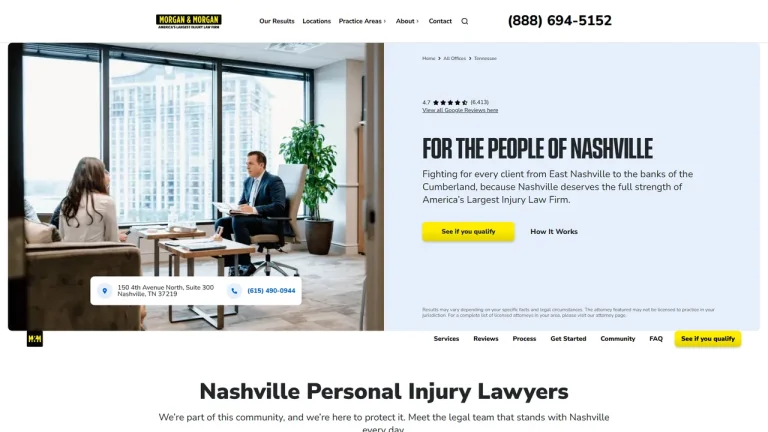
Kathryn E. Barnett (Morgan & Morgan) - Nashville, TN

Thompson Mangelsdorf (Chuck Mangelsdorf) - Nashville, TN

Monge & Associates Injury and Accident Attorneys - Nashville, TN

Law Offices of Luvell L. Glanton - Nashville, TN
Meyers Personal Injury Law Nashville - Nashville, TN

Morgan & Akins, PLLC - Nashville, TN

Denham Property and Injury Law Firm - Nashville, TN

The Law Firm of Kevin A. Moore - Nashville, TN
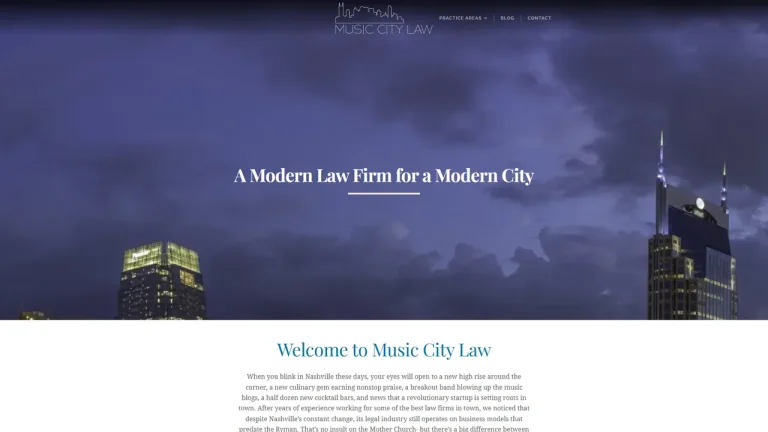
Music City Law, PLLC - Nashville, TN
Navigating Premises Liability Claims in Nashville
Nashville features thriving commercial entertainment districts, retail centers, and residential properties across Lower Broadway, The Gulch, Green Hills, Midtown, and East Nashville. While property owners and commercial businesses owe visitors a legal duty of care, hazardous conditions-such as wet restaurant floors, unmaintained walkways, broken staircases, and dimly lit parking areas-regularly lead to serious slip and fall accidents.
Premises liability claims in Davidson County are litigated in the Davidson County Circuit Court within the 20th Judicial District of Tennessee, located at the Historic Metro Courthouse. Establishing liability requires proving that the commercial establishment or landlord had actual or constructive notice of the hazardous condition before the incident occurred.
Retaining a dedicated Nashville slip and fall attorney ensures prompt preservation of critical business records, sweep logs, and video surveillance footage before it is routinely deleted. A skilled lawyer works to demonstrate property owner fault, counter insurance defenses alleging contributory negligence, and negotiate a comprehensive settlement without the need for prolonged courtroom litigation.
Slip & Fall Injury Legal Fee Structures in Nashville
| Case Scenario | Fee Structure | Estimated Cost (USD) | Key Cost Determinants |
|---|---|---|---|
| Direct Commercial Insurance Settlement (Pre-Suit) | Contingency Fee | 33.3% of Total Recovery | Documented property owner notice, clarity of medical treatment records, and property insurance policy limits. |
| Contested Premises Liability Lawsuit in Circuit Court | Contingency Fee | 40% of Total Recovery | Depositions of store personnel, retainment of flooring safety and biomechanical experts, and motion practice duration. |
| Apartment Complex or Landlord Negligence Action | Contingency Fee | 33.3% - 40% of Recovery | Residential lease provisions, history of building code violations, and evidence of repeated tenant repair notices. |
| Minor Premises Incident & Property Damage Claim | Hourly or Flat Fee | $600 - $1,800 | Value of personal property damaged in fall, uncontested liability, and pre-litigation settlement conferences. |
Critical Legal Deadlines & Statutes in Tennessee
Filing a premises liability claim in Nashville requires strict adherence to Tennessee statutory deadlines and evidentiary rules:
Personal injury lawsuits stemming from a slip and fall are subject to a strict one-year statute of limitations under Tenn. Code Ann. § 28-3-104. The lawsuit must be formally filed in a court of competent jurisdiction within 365 days of the fall, or the injured party's right to compensation is extinguished permanently.
If personal property-such as mobile devices, eyewear, or jewelry-was damaged during the fall, property damage claims are governed by a three-year statute of limitations under Tenn. Code Ann. § 28-3-105.
Under Tennessee common law established in Hudson v. Gaitan, landowners owe visitors a duty of reasonable care under all circumstances. To establish negligence, an injured claimant must prove that the property owner either created the dangerous condition, had actual knowledge of it, or had constructive notice-meaning the condition existed long enough that a reasonably prudent operator should have detected and corrected it.
Tennessee follows a modified comparative fault rule under McIntyre v. Balentine. If an injured plaintiff is determined to be 50% or more at fault (such as failing to observe an open and obvious hazard), they are legally barred from recovering any damages. If the plaintiff is 49% or less at fault, their compensation is reduced proportionally.
General Sessions Court vs. Retaining a Premises Liability Lawyer
The Davidson County General Sessions Court, Civil Division, handles small civil matters up to a statutory jurisdictional limit of $25,000 under Tenn. Code Ann. § 16-15-501.
For modest slip and fall claims with minor bruises or limited medical costs under $25,000, filing a civil warrant pro se in General Sessions Court offers a faster and less formal process. However, commercial property insurance carriers rarely settle without aggressive defense, often claiming the hazard was open and obvious or that the plaintiff was inattentive.
When a slip and fall causes severe injuries-such as fractured wrists, torn ligaments, spinal injuries, or concussions-medical expenses and lost income quickly surpass $25,000. In these situations, claims must be brought in the Davidson County Circuit Court. Engaging an experienced slip and fall lawyer is critical to subpoena store surveillance footage, inspect cleaning logs, counter comparative fault assertions, and protect your financial recovery before a jury.
Red Flags When Hiring a Slip and Fall Lawyer
- Failure to Send Immediate Spoliation Letters: Attorneys who delay issuing formal evidence preservation letters, allowing crucial commercial video surveillance to be automatically overwritten.
- Overlooking Comparative Fault Defenses: Counsel who fails to prepare clients for insurance adjusters arguing the dangerous condition was open and obvious under Tennessee law.
- Reluctance to Litigate in Circuit Court: Settlement-focused law firms that routinely push clients into low settlements rather than filing formal lawsuits against uncooperative insurers.
- Unclear Litigation Fee Deductions: Retainer contracts that do not clearly specify whether expert inspection fees and court filing costs are deducted before attorney fees.
Frequently Asked Questions
How long do I have to file a slip and fall lawsuit in Nashville?
You have exactly one year from the date of the fall to file a lawsuit under Tenn. Code Ann. § 28-3-104. If you do not file within this one-year period, your claim will be permanently barred by Tennessee courts.
What must I prove to establish property owner liability in Tennessee?
You must prove that a hazardous condition existed on the property, that the owner or operator had actual or constructive notice of it, that they failed to remedy or warn of the danger, and that this failure directly caused your injuries.
Can I recover damages if the business argues the hazard was open and obvious?
Yes. Under Tennessee comparative fault law, an open and obvious condition does not automatically terminate a property owner's duty of care. The jury evaluates whether the owner should have anticipated harm despite the obviousness, weighing comparative fault accordingly.
How do attorney fees work in Nashville slip and fall injury cases?
Nashville slip and fall attorneys work on a contingency fee basis. You pay no upfront retainer fees; the lawyer collects an agreed-upon percentage (typically 33.3% to 40%) only if they secure compensation through a settlement or verdict.
Why is surveillance video footage so important in premises liability claims?
Surveillance footage provides objective evidence showing how the hazardous condition originated, how long it remained on the floor, and whether staff neglected maintenance routines. A lawyer must issue a spoliation letter immediately to prevent the footage from being overwritten.