
Business & Work Visa Lawyers in Austin
Retaining an experienced Austin business and work visa lawyer ensures corporate immigration petitions comply with federal employment statutes. Dedicated immigration counsel streamlines specialty occupation filings, navigates labor certifications, and mitigates compliance risks. Explore our directory below to consult verified local business immigration attorneys.

Azarmehr Law Group - Austin, TX

JLW Immigration Law Group - Austin, TX

Peek Law Group - Austin, TX

Black Law Firm, PLLC - Austin, TX

Austin Immigration Law Group, PLLC - Austin, TX

Paul Parsons PC - Austin, TX
Lincoln-Goldfinch Law - Austin, TX

The Mendez Law Group LLP - Austin, TX
Ortiz Immigration Law, PLLC - Austin, TX
Immigration Lawyers PLLC - Austin, TX
Nossa Law Office - Austin, TX
Perez Ramakrishnan Immigration Law - Austin, TX
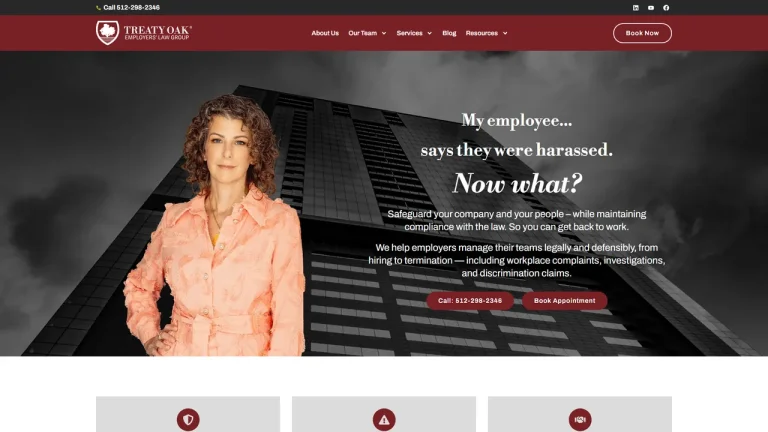
Treaty Oak Employers' Law Group, PLLC - Austin, TX

Buzgova, Meneses & Wellington Smith, LLP - Austin, TX
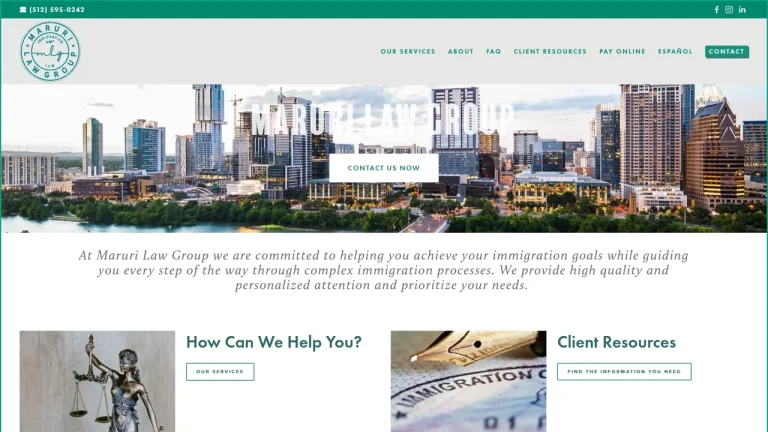
Maruri Law Group - Austin, TX
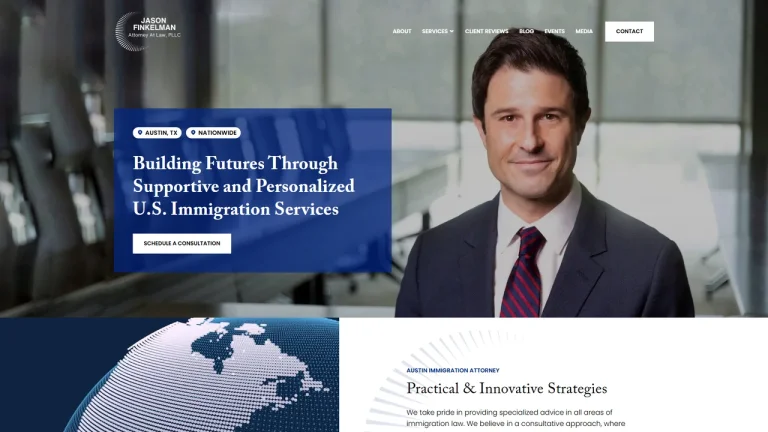
Jason Finkelman, Attorney at Law, PLLC - Austin, TX
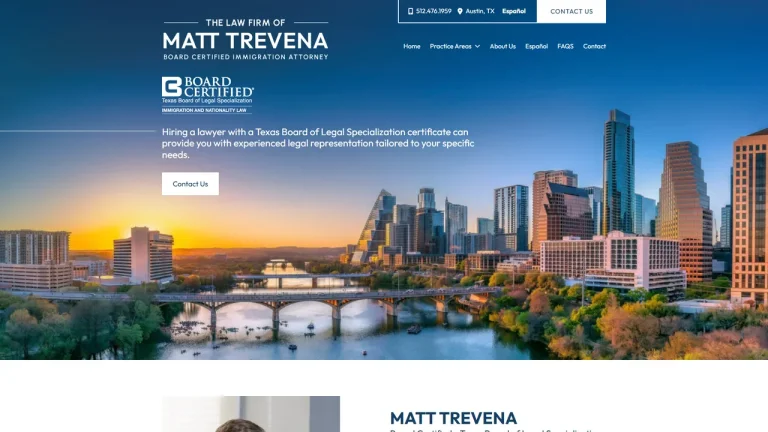
The Law Firm of Matt Trevena - Austin, TX

Cynthia V. De Los Santos Law - Austin, TX
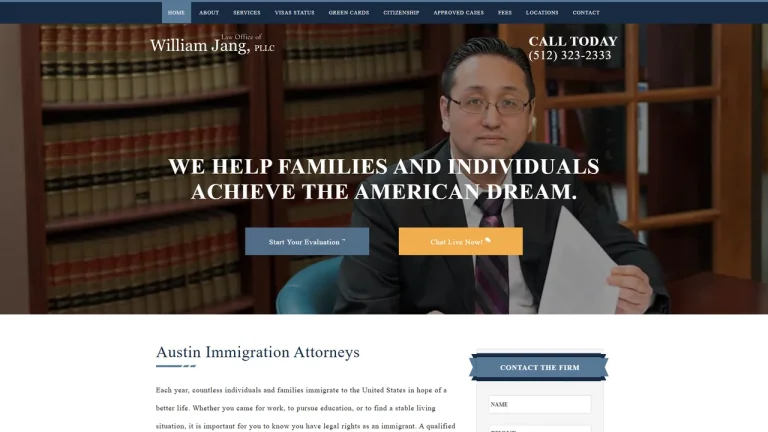
Law Office of William Jang, PLLC - Austin, TX
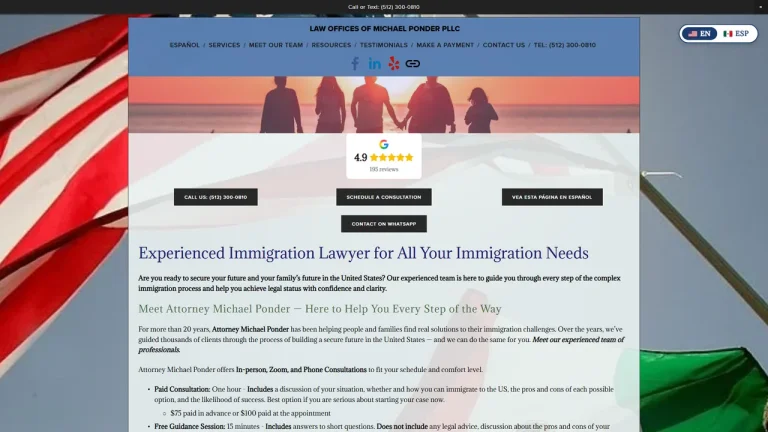
Law Offices of Michael Ponder PLLC - Austin, TX
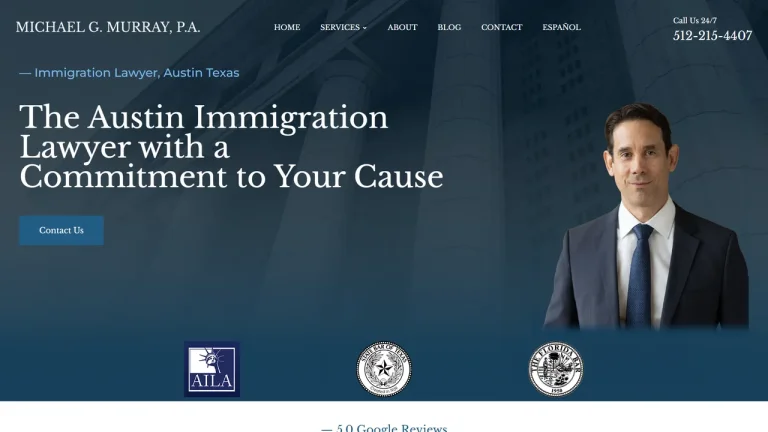
Michael G. Murray, P.A. - Austin, TX

De La Garza Law, PLLC - Austin, TX
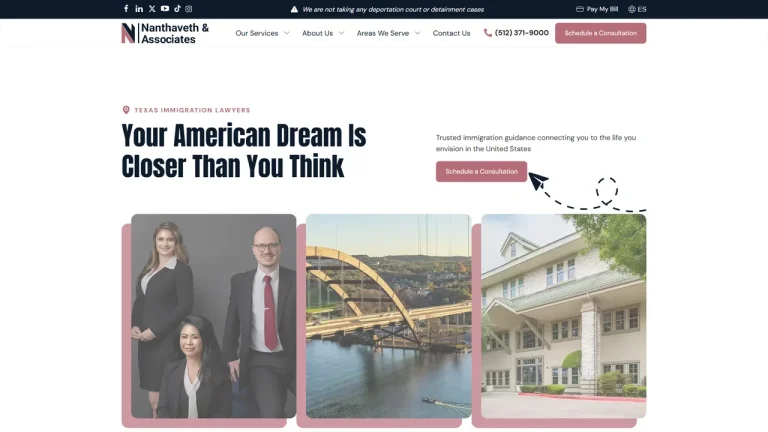
Corporate Immigration Advocacy in Austin and Travis County
Known as Silicon Hills, Austin is a premier destination for global technology corporations, venture-backed startups, semiconductor manufacturing facilities, and biomedical enterprises. Companies operating throughout Downtown Austin, The Domain, and the surrounding Travis County tech corridor rely heavily on sponsoring international talent to fuel innovation and maintain competitive enterprise growth.
Employment-based visa petitions originating in Austin are processed through federal immigration authorities, primarily the U.S. Citizenship and Immigration Services (USCIS) Texas Service Center. Regional in-person interviews and corporate compliance inquiries are conducted through the USCIS Austin Field Office, located at 8915 Montana Drive. Concurrently, permanent labor market tests are overseen by the U.S. Department of Labor (DOL) Foreign Labor Certification division.
A knowledgeable Austin business immigration lawyer assists corporate employers and foreign professionals through the intricate regulations governing nonimmigrant classifications and employment-based lawful permanent residence. Strategic legal representation ensures complete alignment with prevailing wage determinations, resolves complex Requests for Evidence (RFEs), and protects businesses from severe statutory penalties during Form I-9 federal enforcement audits.
Business Visa Legal Fee Schedule
| Case Scenario | Fee Structure | Estimated Cost (USD) | Key Cost Determinants |
|---|---|---|---|
| H-1B Specialty Occupation Petition | Flat Legal Fee | $2,500 - $5,500 (plus USCIS filing fees) | Degree equivalency documentation, DOL prevailing wage compliance, specialty occupation RFE defense |
| PERM Labor Certification & EB-2 / EB-3 | Staged Flat Fee | $5,500 - $10,000 (excluding ad costs) | DOL recruitment campaign compliance, prevailing wage determination, audit notification response |
| L-1 Intracompany Transferee or E-2 Investor | Flat Legal Fee | $5,000 - $9,500 | Qualifying international corporate relationship, substantial capital investment documentation, detailed business plan |
| Corporate Form I-9 Audit & Compliance Defense | Hourly / Retainer | $350 - $600/hr ($3,000 - $6,500 retainer) | Employee roster volume, audit history, substantive paperwork violations, ICE Notice of Inspection defense |
Critical Legal Deadlines & Statutes in Texas
Corporate immigration processes are bound by rigid federal statutory timeframes under the Immigration and Nationality Act. H-1B specialty occupation visas, codified under 8 U.S. Code § 1101(a)(15)(H), require electronic lottery registration during a narrow annual window every March. Petitions selected in the lottery must be filed within a strict ninety-day submission period designated by USCIS.
For employment-based immigrant visas under 8 U.S. Code § 1153(b), employers must complete the PERM labor certification process pursuant to 20 C.F.R. § 656.17. Mandatory recruitment advertising must be conducted at least thirty days, but no more than one hundred eighty days, prior to submitting Form ETA-9089. Failing to file within this 180-day window invalidates the entire recruitment campaign.
All Austin employers must maintain employment eligibility verification under 8 U.S. Code § 1324a. Employers must complete Section 2 of Form I-9 within three business days of an employee's first day of work. When USCIS issues a Request for Evidence (RFE) or Notice of Intent to Deny (NOID), responses must be submitted within the non-extendable statutory timeframe, typically thirty to eighty-seven days pursuant to 8 C.F.R. § 103.2(b)(8).
Small Claims Limits vs. Federal Corporate Representation
While Texas Justice of the Peace small claims courts exercise jurisdiction up to $20,000 under Tex. Gov't Code § 27.031, small claims courts have zero legal authority over federal immigration petitions. Corporate immigration involves exclusively federal administrative law, federal district courts, and U.S. Department of Labor regulatory tribunals.
Attempting to manage corporate immigration petitions without dedicated legal counsel exposes businesses to devastating operational setbacks. A denied petition can result in the immediate loss of lawful status for key foreign executives under 8 U.S. Code § 1182(a)(9)(B) and forfeiture of nonrefundable government fees. Retaining an experienced Austin immigration lawyer ensures corporate compliance, robust responses to specialty occupation challenges, and continuous lawful employment authorization for foreign talent.
Red Flags When Hiring an Austin Work Visa Lawyer
- Attorneys who advise employers to unlawfully shift mandatory PERM legal fees or H-1B recruitment costs onto the foreign worker, in violation of 20 C.F.R. § 656.12.
- Unlicensed non-attorney visa consultants or "notarios" attempting to provide legal representation, in violation of Texas legal ethics and consumer protection laws.
- Lawyers who guarantee an H-1B lottery selection or promise guaranteed approvals before analyzing job duties against Department of Labor specialty occupation criteria.
- Practitioners who fail to conduct preliminary prevailing wage analyses before initiating mandatory recruitment advertisements, causing severe filing delays.
Frequently Asked Questions
What qualifies as a specialty occupation for an H-1B visa in Austin?
Under 8 U.S. Code § 1101(a)(15)(H), a specialty occupation requires the theoretical and practical application of a body of highly specialized knowledge, typically requiring a minimum of a bachelor's degree in a specific related field.
Can a foreign worker pay for their own PERM labor certification?
No. Under 20 C.F.R. § 656.12, federal regulations strictly require the sponsoring employer to pay all attorney fees and advertising expenses associated with the PERM labor certification process.
Where are local employment visa interviews conducted in Austin?
When an in-person interview or biometric collection is required for an employment-based adjustment of status, it is conducted at the USCIS Austin Field Office, located at 8915 Montana Drive in North Austin.
What is Form I-9 compliance and why is it critical for Austin startups?
Under 8 U.S. Code § 1324a, all U.S. employers must verify the identity and work eligibility of every hired employee; paperwork errors can result in substantial civil fines during federal ICE audits.
What is the difference between an L-1A and an L-1B visa?
Under 8 U.S. Code § 1101(a)(15)(L), L-1A visas are designated for executives and managers transferring to a U.S. office, while L-1B visas apply to employees possessing specialized knowledge of company operations.