
Defective Product Injury Lawyers in Austin
Engaging a qualified Austin defective product injury lawyer safeguards your rights when pursuing complex litigation against national manufacturers and distributors. Experienced legal counsel handles exhaustive discovery, engineering reviews, and insurer negotiations to achieve fair out-of-court settlements without unnecessary courtroom delays. Review our verified directory below to consult an established Austin product liability attorney today.

Glen Larson Law Injury Attorneys - Austin, TX

National Trial Law - Austin, TX

Sneed & Mitchell LLP - Austin, TX

Hastings Law Firm, Medical Malpractice Lawyers - Austin, TX

The Sharp Firm - Austin, TX
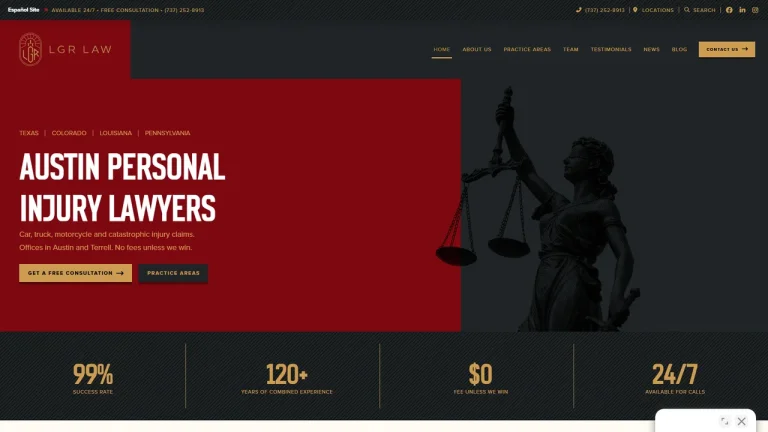
Lee, Gober & Reyna - Austin, TX

The Law Office of Joel A. Levine - Austin, TX

Funk and Associates - Austin, TX

Winckler, Harvey & McConnell, LLP - Austin, TX

Byrd Davis Alden & Henrichson, LLP - Austin, TX

Thomas J. Henry Law - Austin, TX

Feltoon Law, PC - Austin, TX
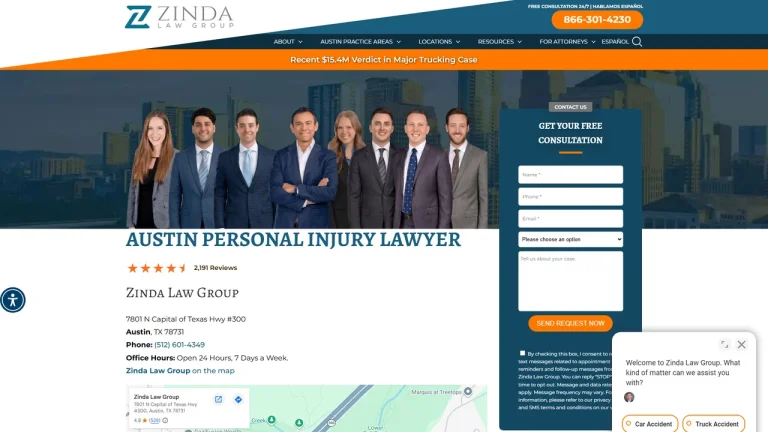
Zinda Law Group - Austin, TX
Fletcher Law Office, LLC - Austin, TX

Lorenz and Lorenz Accident and Injury Lawyers PLLC - Austin, TX

Briggle & Polan, PLLC - Austin, TX

Karns & Karns - Austin, TX
Amaro Law Firm - Austin, TX
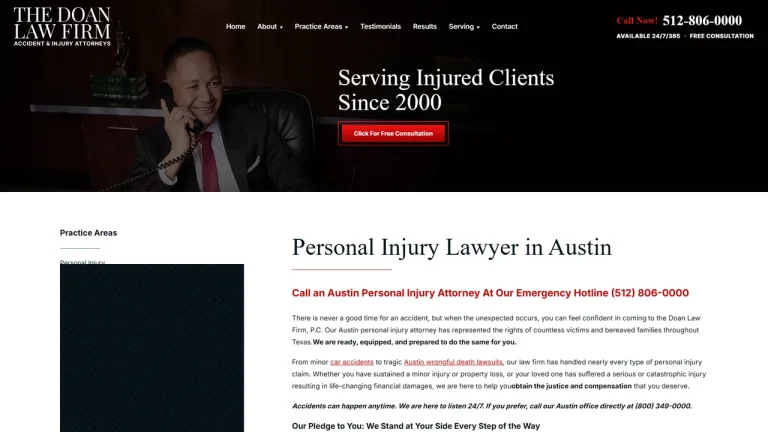
Austin Product Liability Litigation & Travis County Court Jurisdiction
Pursuing compensation for injuries caused by defective consumer goods, industrial equipment, or medical devices requires navigating complex corporate defense structures and nuanced Texas civil procedure. Austin has grown into an international technology and manufacturing corridor encompassing both urban centers and expanding metro communities like Round Rock, Pflugerville, and Westlake Hills. Defective product lawsuits in this region typically involve complex engineering disputes, failure-to-warn allegations, or acute mechanical malfunctions occurring in residential or workplace settings.
Major product liability claims originating within Austin are filed in the Travis County Civil and Family Courts Facility in downtown Austin, or removed to federal jurisdiction at the United States District Court for the Western District of Texas, Austin Division, located on West 5th Street. District judges in Travis County, such as those presiding over the 126th, 250th, and 419th Judicial District Courts, enforce stringent expert witness qualification criteria under Texas evidentiary standards, requiring plaintiffs to present comprehensive chain-of-custody documentation and peer-reviewed technical evaluations.
Retaining local product liability counsel based in Austin is crucial when confronting multinational manufacturing corporations and corporate risk managers. Experienced Austin attorneys maintain established networks with independent metallurgical labs, electrical engineers, and biomedical experts across Texas to inspect and preserve the failed product. Working with an attorney who regularly litigates in Travis County courts ensures your legal strategy aligns with local standing orders and pretrial mediation requirements.
Typical Austin Product Liability Case Tiers & Legal Fee Frameworks
| Case Scenario | Fee Structure | Estimated Cost (USD) | Key Cost Determinants |
|---|---|---|---|
| Household Appliance / Consumer Good Failure | Contingency Fee (Pre-Trial Settlement) | 33.3% of gross settlement | Unambiguous mechanical component defect, preserved physical evidence, direct insurer negotiation |
| Complex Design Defect (Automotive / Machinery) | Contingency Fee (Litigated District Court) | 40% of recovery | Testing of safer alternative design, mechanical engineering expert testimony, extensive corporate document discovery |
| Pharmaceutical / Defective Medical Device Action | Tiered Contingency plus Court Costs | 33.3% - 40% plus litigation expenses | Federal regulatory compliance evaluations, biomedical analysis, multi-party manufacturer liability apportionment |
| Industrial Workplace Equipment Malfunction | Contingency / Third-Party Claim | 33.3% - 40% of gross proceeds | Coordination with workers compensation subrogation liens, safety interlock failure documentation, OSHA review |
Critical Legal Deadlines & Product Liability Statutes in Texas
Under Tex. Civ. Prac. & Rem. Code § 16.003, a claimant must initiate a product liability lawsuit within two years from the day the cause of action accrues, which is typically the date the physical injury occurred. While Texas applies the discovery rule in exceptional circumstances where an injury could not immediately be discovered through reasonable diligence, relying on exceptions is hazardous, making prompt legal review essential to protect your right to compensation.
Furthermore, product liability claims in Texas are strictly constrained by the statute of repose codified under Tex. Civ. Prac. & Rem. Code § 16.012. This statute mandates that any personal injury action against a manufacturer or seller must be filed within fifteen years from the date of the product's first commercial sale. If a defective machine or consumer item was first sold over fifteen years ago, the claim is extinguished as a matter of law, regardless of when the injury happened, subject to narrow commercial warranty exceptions.
Substantive product liability in Texas is governed by the Texas Products Liability Act under Tex. Civ. Prac. & Rem. Code § 82.001. For design defect actions, Tex. Civ. Prac. & Rem. Code § 82.005 requires the claimant to prove by a preponderance of the evidence that a safer alternative design existed that was economically and technologically feasible at the time of manufacture. In addition, non-manufacturing retailers are shielded from liability under Tex. Civ. Prac. & Rem. Code § 82.003, unless specific exceptions such as direct modification of the product or independent negligence are proven.
Justice Court Limits vs. Complex District Court Product Litigation
For minor disputes involving isolated property loss-such as a small electronic accessory that malfunctions and damages a countertop without causing physical injury-handling the matter through a Travis County Justice of the Peace Court may be reasonable. Governed by Tex. Gov't Code § 27.031, Texas Justice Courts maintain a monetary jurisdictional limit of $20,000. These courts provide an expedited process where self-represented individuals can resolve modest monetary disagreements without expensive formal discovery.
In sharp contrast, when a product defect results in serious bodily injuries such as chemical burns, traumatic brain injuries, amputations, or spinal trauma, proceeding without counsel in District Court is virtually impossible. Corporate manufacturers routinely retain top-tier defense firms that utilize procedural motions to dismiss claims lacking certified engineering testimony. An Austin trial lawyer files your lawsuit through eFileTexas, advances substantial funds to pay for forensic laboratory evaluations, coordinates chain-of-custody preservation, and navigates mandatory Texas rules of civil procedure to level the playing field against corporate defense teams.
Red Flags When Selecting an Austin Product Liability Attorney
- Law firms lacking the capital resources to advance thousands of dollars in scientific testing, metallurgical analysis, and expert witness deposition costs.
- Attorneys who fail to immediately instruct you to secure, preserve, and safeguard the damaged product in an unaltered physical state with a documented chain of custody.
- Practitioners promising specific settlement figures before obtaining internal manufacturer design blueprints, safety audit memos, or testing records.
- General practice lawyers who cannot demonstrate familiarity with the technical requirements of proving a safer alternative design under Tex. Civ. Prac. & Rem. Code § 82.005.
Frequently Asked Questions
What are the three main types of product defects under Texas law?
Texas law recognizes design defects, manufacturing defects, and marketing defects (failure to warn). A design defect involves an inherent flaw present in all units of that model; a manufacturing defect occurs when a specific item deviates from the intended design during production; and a marketing defect involves inadequate instructions or failure to warn of non-obvious hazards.
What must be proven to win a design defect claim in Austin?
Under Tex. Civ. Prac. & Rem. Code § 82.005, a plaintiff must prove that an economically and technologically feasible safer alternative design was available at the time of manufacture that would have prevented or significantly reduced the risk of injury without substantially impairing the product's utility.
Can I sue the local Austin retail store where I bought the defective item?
Under Tex. Civ. Prac. & Rem. Code § 82.003, non-manufacturing sellers in Texas are generally immune from product liability unless you can prove an exception, such as that the retailer altered the product, made independent express misrepresentations, exercised control over product warnings, or the manufacturer is insolvent or not subject to Texas jurisdiction.
Why is preserving the product critical to my Austin injury case?
The physical item itself is the primary piece of evidence in any product liability claim. Discarding, cleaning, repairing, or altering the product can expose your case to defense spoliation motions that may result in the court dismissing your lawsuit. Your attorney must secure the item under a strict chain of custody for non-destructive forensic testing.
What is the Texas statute of repose for defective product claims?
Under Tex. Civ. Prac. & Rem. Code § 16.012, Texas enforces a 15-year statute of repose that cuts off product liability lawsuits fifteen years after the product was first sold, regardless of when the injury occurred. Even if you file within two years of being injured, the case will be barred if the item entered the market more than fifteen years prior.