
Probate Lawyers in Austin
Retaining a skilled probate lawyer in Austin streamlines estate administration and protects executors in the Travis County Statutory Probate Courts. Experienced probate counsel guides fiduciaries through independent administration, creditor notices, and asset distribution while minimizing familial conflict. Explore our verified directory below to schedule an estate consultation with trusted Austin probate attorneys.

Drake Law PLLC - Austin, TX

Barnes Lipscomb and Stewart PLLC - Austin, TX

Baker Law Group, PLLC - Austin, TX

Law Office of Kimberly Nash P.C. - Austin, TX
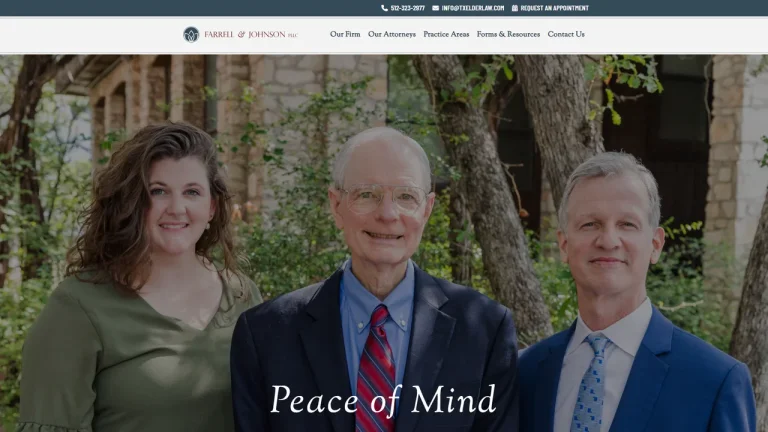
Farrell and Johnson PLLC - Austin, TX

Volunteer Legal Services of Central Texas - Austin, TX

Walberg Patterson Law PLLC - Austin, TX

Blazier, Christensen, Browder & Virr, P.C. - Austin, TX

Jason S. English Law, PLLC - Austin, TX

Nielsen Law - Austin, TX

Nickerson Law Group - Austin, TX

Law Office of Robert E. Black - Austin, TX

Grogan Law, PLLC - Austin, TX

Michelle Somers Williams, PC, Attorney at Law - Austin, TX

Texas Trust Law - Austin, TX

Wally Tingley & Associates - Austin, TX
Austin Probate Attorneys, Kreig LLC - Austin, TX

Eddington and Worley Probate Law Firm - Austin, TX

Austin Legal Access - Austin, TX

Thompson Salinas Londergan, LLP - Austin, TX

Jorgeson Pittman LLP - Austin, TX

Eric M. Willie, P.C. Austin Family & Divorce Lawyer - Austin, TX

ME Law, PLLC - Austin, TX
Navigating the Travis County Statutory Probate Courts
Estate administration in Austin requires adherence to the Texas Estates Code and local court rules enforced by the statutory probate judiciary. In Travis County, probate proceedings are conducted in Travis County Probate Court No. 1 and Travis County Probate Court No. 2, located at the Travis County Civil and Family Courts Facility at 1700 Guadalupe Street in Downtown Austin. Unlike smaller counties where constitutional county judges oversee probate, Travis County features dedicated statutory probate judges specialized in probate litigation and fiduciary law.
Serving as an executor or personal representative in Austin entails serious fiduciary duties. The personal representative must admit the will to probate, secure Letters Testamentary, publish notice to creditors, file inventories, and manage estate assets across Austin, Westlake, Tarrytown, Lakeway, and Pflugerville. Failing to follow statutory creditor payment hierarchies can leave the fiduciary personally liable. An experienced Austin probate attorney provides essential legal guidance to ensure compliance with statutory requirements.
Texas is known for an efficient probate process called Independent Administration. When authorized by the will or agreed upon by all heirs, the executor administers the estate largely free of court supervision. Engaging an Austin probate lawyer ensures that filings, creditor notices, and property transfers proceed smoothly while safeguarding executors from liability.
Common Probate Scenarios and Estimated Legal Costs in Austin
| Case Scenario | Fee Structure | Estimated Cost (USD) | Key Cost Determinants |
|---|---|---|---|
| Probate as Muniment of Title (No Unpaid Debts) | Flat Fee | $1,500 - $3,500 | Real property title transfer, no executor appointment, single court appearance |
| Uncontested Independent Administration (With Will) | Flat Fee or Hourly | $2,500 - $5,500 ($300 - $475/hr) | Letters testamentary issuance, creditor publication, inventory or affidavit in lieu filing |
| Intestate Heirship Determination (No Will) | Hourly Rate with Retainer | $4,500 - $10,000+ ($325 - $525/hr) | Attorney ad Litem appointment, heirship testimony, court judgment declaring heirs |
| Contested Will Litigation & Fiduciary Challenges | Hourly Rate with Retainer | $375 - $650/hr ($10,000 - $30,000+ retainer) | Lack of testamentary capacity claims, undue influence, jury trial at 1700 Guadalupe St |
Critical Legal Deadlines & Statutes in Texas
Texas probate administration is governed by strict statutory deadlines under the Texas Estates Code. Under Tex. Estates Code § 256.003, a will must be offered for probate within four years from the date of the testator's death. Failing to offer a will for probate within this four-year period bars the issuance of letters testamentary, restricting proceedings to muniment of title or intestate succession.
Once letters testamentary or administration are granted, personal representatives must satisfy mandatory notice requirements. Under Tex. Estates Code § 308.051, the executor must publish a notice to creditors in a newspaper of general circulation in Travis County within one month of receiving letters. Under Tex. Estates Code § 309.051, an Inventory, Appraisement, and List of Claims must be filed within 90 days of qualification, unless the executor qualifies to submit an Affidavit in Lieu of Inventory under Tex. Estates Code § 309.056.
Executors may also deliver permissive notice to unsecured creditors pursuant to Tex. Estates Code § 308.054. If properly served, unsecured creditors must submit their claim within 120 days of receipt, or the claim is barred. For individuals challenging a will's validity, Tex. Estates Code § 256.204 requires that a will contest be filed within two years after the date the will was admitted to probate.
Small Estate Affidavit vs. Full Independent Administration
When an individual passes away without a will and leaves minimal assets, Texas law provides a simplified probate procedure under Tex. Estates Code § 205.001. A Small Estate Affidavit may be approved by the Travis County probate judge if the total value of the estate assets (excluding the homestead and exempt property) does not exceed $75,000 and total assets exceed debts. This allows heirs to transfer bank accounts and title to the family homestead without appointing an administrator.
When an estate includes a valid will and has no debts other than real estate liens, probate as a Muniment of Title under Tex. Estates Code § 257.001 transfers property directly to named beneficiaries without an executor. However, when estates involve substantial assets, active debts, tech equity, or real property sales, full Independent Administration under Tex. Estates Code § 401.001 is necessary. Navigating formal administration pro se carries substantial risk, as executors are personally liable for paying creditor claims out of statutory priority under Tex. Estates Code § 355.102.
Red Flags When Hiring an Austin Probate Lawyer
- Percentage-Based Fees: Avoid attorneys who demand an arbitrary percentage of the estate value. Texas ethical standards require legal fees to be reasonable and based on services rendered, typically through hourly or transparent flat rates.
- Unfamiliarity with Travis County Standing Rules: Travis County Probate Court No. 1 and No. 2 enforce specific local rules and electronic submission procedures at 1700 Guadalupe Street. Out-of-area counsel unfamiliar with local judges can cause delays.
- Premature Estate Asset Distributions: Beware of lawyers who recommend distributing estate assets before the 30-day creditor notice has been published and the 90-day inventory window has passed, which creates personal liability for fiduciaries.
- Overlooking the Affidavit in Lieu of Inventory: Under Tex. Estates Code § 309.056, eligible independent executors can file an Affidavit in Lieu of Inventory to keep estate assets private. An attorney should utilize this option when appropriate.
Frequently Asked Questions
What is the deadline to probate a will in Texas?
Under Tex. Estates Code § 256.003, a will must be offered for probate within four years from the date of the testator's death. After four years, letters testamentary cannot be issued except under narrow statutory exceptions.
How does Independent Administration operate in Travis County?
Under Tex. Estates Code § 401.001, an independent executor acts without continuous court supervision once appointed, allowing them to pay debts, sell assets, and distribute property without court orders for each action.
What is an Affidavit in Lieu of Inventory in Texas?
Under Tex. Estates Code § 309.056, an independent executor can file an Affidavit in Lieu of Inventory if there are no unpaid unsecured debts and all beneficiaries receive a copy of the inventory, keeping estate asset details off the public record.
What qualifies for a Small Estate Affidavit in Texas?
Under Tex. Estates Code § 205.001, an estate without a will qualifies for a Small Estate Affidavit if non-exempt assets do not exceed $75,000, assets exceed liabilities, and 30 days have elapsed since the decedent's death.
Where are probate hearings held in Austin?
Probate hearings in Austin are conducted in Travis County Probate Court No. 1 and Travis County Probate Court No. 2, located at the Travis County Civil and Family Courts Facility at 1700 Guadalupe Street in Downtown Austin.