
Commercial Real Estate Lawyers in Houston
Partnering with an experienced Houston commercial real estate lawyer safeguards your commercial acquisitions, industrial leases, and property developments across Harris County. Knowledgeable local counsel navigates complex municipal zoning, environmental due diligence, and Texas financing statutes to structure profitable, risk-mitigated commercial transactions. Explore our verified directory below to schedule a consultation with top commercial real estate attorneys in Houston.
Hayes Hunter PC - Houston, TX

Quadros Migl & Crosby PLLC - Houston, TX

Nimmons & Fronterhouse - Houston, TX

Sanchez Law Firm - Houston, TX

Walter Law Firm, PC - Houston, TX

The Titus Law Firm - Houston, TX

Duffley Law - Houston, TX

Tri Nguyen Law Office PC - Houston, TX

Padua Law Firm - Houston, TX

Vestige Law - Houston, TX

Porter Law Firm - Houston, TX

Nick C. Caridas, Attorney - Houston, TX

Chavana Law, PLLC - Houston, TX

The Weaver Law Firm - Houston, TX

Roger G. Jain and Associates, P.C. - Houston, TX
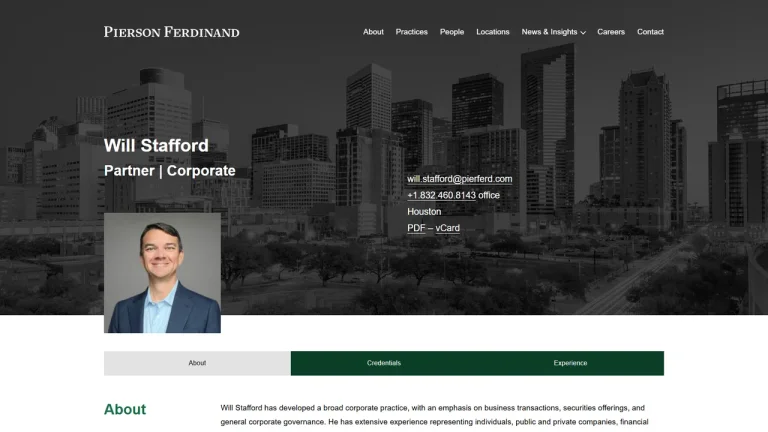
Will Stafford - Houston Business and Estate Planning Attorney - Houston, TX

SimpleLawTX - Carey Worrell - Houston, TX
Crady Jewett McCulley & Houren LLP - Houston, TX

Guerra Days Law Group - Houston, TX

Gregg & Gregg, P.C. - Houston, TX

AWA Law Firm - Houston, TX

The Kruckemeyer Law Firm - Houston, TX

Motamedi Law, PLLC - Houston, TX

Commercial Real Estate Law in the Greater Houston Area
Commercial real estate transactions and site developments in Houston operate within a distinctive legal framework. Houston is recognized for being the largest city in the United States without a traditional municipal zoning code. In place of municipal zoning, land use controls are enforced through private restrictive covenants, municipal Chapter 26 off-street parking rules, and Chapter 42 subdivision ordinances administered by the City of Houston Planning Commission and the City Legal Department.
All commercial title conveyances, deeds of trust, UCC financing statements, and mineral reservations are formally recorded in the Real Property Department of the Harris County Clerk at 201 Caroline Street in Downtown Houston. Disputed commercial development contracts, boundary litigations, and mechanics' lien foreclosures fall under the jurisdiction of the Harris County District Courts.
Navigating commercial real estate across Houston requires an understanding of diverse submarkets, including high-density office corridors in Uptown/Galleria and Downtown, industrial logistics facilities around the Port of Houston, and corporate developments in the Energy Corridor and The Woodlands. Experienced legal counsel structures robust contracts, leads complex due diligence reviews, and negotiates risk allocations to ensure commercial investments remain viable and legally secure.
Commercial Real Estate Fee Schedules and Legal Scenarios in Houston
| Case Scenario | Fee Structure | Estimated Cost (USD) | Key Cost Determinants |
|---|---|---|---|
| Commercial Lease Negotiation (Office / Retail / Industrial) | Flat Fee or Hourly ($375 - $650/hr) | $2,000 - $6,500 | Common Area Maintenance (CAM) audits, tenant improvement work letters, and sublease/assignment provisions. |
| Commercial Property Purchase & Sale Agreement (PSA) | Flat Fee or Staged Retainer | $4,500 - $15,000 | Title and ALTA survey review, Phase I Environmental Site Assessment review, and financing document preparation. |
| Commercial Landlord Lockout & Distress Warrant Litigation | Retainer plus Hourly ($400 - $700/hr) | $5,000 - $20,000 | Statutory lockout compliance under Chapter 93, commercial lien enforcement, and accelerated rent collection. |
| Land Subdivision & Municipal Chapter 42 Variance Approval | Retainer plus Hourly ($450 - $800/hr) | $8,000 - $35,000+ | Houston Planning Commission hearings, utility district compliance, and traffic impact analysis coordination. |
Critical Legal Deadlines & Statutes in Texas
Commercial property operations in Texas must adhere to precise statutory frameworks set forth in the Texas Property Code and the Texas Civil Practice and Remedies Code. Commercial leasing disputes are governed by Tex. Prop. Code § 93.002, which regulates landlord lockout procedures and mandates tenant key retrieval protocols during rental defaults. Landlords holding a commercial building lien under Tex. Prop. Code § 54.021 must comply with strict lien attachment rules on tenant personal property.
Contractors, subcontractors, and materialmen working on commercial properties must satisfy exacting fund-trapping notice deadlines under Tex. Prop. Code § 53.052, requiring written notice to the property owner and general contractor by the 15th day of the third month following each month labor or materials were delivered. Commercial foreclosure proceedings under deeds of trust are executed pursuant to Tex. Prop. Code § 51.002, requiring 21 days public notice prior to conducting sales on the first Tuesday of the month. Furthermore, actions alleging breach of a commercial lease or purchase agreement must be filed within four years under Tex. Civ. Prac. & Rem. Code § 16.004.
Justice Court Limitations vs. District Court Commercial Property Practice
Harris County Justice of the Peace Courts are restricted to claims of $20,000 or less under Tex. Gov't Code § 27.031. While an eviction action (forcible detainer) to recover possession of a commercial warehouse or storefront must originate in a Justice Court, the Justice Court lacks jurisdiction to award back rent or damages exceeding the $20,000 threshold.
Moreover, Justice Courts are statutorily barred from deciding land title controversies, enforcing commercial mechanics' liens, or entering equitable injunctions. Commercial real estate ventures routinely involve multi-million-dollar purchase agreements, intricate capital financing structures, and complex environmental liabilities. Corporate entities (such as LLCs, corporations, or limited partnerships) cannot appear pro se in Harris County District Courts. When high-value commercial defaults, lease accelerations, or replatting disputes occur, retaining experienced Houston commercial real estate counsel is essential to litigate before Harris County District Judges, enforce contractual remedies, and protect substantial capital assets.
Red Flags When Selecting a Houston Commercial Real Estate Attorney
- Using Standard Residential Forms for Commercial Deals: Lawyers who rely on residential TREC templates instead of custom commercial contracts, omitting vital indemnification, environmental warranties, and tenant estoppel requirements.
- Unfamiliarity with Houston's Non-Zoned Regulatory System: Failing to understand how private deed restrictions, municipal parking minimums, and Chapter 42 subdivision codes function in place of zoning.
- Missing Commercial Mechanic's Lien Trapping Deadlines: Missing the strict 15th-day statutory notice deadlines codified in Texas Property Code Chapter 53, forfeiting lien rights against the property owner.
- Overlooking Mineral Estate Severance: Failing to verify severed mineral ownership or neglecting to obtain surface waiver agreements, leaving commercial surface improvements exposed to mineral extraction activities.
Frequently Asked Questions
How does Houston's lack of municipal zoning impact commercial real estate?
Because the City of Houston lacks formal zoning, land use is governed by private deed restrictions and municipal development ordinances such as Chapter 26 (parking requirements) and Chapter 42 (subdivision and platting rules). An attorney must conduct title and land-use due diligence to confirm that restrictive covenants do not prohibit your proposed commercial operations.
What rules must a landlord follow to lock out a commercial tenant in Texas?
Under Tex. Prop. Code § 93.002, a landlord may change the door locks of a commercial tenant who is delinquent in rent. The landlord must place a written notice on the front door stating the name and address of the individual from whom a new key may be obtained during normal business hours after paying the delinquent rent.
How are mechanics' liens perfected on commercial construction projects in Houston?
Under Tex. Prop. Code § 53.052, subcontractors must send statutory fund-trapping notices to the owner and general contractor by the 15th day of the third month following each month labor or materials were provided. The lien affidavit must then be filed with the Harris County Clerk by the 15th day of the fourth month after the indebtedness accrued.
Why are surface use waivers critical in Texas commercial land purchases?
In Texas, the mineral estate is legally dominant over the surface estate, meaning mineral owners have the right to use as much of the surface as reasonably necessary to extract minerals. When purchasing commercial land in Houston, an attorney must secure surface waiver agreements or designated drill-site agreements to prevent future drilling on your development.
What is the process for non-judicial foreclosure on a commercial property in Houston?
Under Tex. Prop. Code § 51.002, following notice of default and opportunity to cure, the lender must post a Notice of Trustee Sale at the Harris County Courthouse, file it with the county clerk, and serve the borrower at least 21 days prior to the sale. Auctions take place on the first Tuesday of the month at the designated courthouse area.