
Criminal Defense Lawyers in Utah
Securing an experienced Utah criminal defense attorney protects your constitutional rights, freedom, and reputation when facing misdemeanor or felony charges. Dedicated legal counsel challenges unlawful traffic stops, negotiates pleas in abeyance, and prepares robust courtroom defenses to prevent incarceration. Explore our verified directory below to schedule an initial consultation with a trusted Utah defense lawyer.

Dyer Law Group PLLC - Salt Lake City, UT

Pawelek Law - Provo, UT

Craig Johnson Law - Provo, UT
Mountain State Attorneys - Salt Lake City, UT
Nelson, Taylor and Associates PLLC - Salt Lake City, UT

Hepworth Legal - Salt Lake City, UT
Paul Grant Attorney at Law - Salt Lake City, UT

Sessions and Williams Bankruptcy Attorney - Provo, UT
Law Offices of Jonathan Z. Paz - Salt Lake City, UT
Bentley Stark Immigration Law - West Jordan, UT
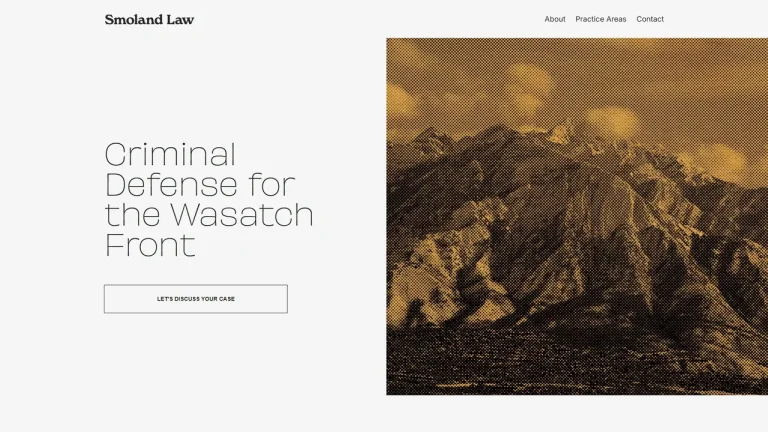
Smoland Law Salt Lake City, UT

Bugden and Isaacson LLC - Salt Lake City, UT

Get Brett: Flickinger Boulton Robson Weeks - Provo, UT
Kristopher K. Greenwood & Associates - Salt Lake City, UT
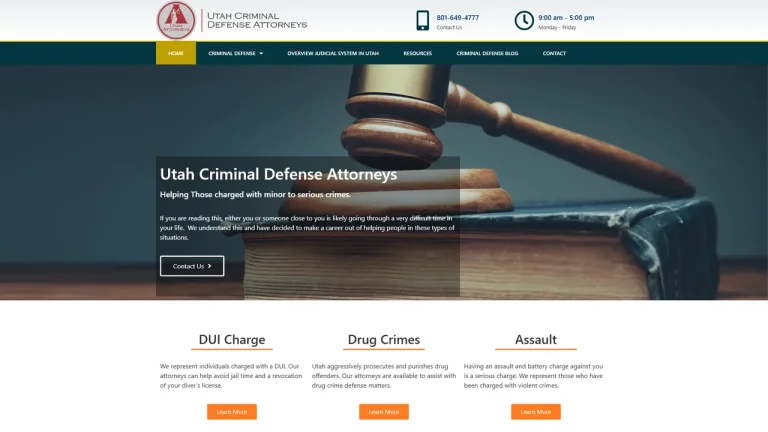
Utah Criminal Defense Attorneys Salt Lake City, UT

Tangaro Law - Salt Lake City, UT

Clyde Snow & Sessions, P.C. - Salt Lake City, UT
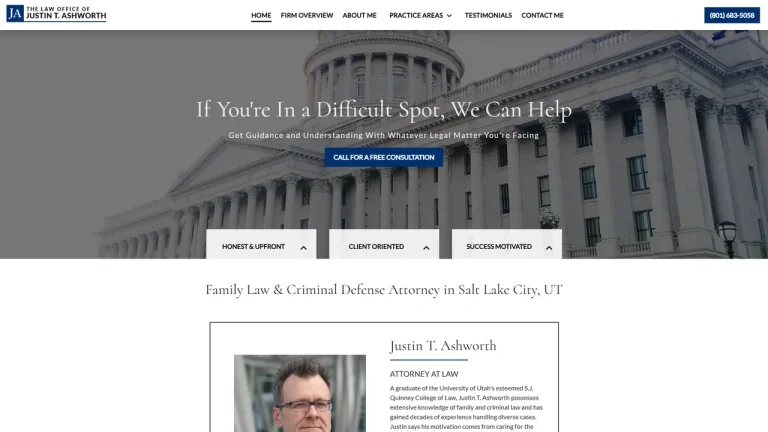
The Law Office of Justin T. Ashworth - Salt Lake City, UT
Allan & Easton, LLC - Provo, UT
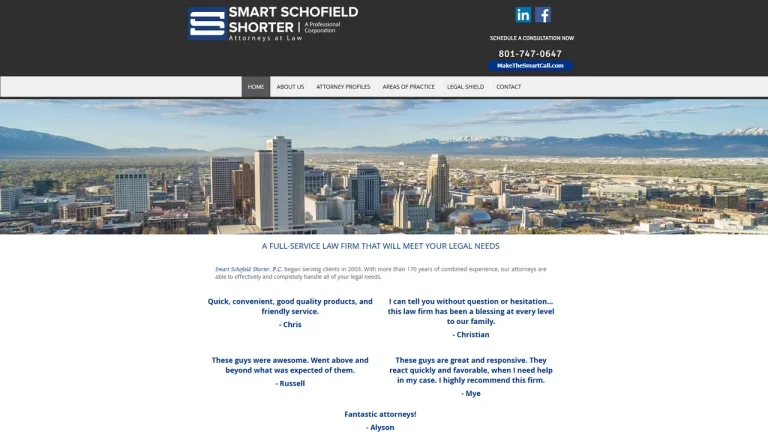
Smart Schofield Shorter, P.C. Salt Lake City, UT
Aaron Nielson Law - Salt Lake City, UT

M. Paige Benjamin, Attorney at Law - Provo, UT

Christensen and Jensen - Salt Lake City, UT
Navigating Utah Criminal Defense Across Justice & District Courts
Facing criminal prosecution in Utah carries life-altering consequences, including jail or state prison terms, extensive fines, driver license revocation, and lasting criminal records. Criminal investigations by the Utah Highway Patrol (UHP), county sheriff offices, and municipal police departments in Salt Lake City, West Valley City, Provo, Ogden, and St. George move rapidly. Protecting your liberty requires an immediate understanding of Utah dual-tier criminal court structure.
Criminal proceedings in Utah are divided between Justice Courts and District Courts. Municipal and county Justice Courts exercise jurisdiction over infractions and Class B and C misdemeanors, including first-offense DUIs, minor theft, and simple assault. Utah District Courts possess exclusive jurisdiction over all felony charges (First, Second, and Third Degree) and Class A misdemeanors. District Court proceedings include preliminary examinations where the prosecution must establish probable cause before a judge.
A seasoned Utah criminal defense attorney examines police bodycam recordings, challenges search warrants, and asserts statutory defenses under the Utah Code of Criminal Procedure. Qualified defense counsel works to secure dismissals, negotiate favorable pleas in abeyance, or advocate forcefully before juries to achieve complete acquittals.
Utah Criminal Defense Legal Fee & Case Representation Schedule
| Case Scenario | Fee Structure | Estimated Cost (USD) | Key Cost Determinants |
|---|---|---|---|
| Class B Misdemeanor / First-Offense DUI (Justice Court) | Flat Fee | $2,000 - $4,500 | Intoxilyzer calibration records, DLD hearing representation, dashcam review, Justice Court negotiations |
| Class A Misdemeanor (Assault / Retail Theft) | Flat Fee / Retainer | $3,500 - $7,500 | District Court transfer, witness depositions, restitution negotiations, plea in abeyance eligibility |
| Third or Second-Degree Felony Defense | Structured Retainer | $6,000 - $15,000 | Preliminary hearing cross-examination, motion to suppress evidence, independent forensic evaluations |
| First-Degree Felony / Multi-Day District Court Trial | Comprehensive Retainer | $15,000 - $45,000+ | Multi-week jury trial, ballistic and medical expert testimony, private investigator deployment |
Critical Legal Deadlines & Statutes in Utah
Utah enforces some of the strictest criminal laws in the United States, including a 0.05% blood alcohol concentration (BAC) limit under Utah Code § 41-6a-502. Following a DUI arrest, an accused driver has exactly ten calendar days from the date of arrest to request a hearing with the Utah Driver License Division (DLD) pursuant to Utah Code § 41-6a-509. Missing this ten-day deadline results in automatic administrative driver license suspension.
Defendants are entitled to a speedy trial under Utah Code § 77-1-6 and the Utah Constitution. For felony prosecutions in District Court, a defendant is entitled to a preliminary examination under Utah Code § 77-8a-1 and Rule 7 of the Utah Rules of Criminal Procedure. If the defendant is held in custody, the preliminary hearing must be scheduled within fourteen days unless good cause is shown.
Eligible defendants may pursue a statutory diversion through a Plea in Abeyance under Utah Code § 77-2a-1, which allows a plea of guilty or no contest to be held without entry of judgment, resulting in complete dismissal upon successful completion of court-ordered conditions. Furthermore, record clearance is governed by the Utah Clean Slate Law and the Utah Expungement Act under Utah Code § 77-40a-101, establishing mandatory waiting periods before eligible misdemeanor records can be expunged.
Justice Court Summary Limits vs. District Court Defense Representation
Utah Justice Courts handle civil small claims matters up to $20,000 under Utah Code § 78A-8-102. These summary civil mechanisms have zero authority or procedural application to criminal charges. All criminal prosecutions carry constitutional stakes that can result in detention in county facilities like the Salt Lake County Metro Jail or incarceration in the Utah State Correctional Facility.
Attempting to handle a criminal charge pro se presents severe dangers. Entering an unvetted guilty plea at a Justice Court arraignment can result in unexpected driver license revocations, mandatory ignition interlock requirements, loss of firearm ownership rights, and disqualification from professional licensing. In District Court felony matters, pro se defendants forfeit critical opportunities to challenge probable cause during preliminary hearings. An experienced Utah defense attorney files motions to suppress illegally seized evidence, evaluates field sobriety test compliance, and negotiates alternatives to incarceration.
Red Flags to Avoid When Selecting Utah Criminal Defense Counsel
- Attorneys who guarantee an outright dismissal or acquittal before examining police incident reports and discovery packets.
- Lawyers who fail to inform clients of the urgent ten-day deadline to request a Utah Driver License Division (DLD) hearing in DUI cases.
- Counsel lacking trial experience before District Court judges in the specific judicial district where your case is pending.
- Firms that do not provide a clear, written fee agreement specifying whether preliminary hearings and jury trials are covered by the initial retainer.
Frequently Asked Questions
What is Utah legal blood alcohol limit for DUI?
Utah has a legal blood alcohol concentration (BAC) limit of 0.05% for driving under the influence, which is the lowest standard per se threshold in the United States.
What is a Plea in Abeyance in Utah?
A Plea in Abeyance is an agreement where you enter a plea of guilty or no contest, but the judge does not enter a conviction. If you successfully complete probation and required terms, the charges are dismissed without a conviction on your record.
How much time do I have to request a DLD hearing after a DUI arrest?
You have exactly ten calendar days from the date of your arrest or citation to submit a written request for a hearing with the Utah Driver License Division to challenge your administrative license suspension.
What is the difference between Justice Court and District Court in Utah?
Justice Courts handle minor Class B and C misdemeanors and infractions within municipal or county boundaries. District Courts have general jurisdiction and handle all felony offenses and Class A misdemeanors.
How does the Utah Clean Slate Law work for expungements?
The Utah Clean Slate Law automatically expunges certain qualifying misdemeanor records, such as dismissed cases, infractions, and eligible Class B and C misdemeanors, after a qualifying period without requiring a formal court petition.