
Wrongful Termination Lawyers in Salt Lake City
Retaining an experienced wrongful termination lawyer in Salt Lake City protects your career and financial livelihood against illegal workplace discharge. Seasoned employment attorneys investigate retaliation, file claims with administrative labor agencies, and negotiate substantial severance packages outside of court. Explore our directory below to consult with top-rated Salt Lake City employment attorneys.
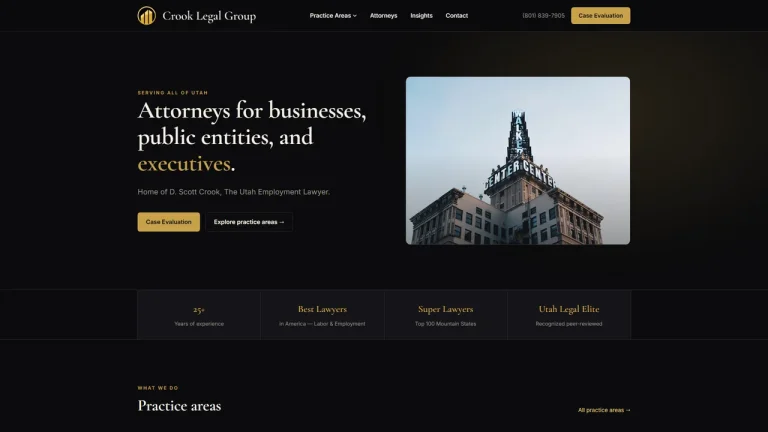
Crook Legal Group PLLC - Salt Lake City, UT
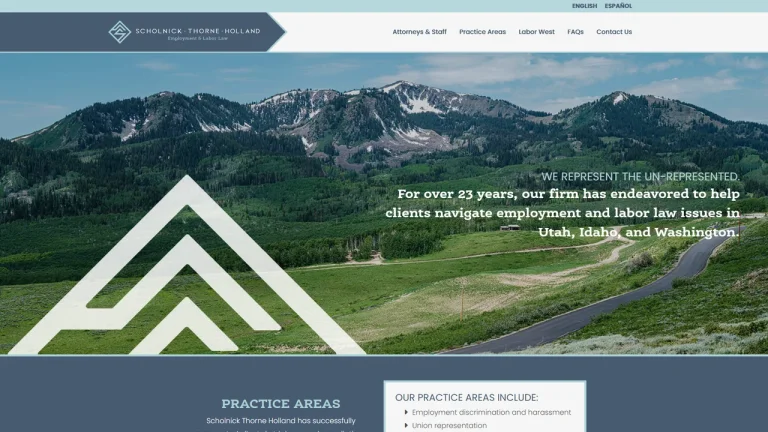
Scholnick Thorne Holland - Salt Lake City, UT
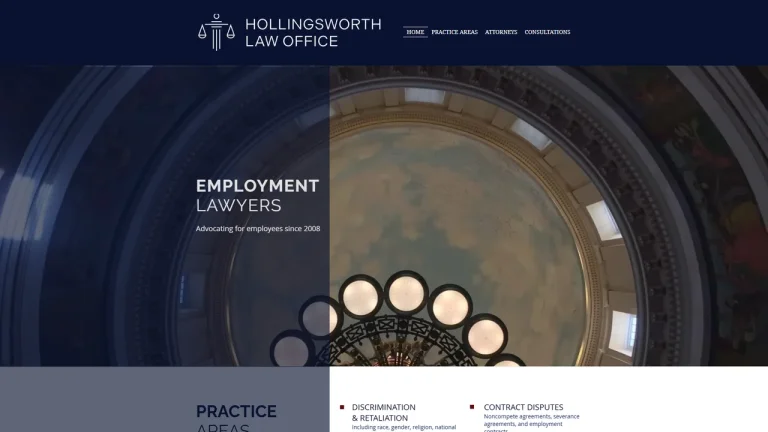
Hollingsworth Law Office, LLC - Salt Lake City, UT

Florence M. Vincent - Salt Lake City, UT
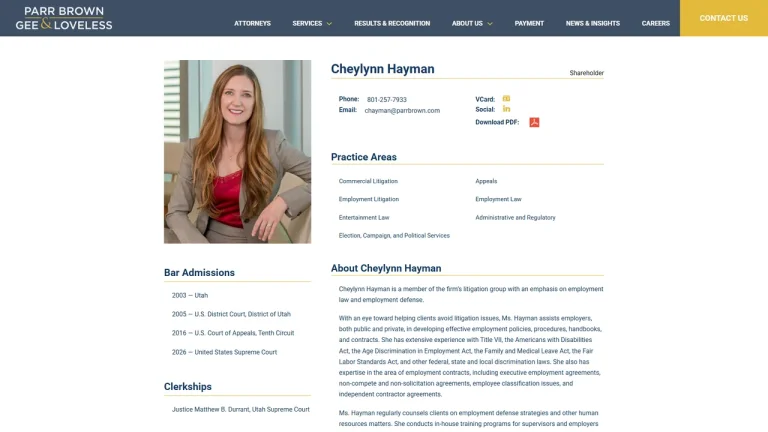
Cheylynn Hayman, Employment Attorney - Salt Lake City, UT
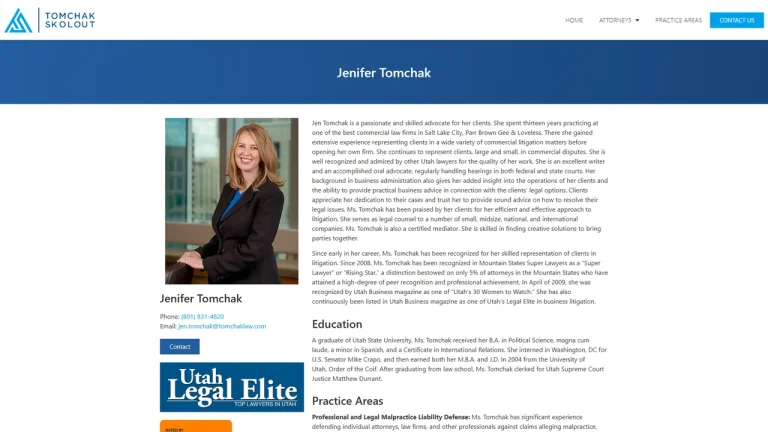
Jenifer L. Tomchak - Employment Litigation Attorney - Salt Lake City, UT
Dyer Law Group PLLC - Salt Lake City, UT
Employment Rights & Unlawful Discharge in Salt Lake County
Experiencing an unlawful termination in Salt Lake City can cause acute financial distress and professional damage. As Utah's primary commercial center, Salt Lake City employs thousands across major healthcare networks, financial institutions, technology startups along the Silicon Slopes corridor, and industrial hubs along the Interstate 15 and Interstate 80 corridors.
While Utah is an at-will employment state, employers are strictly prohibited from discharging workers for illegal reasons, including unlawful discrimination, retaliation for reporting workplace safety violations, or refusal to violate state law. Workers seeking redress for discrimination or retaliatory discharge must first file formal administrative complaints through the Utah Antidiscrimination and Labor Division (UALD), headquartered on East 300 South in downtown Salt Lake City, or dual-file with the federal Equal Employment Opportunity Commission (EEOC).
If administrative mediation does not produce a resolution and a right-to-sue notice is issued, lawsuits are filed in the Third Judicial District Court at the Matheson Courthouse on South State Street in Salt Lake City. Federal employment claims proceed to the Orrin G. Hatch United States Courthouse. Retaining an assertive local wrongful termination attorney ensures critical workplace communications are preserved and legal claims are filed before statutory deadlines lapse.
Common Retainer Structures & Case Valuations for Wrongful Discharge
| Case Scenario | Fee Structure | Estimated Cost (USD) | Key Cost Determinants |
|---|---|---|---|
| Retaliation & Whistleblower Discharge | Contingency (33.3% - 40%) | $40,000 - $175,000 | Documented safety or fraud complaints, proximity of firing to protected activity, back pay damages. |
| Discrimination Discharge (UALD/EEOC) | Contingency (33.3% - 40%) | $50,000 - $250,000+ | Protected class status, employer pretext evidence, front pay, emotional distress assessments. |
| Executive Breach of Employment Contract | Hourly Retainer ($350 - $550/hr) | $15,000 - $60,000+ | For-cause termination criteria, stock option vesting disputes, non-compete covenant litigation. |
| Severance Review & Agreement Negotiation | Flat Fee or Hourly | $750 - $2,500 | Waiver of claims review, non-disparagement modifications, additional months of severance pay. |
Critical Legal Deadlines & Statutes in Utah
Wrongful termination claims in Utah are governed by strict administrative and judicial limitation periods. Under the Utah Antidiscrimination Act, codified under Utah Code § 34A-5-107, an employee alleging discrimination or retaliation based on race, sex, pregnancy, age, disability, or religion must file a formal complaint with the UALD within 180 days of the discriminatory act. Federal claims dual-filed with the EEOC must be filed within 300 days.
For common-law claims alleging wrongful termination in violation of public policy-such as being terminated for refusing to commit an illegal act-Utah courts enforce a four-year statute of limitations under the general catch-all limitation period in Utah Code § 78B-2-307. If the termination involves the breach of a written employment contract, a six-year statute of limitations applies pursuant to Utah Code § 78B-2-309, whereas oral agreements carry a four-year limit.
Small Claims Limits vs. District Court Representation in Salt Lake City
Under Utah Code § 78A-8-102, the Salt Lake City Justice Court exercises jurisdiction over small claims disputes up to $20,000. An employee might consider small claims court solely to recover a modest final paycheck or unpaid expense reimbursement where liability is undisputed.
However, wrongful termination cases involve substantial ongoing financial damages, including front pay, lost retirement contributions, emotional distress, and statutory attorney fees, which quickly surpass the $20,000 small claims limit. Furthermore, small claims courts cannot hear statutory claims under the Utah Antidiscrimination Act. Attempting to negotiate directly with corporate defense counsel without representation frequently results in lowball severance offers. An experienced Salt Lake City employment lawyer handles administrative hearings and litigates in the Third District Court to secure full restitution.
Red Flags When Hiring a Salt Lake City Wrongful Termination Lawyer
- Missing the 180-Day UALD Deadline: Failing to submit an administrative charge to the Utah Antidiscrimination and Labor Division within 180 days permanently bars your state discrimination claims.
- Promising Guaranteed Settlement Figures: Because Utah is an at-will employment state, proving wrongful discharge requires rigorous evidence; attorneys who promise specific sums at the initial intake are misleading you.
- Rushing Clients to Sign Restrictive Severance Releases: Beware of counsel who advises accepting an employer's initial severance offer without thoroughly auditing accrued wage claims or potential retaliation rights.
- Demanding Heavy Non-Refundable Retainers for Wage Claims: Most reputable wrongful termination lawyers work on a contingency fee basis where legal fees are contingent upon securing a recovery.
Frequently Asked Questions
What does at-will employment mean in Salt Lake City, Utah?
At-will employment means an employer can terminate an employee for any lawful reason or no reason at all. However, an employer cannot fire an employee for an illegal reason, such as discrimination, retaliation, or in violation of public policy.
What is the deadline to file a wrongful termination complaint in Utah?
Complaints based on discrimination or retaliation must be filed with the Utah Antidiscrimination and Labor Division (UALD) within 180 days of termination, or within 300 days with the federal EEOC.
What is considered wrongful termination in violation of public policy in Utah?
Under Utah common law, an employer cannot fire an employee for refusing to commit an illegal act, performing a statutory public duty (such as jury duty), or exercising a clear statutory right (such as filing a workers' compensation claim).
Should I sign a severance agreement immediately after being fired?
No. Signing a severance agreement waives your right to sue the employer for wrongful termination. Have an employment lawyer review the agreement to evaluate potential claims and negotiate improved severance terms.
Where are wrongful termination lawsuits filed in Salt Lake City?
State claims are filed in the Third Judicial District Court at the Matheson Courthouse in downtown Salt Lake City, while federal discrimination and statutory claims are filed in the Orrin G. Hatch United States Courthouse.