
Trademark Lawyers in Utah
Securing trademark registration in Utah ensures your brand identity, business name, and market goodwill are shielded against unauthorized infringement and unfair competition. Dedicated trademark attorneys conduct comprehensive clearance searches and manage formal USPTO prosecution to avoid expensive administrative refusals. Browse our directory below to consult an experienced Utah trademark attorney today.
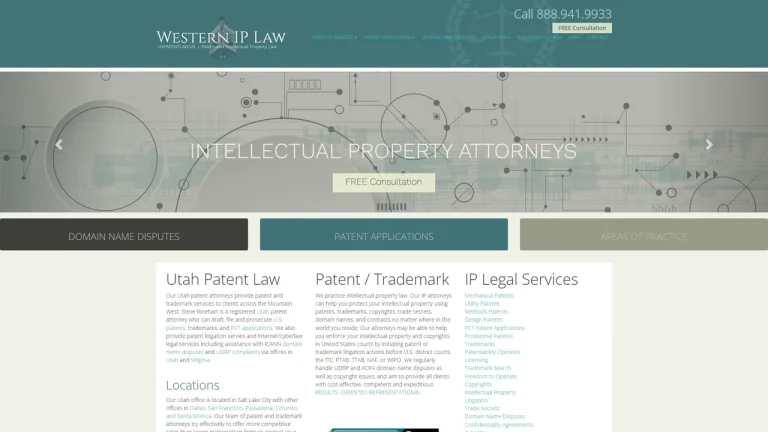
Western IP Law - Utah Patent Attorneys - Salt Lake City, UT
Baker & Associates PLLC - Salt Lake City, UT
Wells IP Law - Trademark Attorney - Salt Lake City, UT
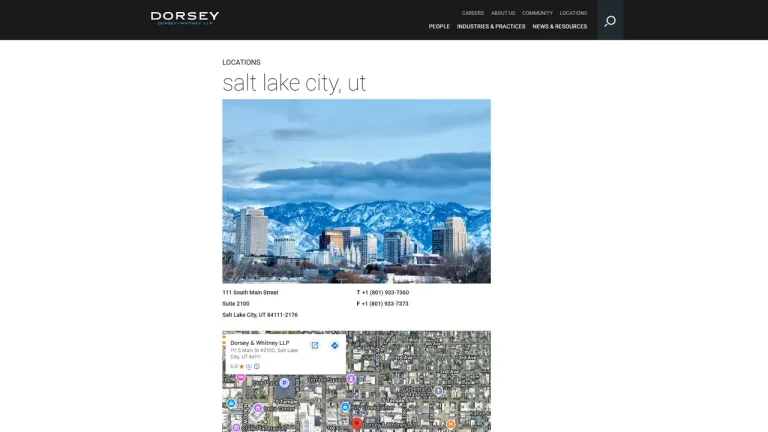
Dorsey and Whitney LLP - Salt Lake City, UT

Dentons Durham Jones Pinegar Salt Lake City, UT

Bold Patents Law Firm - Provo, UT

Ray Quinney & Nebeker - Provo, UT

Law on Call - West Jordan, UT

Kenneth E. Horton, Esq. - Salt Lake City, UT
Dallin Call IP Law, LLC - West Jordan, UT
James Dodge Russell & Stephens, P.C. Salt Lake City, UT

Patent Law Works LLP - Salt Lake City, UT
Bateman IP - Salt Lake City, UT
Parr Brown Gee and Loveless - Salt Lake City, UT
Kirton McConkie - Salt Lake City, UT

TraskBritt PC - Salt Lake City, UT

Goff IP Law - Provo, UT
Wasatch-IP - Salt Lake City, UT

Warren M. Pate, LLC - Salt Lake City, UT
Terry E. Welch - Salt Lake City, UT

Sumsion Business Law - Provo, UT
Kunzler Bean & Adamson - Salt Lake City, UT
Mohr Intellectual Property Law Solutions, P.C. - Salt Lake City, UT

Safeguarding Commercial Brand Assets Across Utah
In Utah's dynamic economic landscape-spanning thriving tech enterprises in the Silicon Slopes, retail chains, hospitality ventures in Park City, and regional consumer goods manufacturers across the Wasatch Front-a distinctive brand name, logo, or trade dress represents one of a company's most critical assets. Protecting that commercial identity against consumer confusion, cybersquatting, and predatory brand hijacking requires proactive trademark legal counsel.
Trademark governance in Utah operates across dual layers of statutory protection. At the federal level, brand protection is governed by the Lanham Act through the United States Patent and Trademark Office (USPTO). For businesses seeking intra-state protection within state borders, trademarks can be registered with the Utah Division of Corporations and Commercial Code under the Utah Trademark Protection Act. When trademark litigation, unfair competition, or counterfeit claims arise, proceedings are heard in either the Utah State District Courts (such as the Third Judicial District in Salt Lake County or the Fourth Judicial District in Utah County) or the United States District Court for the District of Utah in Salt Lake City.
Retaining a licensed Utah trademark lawyer provides indispensable security. An attorney guides your business through thorough clearance searches, determines distinctiveness on the spectrum ranging from descriptive to arbitrary or fanciful, structures precise descriptions of goods and services, and responds to complex substantive Office Actions issued by USPTO examining attorneys.
Trademark Legal Fees & Prosecution Cost Breakdown in Utah
The legal investment required to protect a trademark depends on the number of classes of goods or services, the registration tier (federal vs. state), and the presence of third-party oppositions. Below is a realistic overview of standard trademark legal fees in Utah.
| Case Scenario | Fee Structure | Estimated Cost (USD) | Key Cost Determinants |
|---|---|---|---|
| Comprehensive Trademark Clearance Search & Legal Opinion | Flat Fee | $850 - $1,800 | Number of Nice classes evaluated, common law business registries, domain databases, and state corporate filings. |
| USPTO Federal Trademark Application (Section 1a or 1b) | Flat Fee + USPTO Filing Fees ($250 - $350/class) | $1,200 - $2,500 per mark | Filing basis (Actual Use vs. Intent-to-Use), specimen vetting, custom identification drafting, and number of international classes. |
| Substantive USPTO Office Action Response (Section 2d / 2e) | Hourly or Staged Flat Fee | $1,500 - $4,500 | Complexity of likelihood of confusion citations, requirement of co-existence agreements, or acquiring distinctiveness under Section 2(f). |
| TTAB Opposition, Cancellation, or Federal Infringement Defense | Hourly Retainer ($350 - $650/hr) | $6,000 - $25,000+ | Discovery requirements, expert consumer confusion surveys, settlement mediation, and preliminary injunction hearings. |
Critical Legal Deadlines & Statutes in Utah
Securing and maintaining trademark exclusivity under federal and Utah law requires strict compliance with statutory filing windows. Missing a deadline results in legal abandonment of your mark.
When filing an Intent-to-Use (ITU) trademark application under 15 U.S. Code § 1051(b), once the USPTO issues a Notice of Allowance, the applicant has precisely six months to submit a verified Statement of Use with bona fide specimens under 15 U.S. Code § 1051(d), or request an extension in six-month increments up to a statutory maximum of 36 months.
Once registered on the USPTO Principal Register, marks must be maintained. The registrant must file a Section 8 Declaration of Continued Use between the fifth and sixth year of registration pursuant to 15 U.S. Code § 1058, followed by a joint Section 8 declaration and Section 9 renewal every ten years under 15 U.S. Code § 1059. When a trademark is approved and published in the USPTO Official Gazette, third parties have exactly 30 calendar days under 15 U.S. Code § 1063 to file a Notice of Opposition before the Trademark Trial and Appeal Board (TTAB). At the state level, registrations granted under the Utah Trademark Protection Act are governed by Utah Code § 70-3a-101 and must be renewed every five years pursuant to Utah Code § 70-3a-305.
Small Claims Court vs. District Court Trademark Litigation
In Utah, the Small Claims Court has a statutory jurisdictional limit of $15,000 pursuant to Utah Code § 78A-8-102. While small claims divisions handle routine financial breach-of-contract or unpaid invoice claims, they are structurally unequipped and legally unauthorized to adjudicate trademark infringement actions.
Small claims courts in Utah lack equitable jurisdiction; they cannot issue preliminary injunctions, permanent restraining orders, or mandates ordering an infringer to cease using a brand name, recall counterfeit goods, or forfeit an infringing domain. Under the federal Lanham Act codified at 15 U.S. Code § 1116, injunctive relief and the recovery of infringer profits or statutory damages under 15 U.S. Code § 1117 can only be awarded by courts of general jurisdiction.
Consequently, brand owners seeking to enforce their marks must initiate litigation either in a Utah District Court or the United States District Court for the District of Utah. Attempting to protect trademark assets without legal representation exposes businesses to cancellation counterclaims, loss of rights, and the inability to secure nationwide injunctive enforcement.
Red Flags When Hiring a Utah Trademark Lawyer
Navigating the trademark legal space requires caution against deceptive automated filing services and inexperienced practitioners. Keep an eye out for these critical red flags:
- Confusing an LLC registration with trademark ownership: Some service providers falsely claim that registering a business name or 'Doing Business As' (DBA) with the Utah Division of Corporations provides exclusive trademark protection. An LLC filing merely permits legal operation under that name and confers no trademark rights.
- Filing without a comprehensive multi-tier clearance search: Firms that conduct only a direct-match knockout search on the USPTO public search portal leave you vulnerable to confusingly similar phonetic equivalents, foreign translations, and common law users who hold superior unregistered rights.
- Automated legal platforms using non-lawyer document preparers: Non-lawyer online filing portals cannot evaluate whether your mark is merely descriptive under Section 2(e)(1) or assist when a substantive Office Action is issued. A licensed Utah attorney must represent you to formulate legal arguments.
- Predatory mail solicitations for fake renewal fees: Following USPTO filings, business owners frequently receive deceptive, official-looking letters demanding hundreds of dollars for publication in private registries. Ethical attorneys warn clients about these scams and manage all official USPTO fee correspondence.
Frequently Asked Questions
Does registering an LLC or DBA with the State of Utah grant me trademark rights?
No. Registering an entity or assumed business name with the Utah Division of Corporations only establishes your right to conduct business under that corporate entity in the state. It does not grant trademark ownership, nor does it prevent a senior trademark holder from suing you for infringement.
What is the difference between a Utah state trademark and a federal trademark?
A Utah state trademark registration under Utah Code § 70-3a-101 protects your mark exclusively within the borders of Utah for intrastate commerce. A federal registration with the USPTO grants nationwide presumptive ownership, nationwide constructive use priority, and the legal right to use the official registered symbol (®).
What is a substantive USPTO Office Action?
A substantive Office Action is an official letter from a USPTO examining attorney raising statutory legal objections to your trademark registration, commonly citing a likelihood of confusion under Section 2(d) or mere descriptiveness under Section 2(e)(1). Resolving it requires a detailed legal response brief filed within the statutory response window.
How long does it take to secure a federal trademark through the USPTO?
The federal trademark registration process typically takes between 10 to 18 months from the initial filing date, assuming no extensive substantive Office Actions or third-party oppositions are filed before the Trademark Trial and Appeal Board.
What should I do if my Utah business receives a trademark cease-and-desist letter?
Do not panic or immediately contact the opposing party directly. Consult a qualified Utah trademark attorney immediately to review the claimant's priority date, evaluate whether their mark is enforceable, and determine whether you have valid defenses before responding.