
Workplace Discrimination Lawyers in Utah
Retaining an experienced Utah workplace discrimination attorney ensures your legal rights are vigorously defended under state and federal employment statutes. Skilled counsel can guide you through mandatory administrative agency filings, investigate employer misconduct, and negotiate resolutions to protect your professional standing. Browse our statewide directory to connect with a verified Utah discrimination lawyer for a confidential consultation.

Dentons Durham Jones Pinegar Salt Lake City, UT

Ray Quinney & Nebeker - Provo, UT
Dyer Law Group PLLC - Salt Lake City, UT
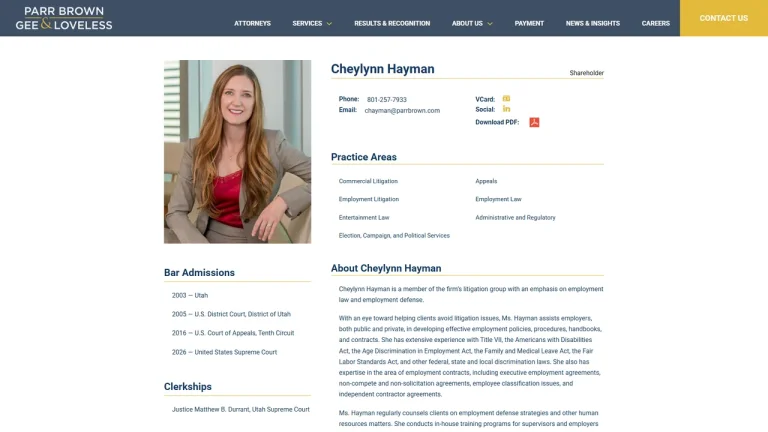
Cheylynn Hayman, Employment Attorney - Salt Lake City, UT
Scholnick Thorne Holland - Salt Lake City, UT
Provo Employment Attorney - UT
Littler Mendelson P.C. - Salt Lake City, UT
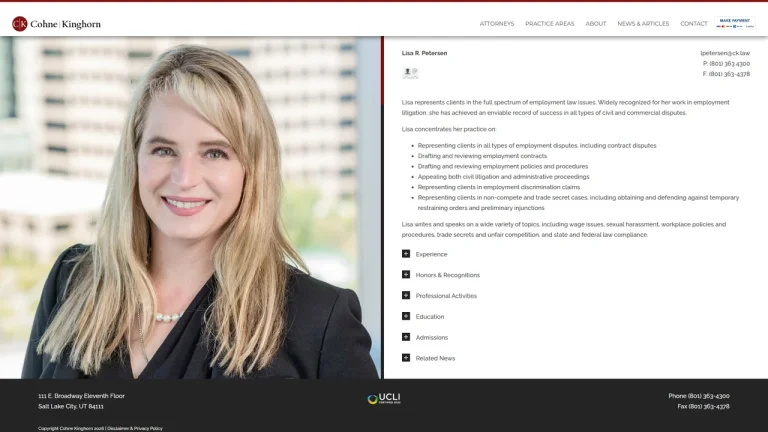
Petersen Lisa R - Salt Lake City, UT
Teter & Vu LLC - Salt Lake City, UT
Hollingsworth Law Office, LLC - Salt Lake City, UT

Fabian VanCott Salt Lake City, UT
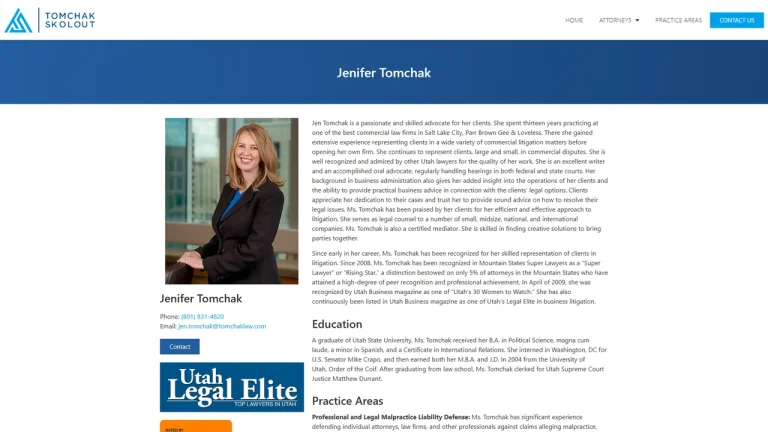
Jenifer L. Tomchak - Employment Litigation Attorney - Salt Lake City, UT

Andrus Law Firm, LLC - Salt Lake City, UT

Enforcing Equal Employment Protections Across the State of Utah
Workplace discrimination undermines career advancement and violates statutory rights guaranteed to employees throughout Utah. Whether operating in the thriving tech campuses of Lehi and Draper, industrial facilities in Weber County, medical centers in Salt Lake City, or service establishments in St. George and Provo, employers are legally bound to maintain workplaces free from illegal bias, harassment, and retaliation.
The primary state enforcement mechanism is the Utah Antidiscrimination Act, codified in Utah Code § 34A-5-106, which explicitly prohibits discrimination based on race, color, religion, sex, pregnancy, childbirth, pregnancy-related conditions, age (40 and older), national origin, disability, sexual orientation, and gender identity. The Act applies to private and public entities employing 15 or more individuals within Utah under Utah Code § 34A-5-102(1)(i), mirroring the employer threshold established under federal civil rights laws.
Administrative oversight is shared between the Utah Labor Commission's Antidiscrimination and Labor Division (UALD) and the federal Equal Employment Opportunity Commission (EEOC). Resolving claims often involves administrative hearings before UALD administrative law judges, followed by state judicial enforcement in Utah District Courts or federal litigation before the United States District Court for the District of Utah.
Fee Structures and Legal Investment for Utah Discrimination Claims
| Case Scenario | Fee Structure | Estimated Cost (USD) | Key Cost Determinants |
|---|---|---|---|
| Intake, Strategy & Formal UALD Filing | Flat Fee / Hourly | $500 - $2,000 | Volume of incident documentation, witness statement collection, timeline reconstruction. |
| UALD Conciliation & Agency Mediation | Hourly / Fixed Retainer | $1,500 - $4,500 | Employer willingness to settle, mitigation evidence, scope of affirmative relief sought. |
| Federal / State Civil Rights Litigation | Contingency (33% - 40%) | $0 upfront (percentage of recovery) | Employer defense tactics, depth of corporate email discovery, deposition count, trial length. |
| Retaliation Defense & Injunction Petitions | Hybrid / Hourly | $4,000 - $15,000+ | Urgency of protective orders, motion practice before Utah District Court, evidentiary hearings. |
Critical Legal Deadlines & Statutes in Utah
Employment discrimination cases are strictly governed by procedural deadlines. Under Utah Code § 34A-5-107(1)(c), an aggrieved individual must file a formal complaint with the UALD within 180 days of the alleged discriminatory act. Because Utah is a deferral state with a worksharing agreement between the UALD and EEOC, federal claims under Title VII may be extended up to 300 days pursuant to 42 U.S. Code § 2000e-5(e)(1). Missing these administrative windows results in the complete forfeiture of statutory discrimination remedies.
Once the administrative investigation concludes, if the agency issues a Right-to-Sue notice or final determination, the employee has exactly 90 days from receipt under 42 U.S. Code § 2000e-5(f)(1) to commence a formal civil lawsuit in federal court. Furthermore, if the discriminatory practices caused wage disparities, the Utah Payment of Wages Act provides enforcement mechanisms under Utah Code § 34-28-19, requiring claims to be asserted within one year of nonpayment.
Administrative Remedies and Small Claims vs. Representation
Under Utah Code § 78A-8-102, Utah Justice Courts maintain small claims jurisdiction up to $20,000. However, small claims courts are completely stripped of jurisdiction over employment discrimination disputes. Claimants cannot file discrimination or sexual harassment complaints in a Justice Court small claims session because Utah law requires the exhaustion of administrative remedies under Utah Code § 34A-5-107.
Additionally, small claims courts cannot award emotional distress damages, order policy revisions, or mandate employee reinstatement. Navigating the evidentiary burdens required to prove disparate treatment or hostile work environments under Title VII and the Utah Antidiscrimination Act necessitates skilled legal counsel who can manage administrative depositions, respond to summary judgment motions, and quantify compensatory and punitive damages before Utah District Courts or the federal bench.
Red Flags to Avoid When Selecting a Utah Discrimination Attorney
- Failing to emphasize the vital 180-day filing deadline with the UALD, potentially causing clients to lose their statutory right to legal recourse.
- Guaranteeing quick, large settlements without conducting a thorough analysis of whether the alleged behavior meets the legal standard of being severe or pervasive.
- Lacking familiarity with Utah-specific statutory provisions, such as religious entity exemptions under Utah Code § 34A-5-102(1)(i)(ii).
- Unclear billing practices that fail to explain how out-of-pocket litigation expenses, court reporter costs, and expert witness retainers are deducted from contingency recoveries.
Frequently Asked Questions
What classes are protected under the Utah Antidiscrimination Act?
Under Utah Code § 34A-5-106, protected categories include race, color, sex, pregnancy, childbirth, pregnancy-related medical conditions, age (40 and older), religion, national origin, disability, sexual orientation, and gender identity. Employers with 15 or more workers are subject to these provisions.
What is the deadline to file a workplace discrimination charge in Utah?
You have 180 days from the discriminatory conduct to file a charge with the Utah Antidiscrimination and Labor Division (UALD) under Utah Code § 34A-5-107(1)(c). If cross-filing under federal law with the EEOC, the deadline is extended to 300 days, though filing promptly with the UALD is strongly advised.
Can an employer retaliate against me for reporting harassment in Utah?
No. Both federal law and Utah Code § 34A-5-106 make it illegal for an employer to demote, fire, harass, or otherwise retaliate against an employee because they opposed discriminatory practices, participated in an internal complaint, or filed an agency charge.
What is the difference between filing with the UALD versus the EEOC?
The UALD enforces state law under the Utah Antidiscrimination Act, while the EEOC enforces federal statutes like Title VII and the ADA. Because they maintain a worksharing agreement, filing a charge with one agency and requesting dual filing typically protects your rights under both state and federal law.
What financial recovery is available in a Utah discrimination lawsuit?
Successful claimants may obtain back pay (lost wages), front pay (future earnings), compensation for emotional distress, restoration of employee benefits, attorney fees, and punitive damages where an employer acted with malice or reckless indifference.