
Bankruptcy Lawyers in Burlington
Finding an experienced Burlington bankruptcy attorney ensures your property and financial assets remain protected under federal and Vermont exemption laws. Local counsel can stop collection actions and foreclosure through the automatic stay while structuring viable debt relief. Explore our verified directory below to schedule a consultation with trusted Chittenden County advocates.

Wiener & Slater, PLLC - Burlington, VT

Paul Frank + Collins P.C. - Burlington, VT

Lisman Leckerling PC - Burlington, VT
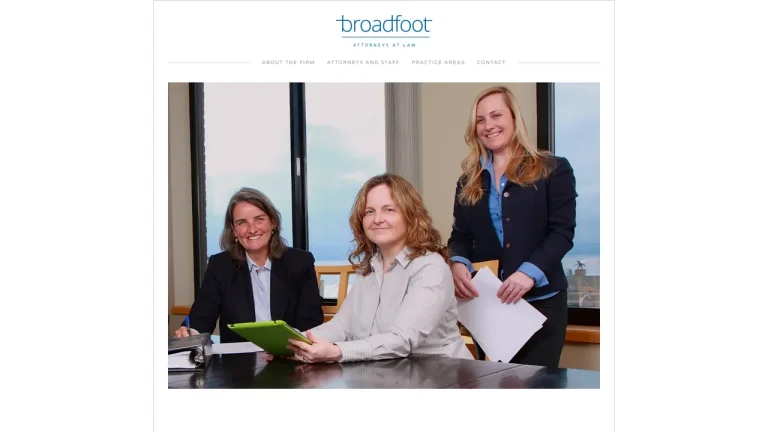
Broadfoot Attorneys at Law - Burlington, VT

Primmer Piper Eggleston & Cramer PC - Burlington, VT

Downs Rachlin Martin PLLC - Burlington, VT

Sheehey Furlong & Behm P.C. - Burlington, VT

Legal Services Vermont - Burlington, VT

O'Connor First - Burlington, VT

Doremus Kantor & Zullo - Burlington, VT
Navigating Federal Bankruptcy in Burlington and Chittenden County
Filing for bankruptcy protection in Burlington requires navigating the federal judicial system rather than state civil courts. All bankruptcy petitions for residents and small business owners throughout Chittenden County-including Burlington, South Burlington, Winooski, Essex Junction, and Colchester-are adjudicated by the United States Bankruptcy Court for the District of Vermont. The court maintains a divisional presence in Burlington, where federal bankruptcy judges oversee Chapter 7 asset liquidations, Chapter 13 wage-earner repayment plans, and Chapter 11 commercial restructurings.
Although bankruptcy is codified under federal law, the assets you retain depend directly on statutory exemption elections. Vermont is an elective exemption jurisdiction, which grants Burlington debtors the valuable choice between federal bankruptcy exemptions established in 11 U.S. Code § 522(d) and Vermont state exemptions codified in 12 V.S.A. § 2740. Selecting the optimal exemption structure requires careful analysis, as Vermont offers an expansive homestead exemption under 27 V.S.A. § 101 protecting up to $125,000 in residential real estate equity, whereas federal exemptions provide flexible wildcard provisions for personal property.
Retaining a Burlington bankruptcy lawyer ensures your petition, asset schedules, and means-test calculations are meticulously prepared before filing. Local practitioners regularly appear before the standing Chapter 7 and Chapter 13 trustees for the District of Vermont, guiding debtors through mandatory 341 Meetings of Creditors and protecting exempt property against trustee turnover motions or creditor objections.
Burlington Bankruptcy Legal Fees & Filing Classifications
| Case Scenario | Fee Structure | Estimated Cost (USD) | Key Cost Determinants |
|---|---|---|---|
| Chapter 7 Liquidation (Individual / Uncontested) | Flat Fee | $1,400 - $2,600 | Passing statutory means testing, volume of unsecured creditors, exemption scheduling, statutory $338 court filing fee. |
| Chapter 13 Repayment Plan (Individual / Sole Proprietor) | Court-Approved Flat / Hourly Hybrid | $3,200 - $4,800 | Structure of 36-to-60 month repayment plan, curing home mortgage arrears, priority tax debts, local District of Vermont standing trustee rules. |
| Small Business Restructuring (Subchapter V Chapter 11) | Retainer + Hourly ($275 - $475/hr) | $8,500 - $22,000 | Operational complexity, cash collateral stipulations, business balance sheet audits, Subchapter V trustee coordination. |
| Adversary Proceeding & Nondischargeability Defense | Hourly ($250 - $425/hr) | $3,500 - $12,000+ | Creditor fraud claims under 11 U.S. Code § 523, formal discovery, deposition practice, trial representation in federal court. |
Critical Legal Deadlines & Statutes in Vermont
Timing in federal bankruptcy is governed by rigid statutory deadlines that dictate rights and liabilities. The moment a bankruptcy petition is formally filed with the District of Vermont, the automatic stay under 11 U.S. Code § 362 immediately takes effect, enjoining foreclosures, wage attachments, utility disconnections, and pending state collection lawsuits in the Vermont Superior Court.
Eligibility for a complete Chapter 7 discharge hinges on the statutory means test calculation under 11 U.S. Code § 707(b), which evaluates your gross household income over the exact 6 calendar months preceding the petition date against the median family income for Vermont. If income exceeds the state median, disposable income formulas determine whether Chapter 13 conversion is mandatory.
Debtors must also account for statutory lookback periods regarding previous financial transfers. Bankruptcy trustees hold avoidance powers under 11 U.S. Code § 547 to claw back preferential transfers made to general creditors within 90 days of filing, or within 1 year for payments made to insiders and family members. Furthermore, under the Vermont Uniform Voidable Transactions Act in 14 V.S.A. § 2281 and 11 U.S. Code § 548, trustees may challenge fraudulent property conveyances occurring up to 4 years prior to filing.
Following filing, the 341 Meeting of Creditors must be scheduled within 21 to 40 days. From that hearing date, creditors and the trustee have exactly 60 days under Fed. R. Bankr. P. 4004(a) to file formal complaints challenging the debtor's general discharge or the dischargeability of specific debts.
Small Claims Limitations vs. Federal Bankruptcy Intervention
When financial disputes involve isolated monetary claims, the Vermont Superior Court, Chittenden Civil Division maintains a Small Claims procedure located at the Costello Courthouse on Main Street in Burlington. The statutory jurisdictional ceiling for small claims actions in Vermont is $5,000 pursuant to 12 V.S.A. § 5531. Small claims cases offer a simplified, informal forum designed for individuals to resolve minor contract debts or property disputes without attorney involvement.
However, small claims litigation offers no mechanism to resolve systemic insolvency, multiple concurrent collection accounts, or pending real estate foreclosure. Attempting to address unmanageable debt by defending individual actions in Chittenden Civil Division creates substantial exposure to post-judgment bank levies and wage attachments. Conversely, filing for bankruptcy invokes federal supremacy, addressing all creditors simultaneously and permanently discharging qualifying liabilities.
Pro se representation in federal bankruptcy court carries considerable risks. Failure to accurately list assets, claim state or federal exemptions properly, or submit certified credit counseling documentation under 11 U.S. Code § 109(h) can result in petition dismissal with prejudice or forfeiture of valuable personal property to the bankruptcy trustee.
Red Flags When Hiring a Bankruptcy Attorney
- Promises of guaranteed debt elimination before conducting a thorough review of the 6-month means test and Vermont tax compliance records.
- Out-of-state petition mills that contract court appearances to unaffiliated per-diem counsel unfamiliar with District of Vermont trustees.
- Failure to perform an in-depth comparative exemption analysis evaluating Vermont statutes against federal bankruptcy provisions.
- Opaque fee arrangements that omit court filing fees, credit counseling charges, or potential fee escalations if an adversary challenge arises.
Frequently Asked Questions
Can I keep my home in Burlington if I file for bankruptcy?
Yes, homeowners in Burlington frequently keep their primary residences by utilizing Vermont state exemptions. Under 27 V.S.A. § 101, Vermont protects up to $125,000 in equity in a dwelling house and associated land. In Chapter 13 cases, debtors can cure delinquent mortgage payments over a 3-to-5-year plan while maintaining ownership, provided ongoing mortgage obligations remain current.
Should I choose Vermont state exemptions or the federal bankruptcy exemptions?
The optimal choice depends directly on your asset portfolio. Filers with substantial home equity typically select Vermont exemptions to leverage the $125,000 homestead provision under 27 V.S.A. § 101. Renters or filers with minimal home equity often benefit more from federal exemptions under 11 U.S. Code § 522(d), which offer a substantial wildcard exemption that can protect bank account balances, vehicles, and personal valuables.
Where are the 341 Meetings of Creditors held for Chittenden County residents?
For residents of Burlington and surrounding Chittenden County towns, the 341 Meeting of Creditors is overseen by the Office of the United States Trustee for Region 2. While historically convened at the federal building in Burlington, most Chapter 7 and Chapter 13 meetings are conducted via secure teleconference or video conference platforms under guidelines set by the District of Vermont.
Will filing bankruptcy stop a wage garnishment immediately in Vermont?
Yes. The entry of the automatic stay under 11 U.S. Code § 362 instantly halts active wage garnishments and trustee process proceedings issued through the Vermont Superior Court. Your attorney transmits official notice of the federal filing to your employer and the Chittenden County Sheriff or court clerk to stop payroll deductions immediately.
Can past-due state and federal taxes be discharged in bankruptcy?
Income taxes owed to the IRS or the Vermont Department of Taxes may be discharged in Chapter 7 or Chapter 13 if they satisfy strict federal criteria: the tax return must have been due at least 3 years prior to filing, submitted at least 2 years before filing, assessed at least 240 days before the petition, and free from fraudulent intent under 11 U.S. Code § 507(a)(8).