
Contract Lawyers in Vermont
Executing sound commercial contracts in Vermont protects your financial interests, minimizes dispute risks, and guarantees enforceable rights under state law. Retaining a skilled Vermont contract lawyer ensures your agreements withstand judicial scrutiny, comply with statutory warranties, and avoid costly court battles. Browse our statewide directory below to connect with verified contract attorneys in your area.

Main Street Law LLP - Montpelier, VT
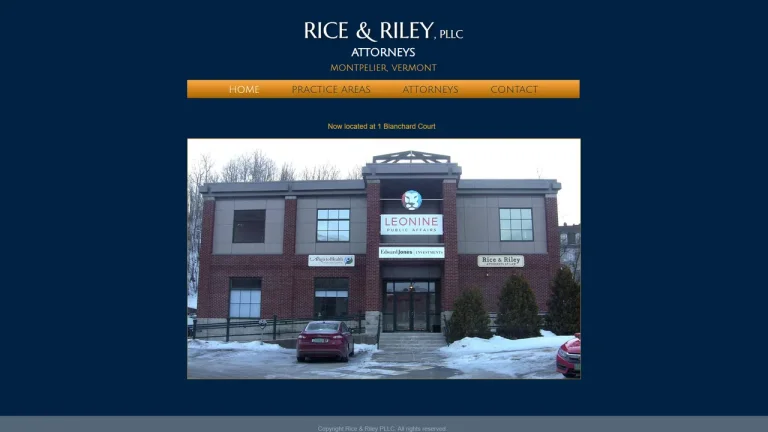
Rice & Riley - Montpelier, VT

SRH Law - Burlington, VT

Paul Frank + Collins P.C. - Burlington, VT
Stitzel Page & Fletcher PC - Burlington, VT

Langrock Sperry & Wool LLP - Burlington, VT

Kehoe Law Firm PC - Burlington, VT

Moody Advisors - Burlington, VT

Downs Rachlin Martin PLLC - Montpelier, VT
Daly & Daly PC - Burlington, VT
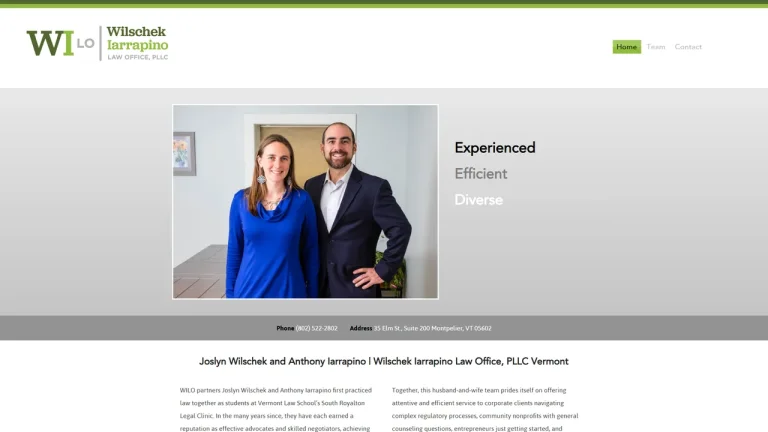
Wilschek Iarrapino Law Office, PLLC - Montpelier, VT

Kurt Mehta Attorney - Burlington, VT
Doremus Kantor & Zullo - Burlington, VT
The Burlington Law Practice, PLLC - Burlington, VT

John Franco Law - Burlington, VT

Lisman Leckerling PC - Burlington, VT

Stark Law, PLLC - Burlington, VT

Langrock Mediation Center PLLC - Burlington, VT

State and Main Mediation - Montpelier, VT
Strouse & Bond, PLLC - Burlington, VT

Sheehey Furlong & Behm P.C. - Burlington, VT

Clarke Demas & Baker PLC - Burlington, VT

Dinse, Knapp & McAndrew, P.C. - Burlington, VT

Drafting and Enforcing Commercial Contracts in Vermont
Commercial transactions in Vermont rely upon precise contractual language constructed in compliance with state statutory and common law. Whether structuring commercial vendor agreements in Burlington, real estate covenants in Rutland, or service engagements in Montpelier, clear drafting preserves business relationships and secures financial investments.
Under Vermont law, contract enforcement balances express terms against implied covenants, notably the implied covenant of good faith and fair dealing inherent in every agreement. Contractual disputes are resolved through the Vermont Superior Court, Civil Division, where ambiguous terminology or poorly defined indemnification clauses can leave businesses vulnerable to unforeseen liabilities.
Retaining an attorney admitted by the Vermont Supreme Court ensures that your agreements incorporate bulletproof choice-of-law clauses, enforceable liquidated damages, and mandatory dispute resolution mechanisms. A veteran Vermont contract attorney identifies latent ambiguities before execution, precluding protracted commercial litigation.
Legal Fee Frameworks for Vermont Contract Services
| Case Scenario | Fee Structure | Estimated Cost (USD) | Key Cost Determinants |
|---|---|---|---|
| Routine Agreement Review & Markup (NDAs, Vendor Contracts) | Flat Fee | $500 - $1,500 | Document page length, turnaround urgency, indemnification and liability cap revisions. |
| Custom Commercial Agreement Drafting | Flat Fee / Hourly | $1,500 - $4,000 | Scope of service specifications, intellectual property assignment, termination and cure provisions. |
| Complex Multi-Party Commercial Lease or Partnership Agreement | Hourly / Structured Retainer | $3,500 - $8,500 | Commercial property use covenants, environmental liability allocations, dispute escalation protocols. |
| Breach of Contract Negotiation & Settlement | Hourly Retainer | $4,000 - $12,000+ | Pre-suit demand letters, mediation conferences, contested damage computations. |
Critical Legal Deadlines & Statutes in Vermont
The baseline statute of limitations for civil contract actions in Vermont is codified under 12 V.S.A. § 511. Parties generally have 6 years from the date the cause of action accrues to initiate a breach of contract lawsuit in the Vermont Superior Court, Civil Division, calculated from when the non-breaching party discovered or reasonably should have discovered the breach.
For transactions involving the commercial sale of goods, the Vermont Uniform Commercial Code applies under 9A V.S.A. § 2-725, setting a 4-year statute of limitations for breach of sales agreements. Furthermore, Vermont's statute of frauds under 12 V.S.A. § 181 mandates that contracts concerning real property, obligations lasting over one year, and promises to answer for the debt of another must be in writing and signed to remain judicially enforceable.
Small Claims Limits vs. Contract Counsel in Vermont
Under 12 V.S.A. § 5531, small claims actions in the Civil Division of the Vermont Superior Court are restricted to controversies not exceeding $10,000. Small claims courts offer a streamlined, informal venue for self-represented individuals and small businesses seeking to collect minor unpaid invoices or simple contract balances.
However, contractual matters involving high-value equipment, proprietary technology, restrictive employment covenants, or ongoing service engagements far exceed the small claims threshold. Self-representation in standard civil court runs afoul of complex discovery procedures, evidentiary rules under the Vermont Rules of Civil Procedure, and procedural motions. Engaging experienced contract counsel ensures your rights are protected and prevents counterclaims that could jeopardize business operations.
Red Flags When Hiring a Vermont Contract Lawyer
- Relying on generic, boilerplate contract forms downloaded from non-legal websites that lack Vermont-specific statutory clauses.
- Failing to provide clear limitation-of-liability or mutual indemnification terms tailored to your industry's specific exposure.
- Inability to explain how the implied covenant of good faith and fair dealing interacts with the express terms of your agreement.
- Charging open-ended hourly fees for routine contract reviews without offering upfront fee estimates or transparent caps.
Frequently Asked Questions
What constitutes a legally binding contract in Vermont?
Under Vermont common law, a binding contract requires an offer, an acceptance of that offer, valid consideration (something of value exchanged), and mutual assent to the essential terms. Certain agreements must also be in writing to comply with Vermont's statute of frauds.
What is the statute of limitations for breach of contract in Vermont?
The general statute of limitations for breach of contract in Vermont is 6 years from the date of breach under state law. However, contracts involving the sale of goods under the Uniform Commercial Code carry a shorter 4-year limitation period.
Are non-compete agreements enforceable in Vermont?
Non-compete agreements are strictly scrutinized by Vermont courts. To be enforceable, they must protect legitimate business interests, be supported by adequate consideration, and remain reasonable in geographic scope and duration without placing undue hardship on the employee.
What is the difference between a material breach and a minor breach under Vermont law?
A material breach strikes at the heart of the agreement, excusing the non-breaching party from continuing performance and allowing them to sue for complete damages. A minor or partial breach allows recovery for actual damages incurred but does not automatically relieve the non-breaching party from performing their remaining contractual duties.
How do I verify the credentials of a Vermont contract attorney?
You can check any attorney's active licensing credentials, admissions history, and disciplinary standing via the attorney licensing directory provided online by the Vermont Judiciary.