
Business & Real Estate Lawyers in Virginia
Engaging a qualified Virginia business and real estate lawyer protects your commercial investments, corporate governance, and property transactions across the Commonwealth. Knowledgeable attorneys provide critical guidance on State Corporation Commission compliance, commercial lease negotiations, title examinations, and contract disputes to avoid costly litigation. Browse our statewide directory to connect with a top-rated Virginia business and real estate attorney.

William A. Lascara - Virginia Beach, VA

Darkhorse Attorneys - Roanoke, VA
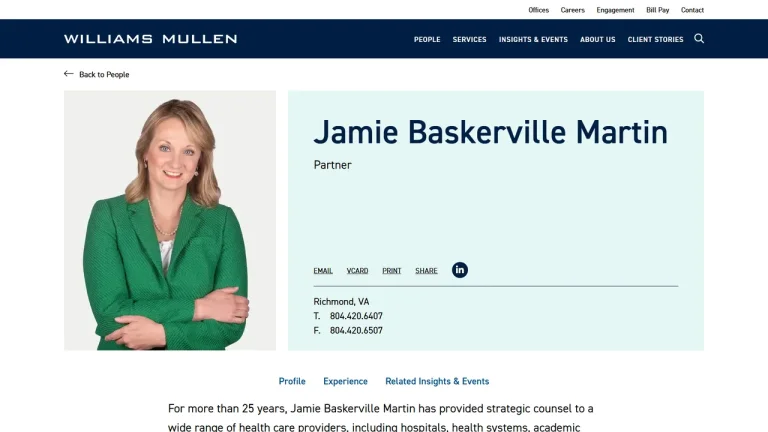
Jamie Baskerville Martin (Williams Mullen) - Richmond, VA

Thomas G. Voekler - Richmond, VA

Hawkins Burcher & Boester - Hampton, VA

Real Estate Legal Services, Charles D. Pittman Jr. & Associates - Virginia Beach, VA

BWW Law Group, LLC - Richmond, VA

Lee Law Office, PLLC - Richmond, VA
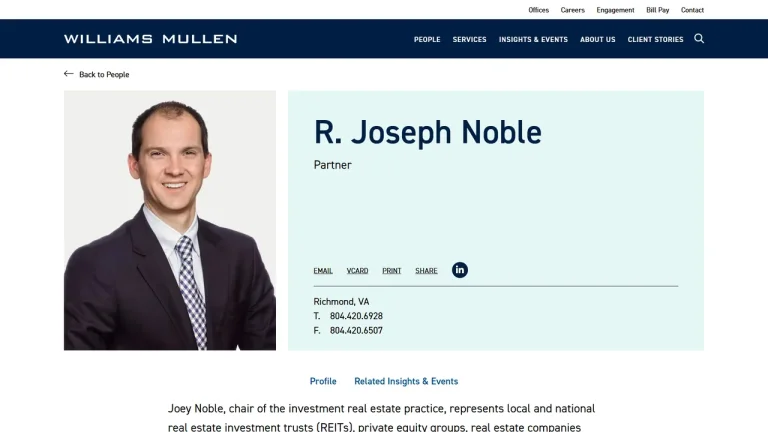
R. Joseph Noble (Williams Mullen) - Richmond, VA

Roth Jackson Gibbons Condlin, PLC - Richmond, VA

Friedman, Grimes, Meinken & Leischner PLLC - Alexandria, VA

James E. Moore (Christian & Barton, LLP) - Richmond, VA

Vogel Law Group, PLC - Roanoke, VA

Jason A. Dunn, PLC - Virginia Beach, VA

Alex Burnett - Richmond, VA

CowanGates - Richmond, VA

Allison J. Carlon - Richmond, VA
Shulman Rogers - Alexandria, VA

Parks Zeigler, PLLC - Attorneys At Law - Virginia Beach, VA

Keeler PLC - Richmond, VA
Mark W. Dellinger - Roanoke, VA
Christy L. Murphy - Bischoff Martingayle P.C. - Virginia Beach, VA

Burtch Law PLLC - Richmond, VA
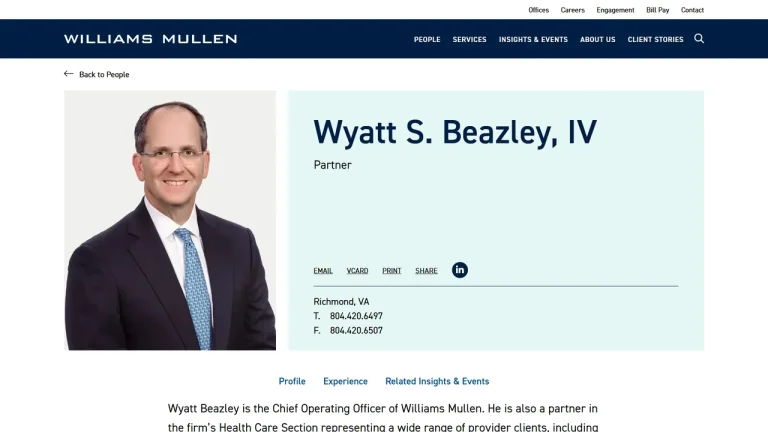
Commercial and Real Property Legal Frameworks Across Virginia
Virginia's thriving economic corridors present dynamic opportunities and intricate regulatory challenges for business operators and real estate investors alike. From the technology and federal contracting hubs of Northern Virginia to corporate logistics centers in Richmond and maritime commercial infrastructure around the Port of Virginia in Hampton Roads, enterprises must navigate rigorous statutory governance.
Corporate entities and business filings are governed statewide by the Virginia State Corporation Commission (SCC) headquartered in Richmond. Operating under the Virginia Limited Liability Company Act in Va. Code Ann. § 13.1-1000 and the Virginia Stock Corporation Act in Va. Code Ann. § 13.1-601, commercial ventures require strict corporate adherence to maintain liability shields. Concurrently, real estate transactions, commercial conveyances, and title instruments are recorded within the land records divisions maintained by the Clerk of the Circuit Court in each respective county or independent city.
Retaining a business and real estate lawyer licensed by the Virginia State Bar ensures that entity formation documents are tailored properly, zoning approvals and commercial leases are thoroughly scrutinized, mechanics' liens are strictly perfected, and commercial breach of contract claims are resolved efficiently.
Typical Fee Structures and Legal Costs for Virginia Business & Real Estate Matters
| Case Scenario | Fee Structure | Estimated Cost (USD) | Key Cost Determinants |
|---|---|---|---|
| Entity Formation & Operating Agreement Drafting | Flat Fee | $800 - $2,500 | Multi-member governance provisions, buy-sell triggers, transfer restrictions, and State Corporation Commission filing fees. |
| Commercial Lease Review & Tenant Negotiations | Flat Fee / Hourly | $1,500 - $4,500 | Square footage, common area maintenance (CAM) expense audit terms, exclusivity clauses, and personal guaranty structures. |
| Mechanics' Lien Filing & Enforcement Suit | Hourly / Partial Retainer | $3,500 - $12,000 | Title examination complexity, compliance with strict statutory notice windows, contractor bond claims, and Circuit Court litigation. |
| Partition Suit or Quiet Title Action | Hourly Retainer | $6,000 - $25,000+ | Number of cotenants, historical deed chain discrepancies, court-appointed commissioner hearings, and property appraisal fees. |
Critical Legal Deadlines & Statutes in Virginia
Commercial transactions and construction disputes in Virginia are subject to unforgiving statutory deadlines. Foremost among these are mechanics' lien rules under Va. Code Ann. § 43-4, which mandate that a memorandum of lien be recorded within 90 days from the last day of the month in which work or materials were furnished, or within 90 days from the completion of the project. Furthermore, under the 150-day rule in Va. Code Ann. § 43-4, a lien claimant cannot include sums for work performed more than 150 days prior to the last day labor was provided, and formal enforcement suits must be filed within six months pursuant to Va. Code Ann. § 43-17.
For commercial contracts, Va. Code Ann. § 8.01-246(2) establishes a five-year statute of limitations for actions founded on written contracts, whereas unwritten or oral agreements are limited to three years under Va. Code Ann. § 8.01-246(4). Real estate purchasers must navigate the doctrine of caveat emptor established in Virginia common law and codified under the Virginia Residential Property Disclosure Act in Va. Code Ann. § 55.1-703, which places the affirmative duty of inspection directly on the buyer.
Additionally, registered entities must maintain active status with the State Corporation Commission by paying annual registration fees under Va. Code Ann. § 13.1-1064; failure to pay results in automatic cancellation of the business entity.
Small Claims Limitations vs. Professional Real Estate & Business Counsel
The Small Claims Division of the Virginia General District Court is restricted to claims not exceeding $5,000 under Va. Code Ann. § 16.1-122.2. Moreover, attorneys are barred from appearing on behalf of clients in small claims cases under Va. Code Ann. § 16.1-122.4.
Small claims courts possess no legal power to adjudicate real property title, issue injunctions, enforce covenants, or handle judicial partitions. Pursuant to Va. Code Ann. § 17.1-513, equitable remedies and disputes involving real estate title reside exclusively within the Virginia Circuit Courts. While simple debt collection under $5,000 can be handled without counsel in small claims court, high-stakes commercial disputes, boundary controversies, mechanics' liens, and corporate dissolutions require seasoned counsel to protect capital assets and enforce contractual remedies.
Red Flags to Avoid When Selecting a Virginia Business & Real Estate Lawyer
- Failing to demonstrate strict familiarity with Virginia's 90-day and 150-day mechanics' lien filing rules under Va. Code Ann. § 43-4.
- Utilizing generic out-of-state corporate form agreements that omit statutory liability protections mandated by the Virginia State Corporation Commission.
- Law firms that do not routinely perform on-site title examinations or coordinate directly with local Circuit Court land records clerk divisions.
- Vague billing practices that fail to distinguish attorney legal fees from title insurance premiums, settlement fees, and court recording taxes.
Frequently Asked Questions
What is the role of the Virginia State Corporation Commission (SCC)?
The Virginia SCC is the centralized regulatory agency in Richmond responsible for chartering corporations, registering limited liability companies, regulating public utilities, and overseeing state-chartered financial institutions and insurance providers under Title 13.1 of the Code of Virginia.
What is the deadline for filing a mechanics' lien in Virginia?
Under Va. Code Ann. § 43-4, a memorandum of lien must be recorded in the local Circuit Court land records within 90 days from the last day of the month in which labor or materials were provided, or within 90 days of project completion. The lien is strictly limited to work performed within 150 days of the last day work was performed.
Is Virginia a caveat emptor state for real estate sales?
Yes. Virginia is a traditional "buyer beware" (caveat emptor) state. Under Va. Code Ann. § 55.1-703, sellers provide standard disclosure statements advising buyers to exercise independent due diligence regarding property condition, zoning, and environmental factors.
What is the statute of limitations for commercial breach of contract in Virginia?
Under Va. Code Ann. § 8.01-246, lawsuits based on written commercial contracts must be filed within five years from the date of the breach. Actions on oral or unwritten agreements must be commenced within three years.
Can a corporate entity be represented by an employee in Virginia courts?
In the Small Claims Division of General District Court, an officer or regular employee may represent the business under Va. Code Ann. § 16.1-122.4. However, in formal General District Court and Circuit Court civil proceedings, corporations and LLCs must be represented by an attorney licensed by the Virginia State Bar.