
Wage & Hour Lawyers in Virginia
Hiring a wage and hour lawyer in Virginia protects your earnings and recovers unpaid overtime under state law. Experienced attorneys resolve wage theft claims through structured negotiation, avoiding prolonged litigation. Explore our verified directory below to schedule a case review with a trusted Virginia wage and hour attorney.

Legal Aid Society of Eastern Virginia - Hampton Office - VA

Law Offices of Peter T Nicholl - Portsmouth, VA

O'Hagan Meyer - Richmond, VA

Law Office of Nichole Buck Vanderslice, PLLC - Richmond, VA
BWLaw PLC - Roanoke, VA

The Brown Firm PLLC - Alexandria, VA
Jones Blechman Woltz & Kelly - Newport News, VA
CowanPerry PC - Roanoke, VA

Williams Melvin E - Roanoke, VA
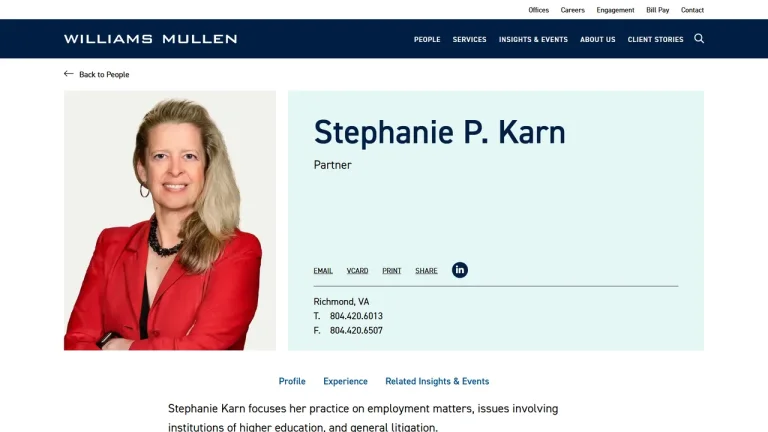
Stephanie P. Karn - Richmond, VA

Williams & Strickler, PLC - Roanoke, VA
Labor Bureau Inc - Alexandria, VA

Butler Curwood PLC - Richmond, VA

RWI LAW - Alexandria, VA
Swift & Swift, Attorneys at Law, P.L.L.C. - Alexandria, VA
The Spiggle Law Firm - Richmond, VA

Binnall Law Group - Alexandria, VA
Mason, Mason, Walker & Hedrick, P.C. - Newport News, VA
Yugo Collins, PLLC - Roanoke, VA
Sarah Robb Law - Richmond, VA

Ogletree Deakins - Richmond, VA
Spilman Thomas & Battle, PLLC - Roanoke, VA
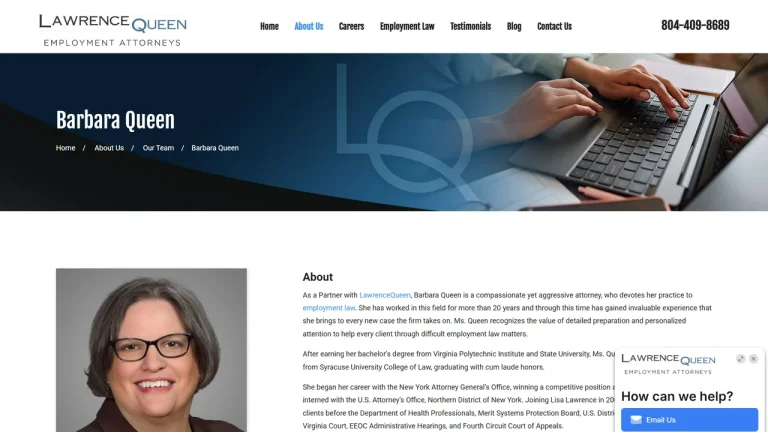
Barbara Queen - Richmond, VA
Enforcing Employee Wage Rights Across the Commonwealth of Virginia
Wage payment compliance in Virginia is governed by robust statutory protections protecting employees across all economic sectors, including construction and government contracting in Northern Virginia, logistics and warehousing in Richmond, maritime shipyards in Hampton Roads, and agriculture in the Shenandoah Valley. Under the Virginia Wage Payment Act, codified at Va. Code § 40.1-29, employers must pay all wages earned on regular pay intervals and are strictly barred from withholding pay or making unauthorized deductions.
Virginia employees who have been denied lawful compensation-including regular wages, overtime pay, earned bonuses, commissions, or compensation lost through unlawful independent contractor misclassification-possess an explicit private right of action. Claims are heard in the Virginia General District Courts and Circuit Courts across the Commonwealth, as well as the federal courts under the Fair Labor Standards Act, codified at 29 U.S. Code § 201.
Retaining an attorney admitted to the Virginia State Bar ensures wage claims are calculated with statutory accuracy, incorporating mandatory liquidated damages and interest. Legal advocates use the Virginia Judiciary Online Case Information System and state e-filing systems to pursue individual or collective actions, holding employers accountable under the expanded provisions of the Virginia Overtime Wage Act, Va. Code § 40.1-29.2.
Legal Fee Structures for Virginia Wage and Hour Claims
| Case Scenario | Fee Structure | Estimated Cost (USD) | Key Cost Determinants |
|---|---|---|---|
| Pre-Suit Wage Audit & Statutory Demand Letter | Contingency / Fee-Shifting | No Upfront Cost (Paid by Employer or 25% - 33.3%) | Payroll record accuracy, timesheet clarity, and employer responsiveness. |
| Individual Unpaid Overtime & Commission Litigation | Contingency / Fee-Shifting | 33.3% of recovery or statutory attorney fees | Total back pay sum, liquidated double/treble damages, and 8% statutory interest. |
| Worker Misclassification & Minimum Wage Actions | Contingency / Fee-Shifting | 33.3% - 40% of recovery | Independent contractor contract review under Va. Code § 40.1-28.7:7 and tax documentation. |
| Collective Action Wage Lawsuit under Virginia Law | Contingency / Court Supervised | Court-Approved Fees Under Va. Code § 40.1-29(J) | Number of affected employees, class certification discovery, and multi-facility audits. |
Critical Legal Deadlines & Statutes in Virginia
Under Va. Code § 40.1-29(L), an action under the Virginia Wage Payment Act must be commenced within three years after the cause of action accrued. This three-year statute of limitations provides a longer lookback period than the standard two-year limit under the federal Fair Labor Standards Act (29 U.S. Code § 255) for non-willful violations. Furthermore, under Va. Code § 40.1-29(L), the filing of an administrative wage complaint with the Virginia Department of Labor and Industry tolls the three-year statute of limitations until the administrative action is resolved or withdrawn.
Under Va. Code § 40.1-29(J), if an employer fails to pay wages in accordance with the law, the court must award all wages owed, an additional equal amount as liquidated damages, and prejudgment interest at eight percent per year from the date the wages were due, plus reasonable attorney fees and costs. If the court finds that the employer knowingly failed to pay wages-defined under Va. Code § 40.1-29(K) as acting with actual knowledge, deliberate ignorance, or reckless disregard-the court is statutorily required to award triple damages plus reasonable attorney fees. Overtime wage disputes are governed by Va. Code § 40.1-29.2, and misclassification claims are enforced pursuant to Va. Code § 40.1-28.7:7.
Small Claims Limits vs. Circuit Court Wage Litigation
In Virginia, the Small Claims Court Division of the General District Court is restricted to monetary claims of $5,000 or less pursuant to Va. Code § 16.1-122.1, and parties are strictly prohibited from being represented by legal counsel in court hearings under Va. Code § 16.1-122.4.
While a worker owed a few hundred dollars in final wages might consider filing pro se in small claims, doing so often forfeits substantial legal rights. In Small Claims Court, employees cannot bring collective or multi-plaintiff actions on behalf of similarly situated co-workers under Va. Code § 40.1-29(J). When unpaid overtime, off-the-clock work, and improper payroll deductions span months or years, the statutory addition of treble damages, eight percent annual interest, and attorney fees routinely pushes the total value well beyond $5,000. In Virginia General District Courts (for claims up to $25,000 under Va. Code § 16.1-77) or Virginia Circuit Courts, experienced wage attorneys utilize formal discovery tools to compel employers to produce electronic time-card records and payroll ledgers, while shifting all legal fees to the non-compliant employer.
Red Flags When Selecting a Virginia Wage & Hour Lawyer
- Lawyers who encourage settling for mere back wages without demanding the mandatory double or treble liquidated damages and eight percent interest required under Va. Code § 40.1-29(J).
- Demanding large upfront retainers from hourly workers, ignoring the mandatory attorney fee-shifting provisions of Virginia wage laws.
- Unfamiliarity with the Virginia Overtime Wage Act (Va. Code § 40.1-29.2) or recent statutory updates expanding private rights of action.
- Failing to evaluate co-worker claims for potential collective action certification under the procedures of Va. Code § 40.1-29(J).
Frequently Asked Questions
What is the statute of limitations for unpaid wages in Virginia?
Under Va. Code § 40.1-29(L), an action under the Virginia Wage Payment Act must be commenced within three years after the cause of action accrued.
What liquidated damages can I recover for unpaid wages in Virginia?
Under Va. Code § 40.1-29(J), you are entitled to double damages (unpaid wages plus an equal amount as liquidated damages) and eight percent annual interest. If the employer knowingly withheld wages, you can recover triple damages under Va. Code § 40.1-29(K).
Does Virginia require employers to pay overtime to salaried workers?
Under the Virginia Overtime Wage Act (Va. Code § 40.1-29.2), salaried non-exempt employees are entitled to 1.5 times their regular hourly rate for all hours worked exceeding 40 hours in a workweek.
Can an employer retaliate against me for claiming unpaid wages?
No. Under Va. Code § 40.1-27.3 and Va. Code § 40.1-29, it is unlawful for an employer to retaliate, discharge, or take adverse personnel action against an employee for exercising their wage rights.
Who pays my attorney fees in a Virginia wage theft lawsuit?
Under Va. Code § 40.1-29(J), if an employee prevails in a wage claim, the court must award reasonable attorney fees and costs to be paid directly by the employer.