
Drug Crime Defense Lawyers in Washington
Retaining an aggressive Washington drug crime defense lawyer is vital to protecting your freedom, constitutional rights, and future from severe criminal penalties. Experienced defense counsel challenges unlawful police searches, pursues chemical dependency diversion programs, and seeks charge reductions before trial. Explore our verified statewide directory to schedule an immediate confidential consultation with an elite Washington defense attorney.
Law Office of David C. Mason - Bellevue, WA
Guadagno Law, PLLC - Seattle, WA

Law Office of Erik P. Kaeding - Kent, WA
Tomlinson Bomsztyk Russ - Seattle, WA
The Law Office of Michael Austin Stewart Criminal Defense Lawyer - Tacoma, WA
Carney & Marchi, P.S. - Seattle, WA
Law Office of Jocelyn C. Stewart - UCMJ Defender - Tacoma, WA
Puget Law Group - Olympia, WA

The Law Office of Nicholas Wood - Vancouver, WA

Aspen Law Group - Seattle, WA

Law Office of Steve Graham - Spokane, WA

ARK Law, PLLC - Kent, WA

Snohomish Law - Everett, WA

Verity Criminal Defense, PLLC - Everett, WA

Law office of Andrew Huff - Seattle, WA
Donahue Law Firm, LLC - Spokane, WA
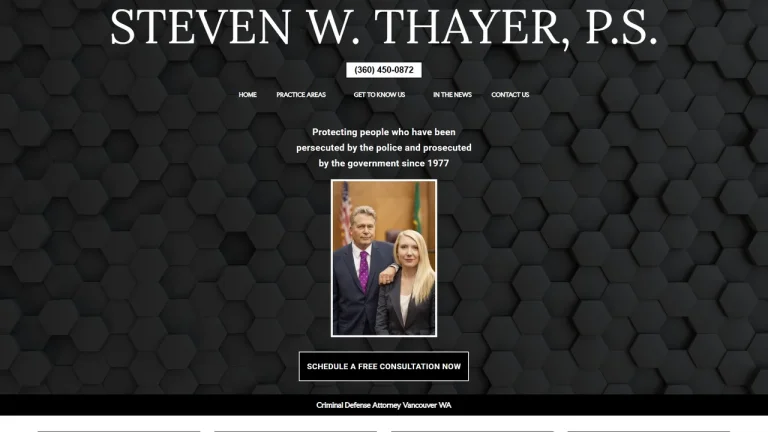
Steven W. Thayer, P.S. - Vancouver, WA
Snohomish County Public Defender Association - Everett, WA
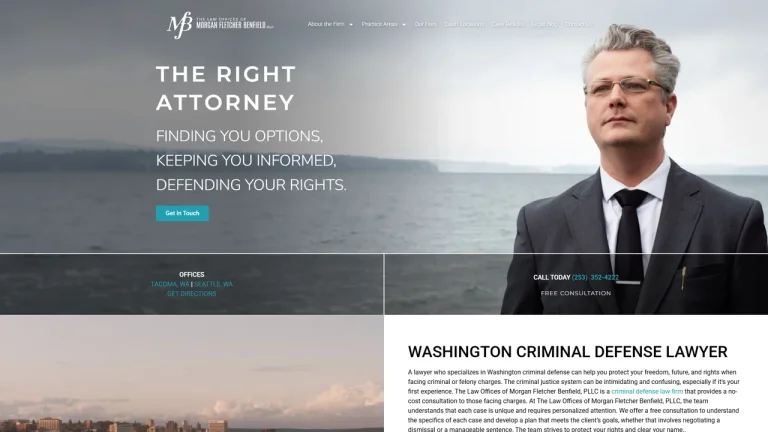
The Offices of Morgan Fletcher Benfield, PLLC - Seattle, WA

Rice O'Neal PLLC - Everett, WA
Mazzone Law Firm, PLLC - Everett, WA
Kertchen Law - Tacoma, WA

The Law Offices of Kevin Trombold, PLLC - Seattle, WA
Defending Controlled Substance Allegations Across Washington State
Drug crime allegations in Washington carry severe legal jeopardy that threatens your personal freedom, employment stability, and civil rights. Across the Puget Sound metropolitan corridor-including King County courthouses in Seattle and Kent, Pierce County in Tacoma, and Snohomish County in Everett-as well as Eastern Washington communities in Spokane and Yakima, multi-jurisdictional task forces aggressively prosecute controlled substance violations.
Misdemeanor drug possession and municipal violations are adjudicated within Washington District Courts and Municipal Courts, whereas felony manufacturing, delivery, and trafficking offenses are litigated exclusively in Washington Superior Courts. Furthermore, major interstate trafficking indictments and federal conspiracy charges proceed before the United States District Court for the Western District of Washington or the Eastern District of Washington.
Engaging a criminal defense lawyer licensed by the Washington State Bar Association guarantees that your constitutional protections are asserted immediately. Strategic counsel investigates police handling, challenges warrantless searches under state constitutional standards, and pursues treatment-focused diversion options to safeguard your record.
Estimated Legal Fees and Defense Costs for Washington Drug Charges
| Case Scenario | Fee Structure | Estimated Cost (USD) | Key Cost Determinants |
|---|---|---|---|
| Simple Possession & Pretrial Treatment Diversion | Flat Fee | $2,000 - $4,500 | Eligibility for county drug diversion or Law Enforcement Assisted Diversion (LEAD), chemical dependency evaluations. |
| Felony Possession with Intent to Deliver (VUCSA) | Flat Fee / Retainer | $6,000 - $15,000 | Controlled substance weight, confidential informant credibility, search warrant validity, CrR 3.6 suppression motions. |
| Complex Drug Trafficking & Conspiracy Defense | Hourly Retainer | $15,000 - $50,000+ | Electronic wiretap evidence, independent toxicology lab testing, multi-agency task force discovery, trial length. |
| Drug Offender Sentencing Alternative (DOSA) Hearing | Hourly / Fixed Retainer | $3,500 - $9,000 | Department of Corrections risk assessments, residential versus prison DOSA qualification, contested disposition hearings. |
Critical Legal Deadlines & Statutes in Washington
Washington controlled substance prosecutions are governed by exacting procedural rules and statutes. Under RCW 69.50.401, it is a Class B or Class C felony to manufacture, deliver, or possess with intent to manufacture or deliver controlled substances such as fentanyl, methamphetamine, or heroin. Simple possession and public use of controlled substances are codified under RCW 69.50.4013 as gross misdemeanors, carrying up to 180 days in jail for initial convictions and up to 364 days for subsequent offenses, alongside opportunities for treatment diversion.
For eligible non-violent felony offenders, the Drug Offender Sentencing Alternative codified under RCW 9.94A.660 allows defendants to complete comprehensive substance abuse treatment in lieu of standard prison sentences. Time limits to enforce constitutional protections are vital: under Washington Superior Court Criminal Rule CrR 3.3 and District Court rule CrRLJ 3.3, a defendant held in custody must be brought to trial within 60 days of arraignment, or within 90 days if released on bail or personal recognizance.
Evidentiary suppression motions challenging illegal traffic stops and searches are filed under CrR 3.6, invoking the heightened privacy guarantees of Article I, Section 7 of the Washington State Constitution, while statement voluntariness is contested under CrR 3.5. Under RCW 9A.04.080(1)(i), felony drug prosecutions must be commenced within three years of the offense, whereas gross misdemeanors are subject to a two-year limit under RCW 9A.04.080(2).
Small Claims Limitations vs. Professional Criminal Defense Counsel
In Washington, Small Claims Court is organized within the District Courts pursuant to RCW 12.40.010 with a jurisdictional ceiling of $10,000 for natural persons. Crucially, under RCW 12.40.080, attorneys are prohibited from appearing in Small Claims Court without explicit permission from the presiding judge.
Small claims courts have zero legal jurisdiction over criminal offenses, search warrant challenges, or liberty deprivations. Even a misdemeanor drug conviction under RCW 69.50.4013 results in a permanent criminal record, suspension of commercial driving privileges, loss of firearm possession rights, and mandatory deportation risks for non-citizens under federal immigration law. In felony proceedings, sentencing is strictly determined by the Washington Sentencing Reform Act (SRA) offender score grid. Retaining an experienced private criminal defense attorney ensures that suppression hearings are litigated under CrR 3.6, chemical dependency alternatives like DOSA are secured, and constitutional protections are preserved.
Red Flags to Avoid When Selecting a Washington Drug Defense Lawyer
- Guaranteeing case dismissal or drug court admission prior to reviewing police incident reports and state toxicology lab analysis.
- Pressuring clients into an immediate guilty plea without investigating potential search and seizure violations under CrR 3.6.
- Lack of familiarity with Article I, Section 7 of the Washington State Constitution, which provides broader privacy protections than federal law.
- Failing to explain statutory sentencing alternative mechanics, such as residential or prison DOSA programs under RCW 9.94A.660.
Frequently Asked Questions
Is drug possession a felony or a misdemeanor in Washington?
Under RCW 69.50.4013, knowingly possessing a controlled substance without a valid prescription is classified as a gross misdemeanor, punishable by up to 180 days in jail for the first two offenses and up to 364 days for subsequent violations, with statutory diversion alternatives available.
What is the Drug Offender Sentencing Alternative (DOSA) in Washington?
Codified under RCW 9.94A.660, DOSA allows qualifying felony drug offenders to substitute standard prison terms with court-ordered chemical dependency treatment and community custody, available as either a prison-based or residential program.
How does the Washington State Constitution protect against unlawful drug searches?
Article I, Section 7 of the Washington State Constitution provides greater privacy protections than the federal Fourth Amendment, strictly prohibiting warrantless searches without recognized exceptions and allowing defense lawyers to suppress evidence under CrR 3.6.
What is the speedy trial deadline for criminal cases in Washington?
Under Washington court rules CrR 3.3 and CrRLJ 3.3, an accused individual held in custody must be brought to trial within 60 days of arraignment, while an individual released on bail or personal recognizance must be tried within 90 days.
Can a Washington drug charge be dismissed if the police lacked a warrant?
Yes. If law enforcement conducted a warrantless search without a recognized exception, your defense attorney can file a suppression motion under CrR 3.6. If the judge rules the search unconstitutional, the seized drugs are excluded from evidence, frequently resulting in case dismissal.