
Medical Malpractice Lawyers in Washington
Connecting with an experienced Washington medical malpractice lawyer protects your rights and secures vital evidence after suffering severe healthcare negligence. Skilled attorneys navigate complex statutory standards and consult leading medical experts to prove liability while avoiding prolonged court battles. Explore our directory below to schedule a case review with trusted local counsel.

The Blankenship Law Firm, PLLC - Seattle, WA

J|M Felice Legal, PLLC (Felice Legal) - Spokane, WA

Russ Juckett, Attorney at Law - Everett, WA

Greaney Scudder Law Firm - Kent, WA

Law Offices of Arman Manoucheri - Bellevue, WA
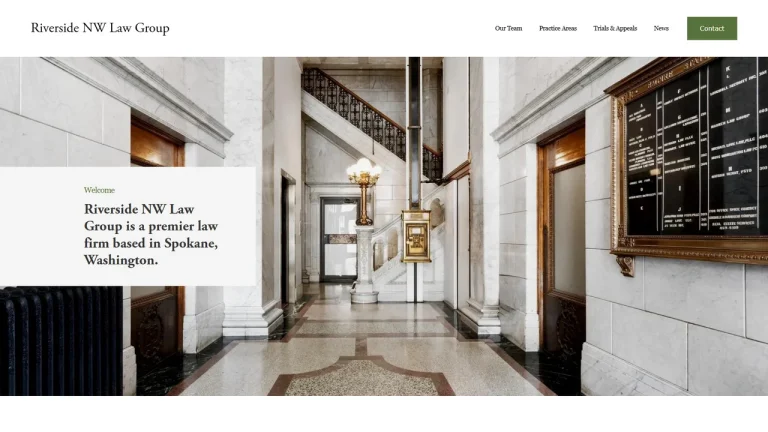
Riverside NW Law Group, PLLC - Spokane, WA

Seattle Injury Law - Seattle, WA
Dubin Law Group - Everett, WA

GLP Attorneys - Vancouver, WA
Ingress Legal - Everett, WA

PNW Strategic Legal Solutions PLLC - Bellevue, WA

Ladenburg Law Injury Attorneys - Tacoma, WA

Helsell Fetterman LLP - Seattle, WA

Rush, Hannula, Harkins & Kyler - Tacoma, WA

Sweetser Law Office - Spokane, WA

Layman Law Firm, PLLP - Spokane, WA

Boyer Law Firm - Bellevue, WA

Kornfeld Law - Everett, WA

D'Amore Law Group - Vancouver, WA

Nelson Boyd Attorneys - Seattle, WA

Bridger Law Group - Spokane, WA

Pfau Cochran Vertetis Amala PLLC - Seattle, WA
Gregory Marshall, P.S. - Everett, WA

Medical Negligence Litigation Across Washington State
Suffering harm due to substandard medical care disrupts lives, causing severe physical disability and crushing financial burdens. From major hospital networks in Seattle, Bellevue, and Tacoma to regional healthcare facilities in Spokane, Yakima, and Vancouver, patients expect clinicians to uphold professional standards of care.
Medical malpractice actions in Washington are governed comprehensively by statute, establishing strict standards of proof for diagnosis errors, surgical mistakes, birth trauma, and medication mismanagement. Cases are litigated in Washington Superior Courts, including King County Superior Court in Seattle and Kent, Pierce County Superior Court in Tacoma, and Spokane County Superior Court.
Succeeding in a healthcare liability claim requires proving that a provider failed to exercise the degree of care, skill, and learning expected of a reasonably prudent healthcare provider in the same profession. Engaging a seasoned Washington medical malpractice lawyer ensures your medical charts are reviewed by qualified specialists and that claims satisfy statutory mediation requirements before trial.
Washington Medical Malpractice Service Scenarios and Costs
| Case Scenario | Fee Structure | Estimated Cost (USD) | Key Cost Determinants |
|---|---|---|---|
| Surgical Error or Retained Foreign Object | Contingency Fee | 33.3% - 40% of recovery | Operative record reviews, revision surgery documentation, permanent impairment |
| Diagnostic Delay or Cancer Misdiagnosis | Contingency Fee | 33.3% - 40% of recovery | Oncology expert evaluations, survival rate reduction, life-care economic modeling |
| Birth Injury & Neonatal Trauma | Contingency Fee | 33.3% - 40% of recovery | Lifetime care planning, pediatric neurology testimony, hospital systems liability |
| Medication, Dosage, or Anesthesia Errors | Contingency Fee | 33.3% - 40% of recovery | Pharmacy dispensing audits, anesthesiology records, intensive care documentation |
Critical Legal Deadlines & Statutes in Washington
Medical injury lawsuits in Washington are governed by the statutory framework set forth in RCW 7.70.040, which defines the standard of care, and RCW 7.70.050, which establishes liability for failure to secure informed consent.
Under RCW 4.16.350, actions must be commenced within three years of the negligent act or omission, or within one year of the date the patient discovered or reasonably should have discovered the injury, whichever is later. However, the statute imposes an ultimate eight-year statute of repose, barring claims brought more than eight years after the event, except in instances of foreign objects left in the body or intentional concealment.
Financial recovery is governed by Washington's pure comparative fault rule under RCW 4.22.005, meaning an injured claimant's recovery is reduced proportionally by their share of fault, but recovery is never completely barred. Furthermore, parties must undergo mandatory court-annexed mediation procedures prior to trial pursuant to RCW 7.70.100.
Small Claims Limitations vs. Superior Court Medical Malpractice
The Small Claims Department of the District Court in Washington is strictly limited to monetary disputes capped at $10,000 for natural persons under RCW 12.40.010. Small claims courts have no capacity to handle medical malpractice actions, which involve complex evidentiary standards, medical records subpoenas, and life-care economic planning.
Healthcare institutions and malpractice insurance carriers defend negligence allegations aggressively with specialized legal defense firms. Pursuing a malpractice claim requires substantial financial resources to retain medical experts, conduct depositions of treating physicians and nurses, and present technical testimony to a jury.
Retaining a trial lawyer admitted to the Washington State Bar Association guarantees that your lawsuit complies with civil pleading requirements in Washington Superior Court, preserves critical hospital audit logs, and positions your family for full compensation.
Red Flags When Hiring a Washington Medical Malpractice Lawyer
- Firms demanding non-refundable upfront retainers from injured patients to review records, rather than operating on a contingency basis.
- Attorneys who lack courtroom trial experience in Washington Superior Courts and push clients toward premature, discounted settlements.
- Lawyers who do not work with actively practicing medical specialists who can meet state evidentiary qualifications under court rules.
- Promising specific dollar recoveries before obtaining and evaluating full hospital records and medical expert opinions.
Frequently Asked Questions
What is the statute of limitations for medical malpractice in Washington?
Under RCW 4.16.350, you have three years from the date of the medical error, or one year from the date you discovered or should have discovered the injury, subject to an ultimate eight-year statute of repose from the date of the incident.
Does Washington cap non-economic damages in medical malpractice cases?
No. Washington does not place statutory caps on non-economic damages such as pain, suffering, and emotional distress, because the Washington Supreme Court ruled statutory damages caps unconstitutional under the state constitution.
Is mediation mandatory before going to trial in Washington?
Yes. Under RCW 7.70.100, all medical malpractice claims filed in Washington Superior Court are subject to mandatory mediation procedures to encourage out-of-court settlement before a trial date is scheduled.
How do contingency fees work in a Washington medical injury lawsuit?
Attorneys handle medical malpractice on a contingency fee agreement, meaning you pay zero legal fees upfront. The attorney receives an agreed-upon percentage of the final settlement or jury verdict only if they secure a successful financial recovery.
What constitutes lack of informed consent under Washington law?
Under RCW 7.70.050, a healthcare provider violates informed consent if they fail to disclose material risks, consequences, and alternative treatments that a reasonably prudent patient would consider significant in deciding whether to undergo a proposed procedure.