
Business & Work Visa Lawyers in Seattle
Securing high-tier foreign talent in Seattle requires seasoned corporate immigration attorneys with deep technical industry expertise. Qualified King County legal counsel streamlines H-1B, L-1, O-1, and PERM applications while ensuring strict compliance with federal labor standards. Browse our curated directory below to partner with leading corporate immigration lawyers.
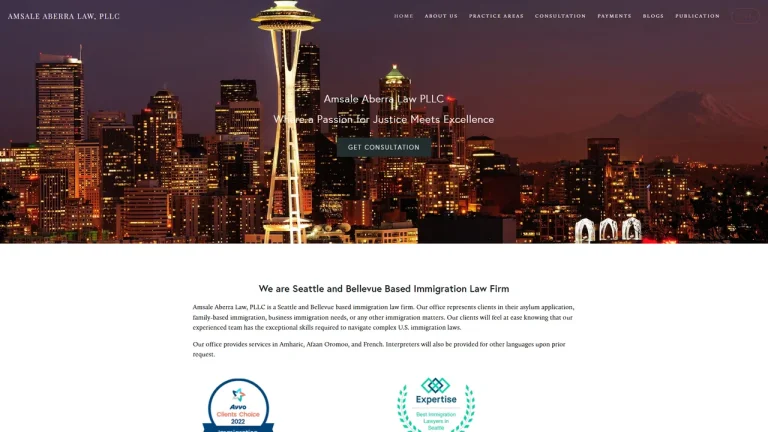
Higuera & VanDerhoef PLLC - Seattle, WA
Choquette Immigration Law Group - Seattle, WA
Gonzales, Gonzales & Gonzales - Seattle, WA
Gibbs Houston Pauw - Seattle, WA

ERM Immigration Law, PLLC - Seattle, WA
Law Offices of Carol L Edward & Associates, P.S. - Seattle, WA
Columbia Legal Services - Seattle, WA
Fisher & Phillips, LLP - Seattle, WA
Littler Mendelson P.C. - Seattle, WA
Metz Law Group, PLLC - Seattle, WA
Rosche Immigration Law PLLC - Seattle, WA

Shaklee & Oliver, PS - Seattle, WA
Watson Immigration Law - Seattle, WA
Weinrich Immigration Law - Seattle, WA
EC Immigration Law PLLC - Seattle, WA
Rios Immigration Defense, P.S - Seattle, WA
ZafiroLaw - Seattle, WA

Millar & Hayes U.S. Business Immigration Lawyers, P.C. - Seattle, WA
L.I.H. Law - Seattle, WA

Stratton Immigration, PLLC - Seattle, WA
Law Office of Daniel J. Smith - Seattle, WA
Stelmakh & Associates - Seattle, WA
Strategic Business Immigration Counsel for Seattle's Corporate Hub
Seattle stands as a premier global technology and commercial powerhouse, anchoring multinational corporations, cloud computing giants, and cutting-edge startups across South Lake Union, Downtown Seattle, and the broader Puget Sound region. Employers operating within Seattle, Bellevue, and Redmond face rigorous federal standards when recruiting specialized international personnel. Securing specialty occupation visas, intercompany transfers, and permanent employment green cards requires comprehensive coordination with federal authorities.
Employment-based visa petitions originating in King County are adjudicated under USCIS Service Centers, the United States Department of Labor (DOL), and the U.S. Department of State. A Seattle business immigration attorney guides enterprises through competitive talent mobility strategies, prevailing wage requests, and rigorous Labor Condition Applications (LCA). Knowledgeable local counsel ensures corporate hiring workflows align with regional salary scales and federal specialty occupation benchmarks.
When regulatory hurdles or protracted administrative delays threaten business continuity, Seattle immigration litigators possess the capacity to seek federal judicial review in the U.S. District Court for the Western District of Washington, situated on Stewart Street in Seattle. Retaining experienced corporate counsel safeguards companies against audit vulnerabilities, workforce disruptions, and compliance liabilities.
Business Visa & Employment Immigration Fee Benchmarks in Seattle
| Case Scenario | Fee Structure | Estimated Cost (USD) | Key Cost Determinants |
|---|---|---|---|
| H-1B Specialty Occupation Petition (Cap or Transfer) | Flat Fee | $2,800 - $5,500 | Degree-to-position alignment, wage level scrutiny, USCIS Request for Evidence defense |
| L-1A / L-1B Intra-Company Transferee Petition | Flat Fee | $4,500 - $9,000 | Foreign subsidiary structure, managerial authority documentation, specialized knowledge depth |
| PERM Labor Certification & EB-2 / EB-3 Filing | Staged Flat Fee | $6,500 - $13,000 | DOL audit responses, mandatory recruitment campaign scope, prevailing wage complexity |
| O-1 Extraordinary Ability or EB-2 NIW Petition | Flat / Hourly ($375 - $650/hr) | $5,500 - $11,500 | Peer review letters, published research metrics, substantial national merit justification |
Critical Legal Deadlines & Statutes in Washington
Corporate immigration processes adhere to strict statutory timetables where missing a single filing window can jeopardize employee legal authorization. For cap-subject H-1B petitions, employers must register during the initial electronic window opened each March under 8 C.F.R. § 214.2, with selected beneficiaries granted a precise 90-day filing period to submit their full petitions.
The permanent labor certification framework dictates strict procedural milestones governed by 20 C.F.R. § 656.17, mandating a mandatory 30-day quiet period following recruitment before filing Form ETA-9089, with all recruitment efforts remaining valid for a maximum of 180 days. Nonimmigrant workers laid off by regional tech firms are subject to a strict 60-day discretionary grace period under 8 C.F.R. § 214.1 to file a change of employer or leave the country. Furthermore, Washington employers must balance federal Form I-9 verification mandates under 8 U.S. Code § 1324a with state non-discrimination mandates codified under Wash. Rev. Code § 49.60.030, precluding discriminatory document requests during the onboarding process.
Corporate HR Self-Filing vs. Retaining Specialized Legal Counsel
While internal human resources departments frequently handle routine Form I-9 reviews and basic document collection, attempting to prepare complex corporate immigration petitions in-house exposes firms to substantial regulatory risk. Misinterpreting prevailing wage classifications or failing to satisfy technical PERM advertising regulations leads directly to denial, forfeiting months of effort and recruiting expenditure.
Outside immigration counsel provides vital insulation during corporate mergers, acquisitions, and restructuring, ensuring I-140 priority date retention under the American Competitiveness in the Twenty-First Century Act (AC21). Disputes over commercial employment agreements or vendor contracts may fall within the King County District Court Small Claims threshold of $10,000 under Wash. Rev. Code § 12.40.010, but immigration petitions fall entirely beyond state court purview and must be handled under federal administrative authority.
Red Flags When Selecting an Employment Immigration Law Firm
- Promises or guarantees of H-1B lottery selection or expedited petition approvals independent of federal premium processing guidelines.
- Law firms that fail to separate mandatory employer-paid PERM legal expenses from employee-payable costs, violating federal labor regulations.
- Attorneys lacking specific familiarity with high-tech job codes and standard King County prevailing wage categorizations.
- Absence of formal electronic document security protocols protecting proprietary corporate data and sensitive employee personnel files.
Frequently Asked Questions
Who must pay the legal fees for an H-1B or PERM filing in Seattle?
Federal regulations strictly dictate that the petitioning employer must pay all costs and attorney fees associated with the PERM labor certification process. Employers are also prohibited from requiring foreign workers to reimburse H-1B statutory filing fees or legal costs if doing so drops their wage below the prevailing minimum.
What options exist for a laid-off Seattle tech worker on an H-1B visa?
A laid-off worker has a 60-day grace period, or until their I-94 expiration date (whichever is shorter), to secure a new employer willing to file an H-1B transfer, change to another status (such as B-2 visitor or F-1 student), or depart the country.
Can an immigration lawyer challenge an unreasonable H-1B Request for Evidence (RFE)?
Yes. Experienced corporate attorneys routinely compile detailed expert opinion letters, organizational charts, and industry evidence to refute specialty occupation challenges and wage-level inquiries from USCIS adjudicators.
How does an EB-2 National Interest Waiver (NIW) benefit Seattle researchers and founders?
The EB-2 NIW allows qualifying professionals with exceptional ability or advanced degrees to self-petition for a green card without requiring an employer sponsor or lengthy PERM labor certification process, provided their venture has substantial merit and national importance.
How can a Seattle enterprise verify that an attorney is licensed to handle business visas?
You can check active membership and license validity through the Washington State Bar Association (WSBA) directory. Business immigration attorneys must be admitted to practice and in good standing before the bar of any U.S. state to represent clients before USCIS.