
Citizenship Lawyers in Seattle
Connect with top-rated citizenship lawyers in Seattle to navigate naturalization, green card adjustments, and consular processing with complete confidence. An experienced local immigration attorney safeguards your rights before regional federal authorities and helps resolve background discrepancies outside of formal removal proceedings. Explore our verified King County directory below to arrange a confidential consultation with a qualified legal professional today.
L.I.H. Law - Seattle, WA
Higuera & VanDerhoef PLLC - Seattle, WA

Weinrich Immigration Law - Seattle, WA
Rosche Immigration Law PLLC - Seattle, WA
Law Offices of Carol L Edward & Associates, P.S. - Seattle, WA
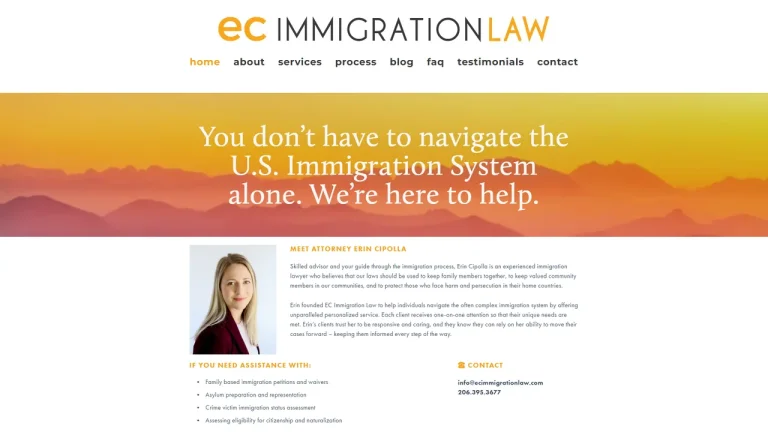
EC Immigration Law PLLC - Seattle, WA

Stratton Immigration, PLLC - Seattle, WA
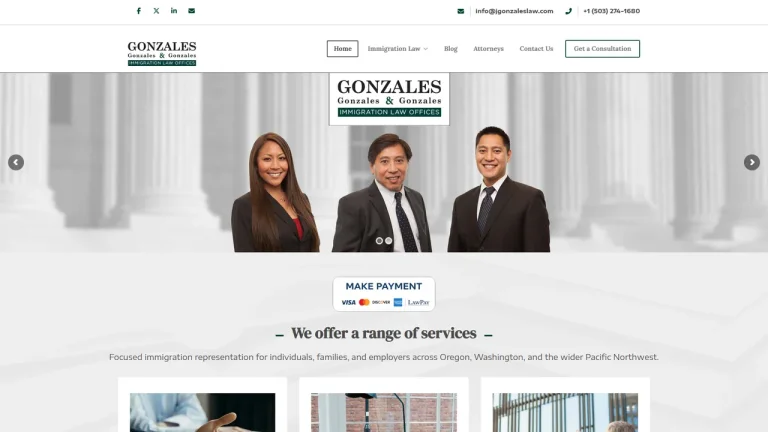
Gonzales, Gonzales & Gonzales - Seattle, WA
Washington Immigration Defense - Seattle, WA
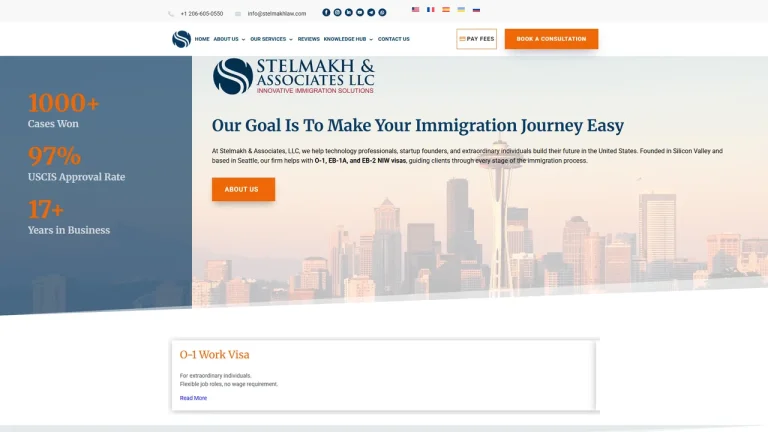
Stelmakh & Associates - Seattle, WA
Watson Immigration Law - Seattle, WA
Metz Law Group, PLLC - Seattle, WA
Choquette Immigration Law Group - Seattle, WA

Shaklee & Oliver, PS - Seattle, WA
ERM Immigration Law, PLLC - Seattle, WA
Law Office of Daniel J. Smith - Seattle, WA
Law Office of Tanya Fekri, PLLC - Seattle, WA

Millar & Hayes U.S. Business Immigration Lawyers, P.C. - Seattle, WA
Sylvia A. Miller, Attorney at Law, PLLC - Seattle, WA
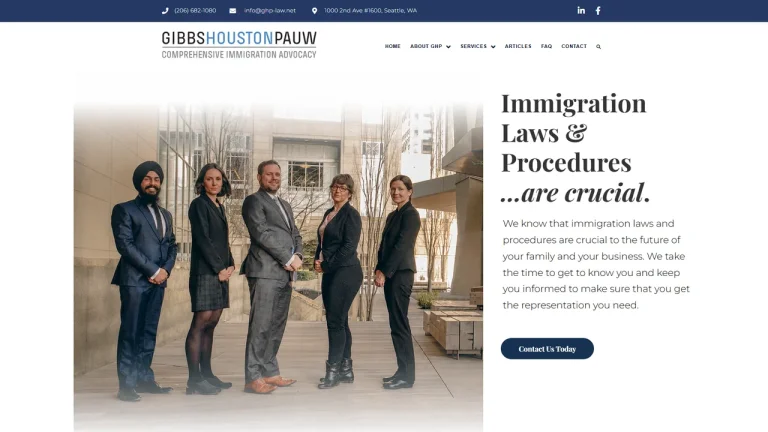
Gibbs Houston Pauw - Seattle, WA

Dobrin & Han - Seattle, WA
Law Office of Andre Olivie, PLLC - Seattle, WA
Navigating U.S. Citizenship Law in Seattle and King County
Securing United States citizenship represents the culmination of years of dedicated adherence to immigration regulations. For residents across Seattle, Bellevue, Renton, and surrounding King County communities, the path to naturalization is administered through regional federal bodies, primarily the United States Citizenship and Immigration Services (USCIS) Seattle Field Office located on Tukwila International Boulevard. Navigating this process demands meticulous documentation and an exhaustive understanding of statutory requirements.
While naturalization proceedings are governed by federal statutes, local practice nuances in the Pacific Northwest frequently dictate how applications are examined. The Seattle Field Office maintains rigorous evidentiary standards concerning continuous presence, tax compliance, and good moral character. Furthermore, should disputes arise regarding unlawful delays or disputed denials, matters may advance to the United States District Court for the Western District of Washington, located on Stewart Street in Downtown Seattle.
Retaining a licensed immigration attorney practicing within the Seattle metropolitan corridor ensures that your petition is fortified against procedural delays, administrative challenges, or unexpected inquiries during the mandatory naturalization interview and civics examination.
Typical Legal Fees for Citizenship and Naturalization Matters
| Case Scenario | Fee Structure | Estimated Cost (USD) | Key Cost Determinants |
|---|---|---|---|
| Routine N-400 Naturalization Application | Flat Fee | $1,200 - $2,500 | Unbroken continuous residence, absence of criminal citations, direct English proficiency |
| Complex N-400 (Arrests, Extended Travel, Tax Issues) | Flat Fee or Hourly | $2,500 - $5,500 | King County criminal record expungements, travel rebuttals, IRS payment plan proofs |
| N-600 Certificate of Citizenship Acquisition / Derivation | Flat Fee | $1,500 - $3,200 | Historical parentage verification, tracing physical custody and parental domicile dates |
| N-336 Administrative Review & Federal Mandamus Actions | Hourly ($350 - $600/hr) | $4,000 - $8,500 | Federal district court brief drafting, Western District of Washington appearance |
Critical Legal Deadlines & Statutes in Washington
Naturalization is governed by strict statutory timelines codified under federal immigration jurisprudence. An applicant seeking naturalization must establish continuous lawful permanent residency under 8 U.S. Code § 1427 for a minimum of five continuous years, or three years if married to and living with a U.S. citizen under 8 U.S. Code § 1430. Prospective citizens may file Form N-400 up to 90 days before reaching this required physical presence threshold pursuant to federal immigration regulations.
When USCIS issues an adverse decision or an outright denial on an N-400 application, the deadline to file a request for an administrative hearing under 8 U.S. Code § 1447 is precisely 30 calendar days from the receipt date of the denial notice. Missing this non-negotiable jurisdictional cutoff terminates administrative recourse, leaving the applicant with the sole, costly option of filing an entirely new petition.
Additionally, where the Seattle Field Office conducts an initial examination but fails to render a formal determination within 120 calendar days, the applicant obtains the legal right under 8 U.S. Code § 1447(b) to petition the U.S. District Court for the Western District of Washington to adjudicate the petition or instruct USCIS to act immediately.
Direct USCIS Filings vs. Professional Legal Counsel
Immigration matters exist entirely under federal jurisdiction, meaning local municipal courts and the King County District Court Small Claims department, which operates under a statutory claim limit of $10,000 under RCW 12.40.010, possess zero authority over citizenship disputes. While individuals are legally entitled to submit an N-400 application independently through the USCIS online filing portal, direct filing without legal review carries substantial risks if an applicant has any irregularities in their background.
A seemingly minor municipal infraction resolved in Seattle Municipal Court, an unresolved child support order, or an undisclosed period of residing outside the United States can transform a standard citizenship interview into an immediate denial. In severe cases, an unrepresented applicant may be referred to the Executive Office for Immigration Review (EOIR) Seattle Immigration Court on Second Avenue for removal proceedings. Retaining experienced legal counsel ensures full review of King County court records, proper disclosures, and legal representation inside the interview room.
Red Flags When Hiring a Seattle Citizenship Attorney
- Promises of guaranteed naturalization or accelerated interview scheduling through internal connections at the USCIS Seattle Field Office.
- Unlicensed non-attorney document preparation services or unauthorized consultants violating Washington consumer regulations under RCW 19.154.010.
- Refusal to execute a formal Notice of Entry of Appearance as Attorney (Form G-28) to represent you on record.
- Law firms that fail to conduct a comprehensive criminal record check across Washington municipal and state databases before submitting naturalization paperwork.
Frequently Asked Questions
Where are naturalization interviews conducted for Seattle residents?
Naturalization interviews for residents of Seattle, King County, and adjacent western Washington regions are conducted at the USCIS Seattle Field Office, located in Tukwila. Your attorney can accompany you to this official interview to protect your rights.
Can a past misdemeanor arrest in Washington prevent me from obtaining citizenship?
Prior arrests or convictions, including Washington gross misdemeanors, can impact the statutory good moral character requirement under 8 U.S. Code § 1427. A Seattle citizenship lawyer will examine your court disposition records from King County Superior Court or local municipal courts to determine eligibility prior to application.
What occurs if USCIS delays my Seattle citizenship application indefinitely?
If 120 days have elapsed following your naturalization examination without an adjudication, an attorney can invoke 8 U.S. Code § 1447(b) by filing an action in the U.S. District Court for the Western District of Washington in Downtown Seattle to compel a resolution.
How does dual citizenship work under United States law?
The United States does not require naturalizing citizens to formally renounce foreign nationalities unless specified by the origin country. During the naturalization oath ceremony in Seattle, you pledge primary allegiance to the U.S. Constitution while maintaining existing foreign status if permitted by your native country.