
Estate Planning Lawyers in Seattle
Find vetted Seattle estate planning attorneys to safeguard your assets, structure trusts, and ensure full compliance with Washington statutory requirements. Dedicated counsel helps families navigate community property nuances and avoid prolonged court disputes. Review our comprehensive Seattle directory below to connect with leading legal professionals today.

Ryan, Swanson & Cleveland, PLLC - Seattle, WA

AKW LAW, P.C. - Seattle, WA
DuBois Levias Law Group PLLC - Seattle, WA
Jerome O Cohen Law Offices - Seattle, WA

Law Office of Todd P. Kimball - Seattle, WA

Gill Legal Strategies PLLC - Seattle, WA
Redinger Law Offices PLLC - Seattle, WA

The Law Offices of Jenny Ling, PLLC - Seattle, WA
Leschi Law, PLLC - Seattle, WA

Northwest Strategy and Planning, PLLC - Seattle, WA

Lasher Holzapfel Sperry & Ebberson PLLC - Seattle, WA

Attorney West Seattle, P.S. - Seattle, WA

Ostrem Law - Seattle, WA

Latterell Law Office - Seattle, WA

de Vrieze | Carney PLLC - Seattle, WA

Northwest Elder Law Group PLLC - Seattle, WA

Jensen Estate Law - Seattle, WA

Law Offices of Lora L. Brown - Seattle, WA
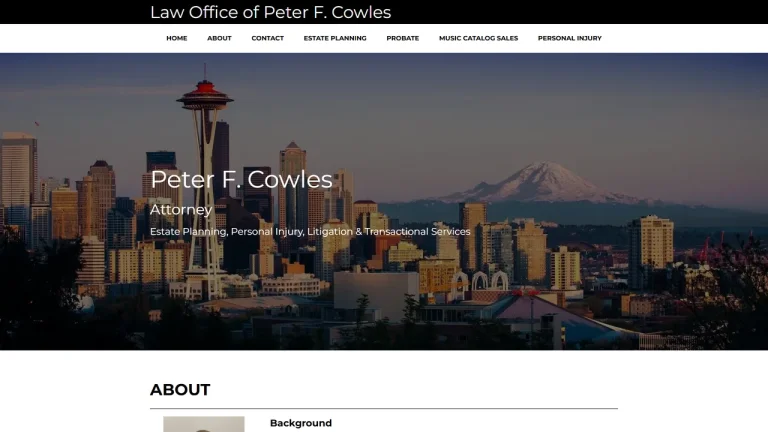
Law Office of Peter F. Cowles - Seattle, WA

NW Legacy Law, P.S. - Seattle, WA

View Ridge Law - Seattle, WA

Selander O'Brien PLLC - Seattle, WA

Elder Law Offices of Lisa Saar, PLLC - Seattle, WA

Navigating Seattle Estate Planning and King County Probate Jurisdiction
Structuring a resilient estate plan in Seattle requires a thorough understanding of Washington community property statutes, state-level wealth transfer taxes, and local procedural practices. King County estate planning touches complex asset portfolios ranging from residential properties in Queen Anne, Ballard, and West Seattle to tech equity and corporate interests in the greater Puget Sound region. Without meticulous legal drafting, an individual's estate risks exposure to unnecessary judicial intervention and costly statutory defaults.
Estate administration and trust matters in this jurisdiction fall under the authority of the King County Superior Court, with primary proceedings administered at the King County Courthouse in Downtown Seattle and the Maleng Regional Justice Center in Kent. Local judges and court commissioners expect strict compliance with Washington Title 11 statutes. Retaining a Seattle attorney ensures your wills, trusts, and transfer documents are formatted to meet local administrative benchmarks and King County probate registry standards.
A localized estate plan also accounts for cross-border assets within Washington State and clarifies ownership characterization between separate and community property. Attorneys familiar with King County real property registries and local clerk protocols streamline trust funding, coordinate beneficiary deeds, and prevent jurisdictional disputes before they reach a courtroom.
Typical Estate Planning Legal Fees and Retainers in Seattle
Estate planning attorneys in Seattle generally bill through either flat-fee packages for structured planning or hourly billing arrangements for high-net-worth estates, specialized trusts, and blended family assets. The table below outlines prevailing cost structures across King County legal practices.
| Case Scenario | Fee Structure | Estimated Cost (USD) | Key Cost Determinants |
|---|---|---|---|
| Basic Estate Plan (Individual) | Flat Fee | $1,200 - $2,500 | Standard last will and testament, durable financial power of attorney, advance healthcare directive, and statutory property declarations. |
| Comprehensive Revocable Living Trust Package | Flat Fee | $3,000 - $6,500 | Trust establishment, real property deed transfers into trust, pour-over wills, incapacity documents, and King County recording coordination. |
| High-Net-Worth & Washington Estate Tax Planning | Hourly or Structured Retainer | $5,000 - $15,000+ | Estates exceeding the Washington state estate tax exclusion threshold, irrevocable trusts, business succession provisions, and equity compensation portfolios. |
| Trust Amendment or Plan Modernization | Flat Fee / Hourly ($350 - $600/hr) | $800 - $2,200 | Updates reflecting marriage, dissolution, birth of beneficiaries, relocation to King County, or changes in fiduciary nominations. |
Critical Legal Deadlines & Statutes in Washington
Washington estate planning operates within precise statutory frameworks governing document execution, tax obligations, and fiduciary duties. Under RCW 11.12.010, any individual of sound mind who has attained eighteen years of age may construct a valid will, which must be memorialized in writing, signed by the testator, and witnessed by two competent individuals pursuant to RCW 11.12.020. Unlike many jurisdictions, Washington does not recognize holographic (unwitnessed handwritten) wills executed locally, making formal execution essential.
Spousal and domestic partner property rights are governed by RCW 26.16.030, which establishes the presumption of community property for assets accumulated during marriage. To avoid unintended distributions, Seattle residents frequently utilize Community Property Agreements under RCW 26.16.120 to pass property instantly to a surviving spouse without opening probate. However, high-net-worth residents must exercise caution: Washington enforces a standalone state estate tax under RCW 83.100.040 with a statutory exclusion threshold of $2,193,000. Estate tax returns (Form REV 85 0012) and corresponding tax payments must be remitted to the Washington State Department of Revenue within nine months of the decedent's passing.
Trust formation and management are codified under the Washington Trust Act in RCW 11.98.005, granting trustees defined administrative authorities while holding them to fiduciary accounting benchmarks. When fiduciary disputes emerge, the Trust and Estate Dispute Resolution Act (TEDRA) codified at RCW 11.96A.010 requires structured out-of-court dispute mechanisms, including formal mediation and nonjudicial settlement agreements under RCW 11.96A.220.
Small Claims Limitations vs. King County Superior Court Representation
The King County District Court Small Claims Division maintains a statutory jurisdictional limit of $10,000 for claims brought by natural persons under RCW 12.40.010. While small claims tribunals offer an economical pathway for resolving minor monetary disagreements, such as unreturned personal property deposits or small unpaid debts, Washington law strictly forbids attorneys from representing parties during small claims hearings under RCW 12.40.080, unless granted express judicial consent.
In stark contrast, estate planning matters and testamentary challenges cannot be adjudicated in small claims court. Questions of testamentary capacity, trust reformation, real estate re-titling, and will construction fall under the exclusive subject-matter jurisdiction of the King County Superior Court. Relying on self-help methods or unverified DIY document platforms to circumvent legal representation routinely generates defective instruments that fail Washington execution tests. Retaining a qualified Seattle attorney ensures proper trust funding, prevents accidental disinheritance, and establishes legally binding structures that insulate your estate from future litigation.
Red Flags When Selecting a Seattle Estate Planning Attorney
- Ignoring the Washington Estate Tax: Be cautious of practitioners using nationwide templates that overlook Washington's separate state estate tax threshold under RCW 83.100.040, which can trigger unexpected tax liabilities for estates that are otherwise exempt under federal guidelines.
- Failure to Address Community Property Characterization: An attorney who does not analyze the distinction between community and separate assets under RCW 26.16.030 risks creating invalid trust provisions that conflict with marital property rights.
- Omission of Trust Funding Guidance: Drafting a revocable living trust is ineffective if the attorney fails to guide you through funding the vehicle, leaving Seattle real estate and brokerage accounts vulnerable to formal probate administration.
- Vague Fee Retainers and Hidden Hourly Charges: Avoid counsel unwilling to furnish a clear, written representation contract outlining whether estate planning packages include deeds, power of attorney documents, and county recording fees.
Frequently Asked Questions
What is the difference between a will and a revocable living trust in Seattle?
A last will and testament specifies asset distribution upon death and must pass through King County Superior Court probate to transfer title. A revocable living trust, established under RCW 11.98.005, allows assets titled in the trust to transfer immediately to designated beneficiaries upon death without court intervention, ensuring privacy and continuity of asset management.
Does Washington State levy an estate tax on Seattle residents?
Yes. Washington is one of the few states with an independent state estate tax under RCW 83.100.040. The statutory exclusion is set at $2,193,000, and taxable amounts above this threshold are assessed at graduated rates between 10% and 20%. Seattle estate planning lawyers use credit shelter trusts and marital deductions to mitigate this tax burden.
How does Washington community property law impact my estate plan?
Under RCW 26.16.030, all property acquired during marriage while domiciled in Washington is presumed to be community property, with each spouse owning an undivided one-half interest. Testators can only distribute their half of the community estate along with their separate property. A Seattle lawyer ensures wills and trusts do not attempt to convey a surviving spouse's community share.
Are holographic (handwritten) wills valid in Washington?
No. Washington does not recognize holographic wills executed within state borders. Pursuant to RCW 11.12.020, all wills executed in Washington must be in writing, signed by the testator or at their direction, and attested by two competent witnesses in the presence of the testator.
What is a Community Property Agreement under Washington law?
A Community Property Agreement, governed by RCW 26.16.120, is a binding marital contract converting separate property into community property and providing that upon the death of either spouse, all community property vests immediately in the survivor without probate. While efficient, it may exhaust the deceased spouse's estate tax exemption, making professional counsel essential.