
Workers' Compensation Lawyers in Washington
Retaining a skilled Washington workers' compensation lawyer protects your time-loss benefits and medical treatment following an unexpected workplace injury. Knowledgeable attorneys navigate the Department of Labor & Industries system and resolve claim disputes before complex hearings. Explore our directory below to consult verified Washington workers' compensation advocates today.

Armstrong Law Offices, P.S. - Kent, WA

Dimmock Law Group - Everett, WA
The Law Office Of Robert M. Arim - Bellevue, WA

Sharpe Law Firm, PLLC - Seattle, WA

Wallace & Whitford Law - Tacoma, WA

Elder Law Offices of Lisa Saar, PLLC - Seattle, WA

Smith Duran Law - Tacoma, WA
McPartland Law Offices PLLC - Spokane, WA
Employer Solutions Law - Bellevue, WA

Carpenter & Zuckerman - Bellevue, WA

Dubin Law Group - Personal Injury Attorneys - Spokane, WA
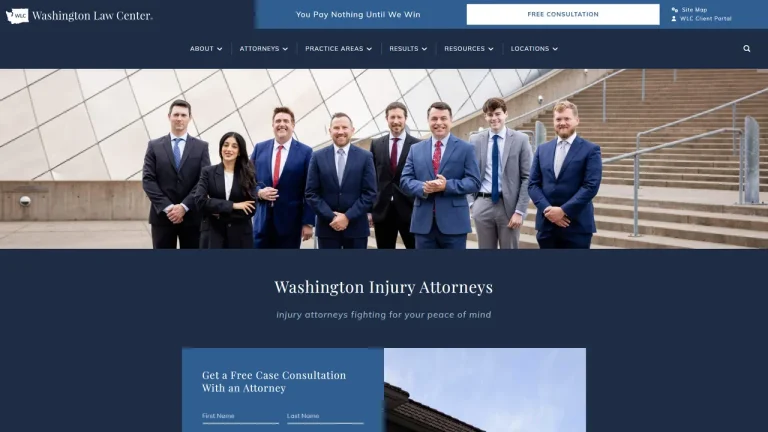
Washington Law Center - Tacoma, WA

Reck Law - Tacoma, WA
Employer Solutions Law - Bellevue, WA
Lehmbecker Law - Bellevue, WA

Zuanich Law, PLLC - Seattle, WA
Hughes Mathews Legal Group - Bellevue, WA

Tacoma Legal Counsel, PLLC - Tacoma, WA
WA Workers' Comp Law PLLC - Seattle, WA
Hamrick Palmer Johansen - Vancouver, WA

Law Offices of Mark C. Wagner - Tacoma, WA

Phillips Law Firm - Seattle, WA

Putnam Lieb Potvin Dailey - Olympia, WA
Navigating the Washington Industrial Insurance System
Suffering an injury on the job threatens an employee's livelihood and long-term physical well-being. From aerospace machinists and construction workers along the Interstate 5 corridor to agricultural laborers in Central Washington and healthcare workers statewide, workplace injuries demand prompt legal protection.
Washington operates a distinct workers' compensation system governed by the Industrial Insurance Act. The majority of employers are insured through the state fund administered directly by the Washington State Department of Labor & Industries (L&I), while qualified large employers are permitted to self-insure under state regulatory supervision.
When L&I or a self-insured employer denies benefits, cuts off medical treatment, or issues an adverse decision, appeals proceed through a multi-tiered administrative process. Disputed orders are appealed to the Board of Industrial Insurance Appeals (BIIA), an independent state agency, and can proceed to Washington Superior Court. Retaining a seasoned workers' compensation attorney ensures your medical records are properly framed and critical appeal deadlines are met.
Washington Workers' Compensation Services and Cost Guidelines
| Case Scenario | Fee Structure | Estimated Cost (USD) | Key Cost Determinants |
|---|---|---|---|
| Rejected Claim Protest & Allowance Appeal | Contingency / Statutory Fee | 15% - 30% of back benefits | Medical causation opinions, employer opposition, IME reports |
| Time-Loss Wage Replacement Dispute | Contingency / Statutory Fee | 15% - 30% of recovered payments | Prior wage calculations, loss of earning power, vocational disputes |
| Permanent Partial Disability (PPD) Award | Contingency / Statutory Fee | 20% - 30% of PPD increase | Impairment ratings, category vs. percentage rating, medical exhibits |
| Board of Industrial Insurance Appeals Litigation | Contingency / Statutory Fee | 30% of benefits recovered | Industrial appeals judge trial, cross-examination of IME doctors, court reporter fees |
Critical Legal Deadlines & Statutes in Washington
Workplace injury rights in Washington are governed by the Industrial Insurance Act set forth in RCW 51.04.010, with self-insured employer mandates outlined under RCW 51.14.010.
Injured workers face strict statutory reporting deadlines. Under RCW 51.28.050, a claim for an industrial injury must be filed within one year from the date of the accident. For occupational disease claims resulting from repetitive trauma or toxic exposure, the claim must be filed within two years from the date the worker receives written notice from a physician under RCW 51.28.055.
When L&I or a self-insured employer issues a formal decision, the worker has exactly 60 days to file a written protest or appeal under RCW 51.52.050, though this window is shortened to only 15 days for decisions involving vocational rehabilitation services. Missing this deadline makes the administrative order final and binding forever. Wage replacement rates are established under RCW 51.32.090, while attorney fee limits are strictly regulated by RCW 51.52.120.
Small Claims Jurisdictional Bar vs. Industrial Insurance Appeals
Washington Small Claims Departments have no authority to hear workers' compensation disputes under RCW 12.40.010. The Industrial Insurance Act acts as an exclusive statutory remedy that removes on-the-job injury disputes from general civil courts, placing them under the administrative authority of L&I and the Board of Industrial Insurance Appeals.
Injured workers attempting to represent themselves against self-insured employers or L&I claims examiners frequently face biased Independent Medical Examinations (IMEs) and premature claim closure. Self-insured employers retain experienced defense counsel whose primary goal is minimizing benefit payouts.
A dedicated Washington workers' compensation lawyer deposes treating physicians, secures rebuttal medical evidence, cross-examines adversarial IME doctors, and negotiates structured settlement agreements under RCW 51.04.063 or total permanent disability pensions.
Red Flags When Hiring a Washington Workers' Compensation Attorney
- Non-attorney representatives or unauthorized claims handlers who cannot represent you before the Board of Industrial Insurance Appeals or in court.
- Lawyers charging fees on ongoing undisputed time-loss compensation or routine medical payments, violating statutory fee limits under RCW 51.52.120.
- Failing to monitor the strict 60-day deadline for protesting an L&I closing order, allowing benefits to terminate permanently.
- Ignoring viable third-party liability claims against negligent subcontractors or equipment manufacturers that exist outside the workers' comp system.
Frequently Asked Questions
How long do I have to file a workers' compensation claim in Washington?
Under RCW 51.28.050, you have one year from the date of an on-the-job injury to file a claim with L&I. For occupational diseases, you have two years from when a doctor provides written notice under RCW 51.28.055.
What is the difference between state fund and self-insured employers in Washington?
State fund employers pay premiums directly to the Department of Labor & Industries, which pays benefits. Large qualifying employers are self-insured under RCW 51.14.010 and pay benefits directly, often managing claims through third-party administrators.
How much time do I have to appeal an adverse L&I order?
Under RCW 51.52.050, you have 60 days from the date you receive an L&I order to file a protest with L&I or an appeal to the Board of Industrial Insurance Appeals. Vocational rehabilitation orders have a strict 15-day deadline.
Can I sue my employer for a work-related injury in Washington?
In most instances, no. Washington workers' compensation is an exclusive remedy that protects employers from direct lawsuits. However, you can sue negligent third parties, such as outside drivers, contractors, or machinery manufacturers.
How are attorney fees regulated in Washington workers' comp claims?
Under RCW 51.52.120, attorney fees are statutorily regulated and capped, typically limited to a percentage of the increased benefits secured on appeal, ensuring injured workers are protected against excessive legal charges.