
Business Litigation Lawyers in West Virginia
Retaining an experienced business litigation lawyer in West Virginia protects corporate assets and resolves high-stakes commercial disputes efficiently. Skilled attorneys prioritize pre-trial negotiation and mediation to avoid protracted court trials. Explore our directory below to schedule a case review with trusted local counsel.

Ray, Winton and Kelley, PLLC - Charleston, WV

Mundy & Associates - Huntington, WV

Spilman Thomas & Battle, PLLC (Spilman Center) - Charleston, WV

Jackson Kelly PLLC - Charleston, WV

Farrell and Farrell PLLC - Huntington, WV

Shaffer & Shaffer PLLC - Charleston, WV

Rose Law Office - Charleston, WV

Jason Lord Law Office - Charleston, WV
Hendrickson and Long PLLC - Charleston, WV
Lewis Brisbois Bisgaard & Smith LLP - Charleston, WV
Bowles Rice LLP - Charleston, WV

Todd W. Reed, Attorney at Law - Charleston, WV

Steptoe & Johnson PLLC - Charleston, WV
Timothy Abeel & Associates Lemon Law Attorneys - Charleston, WV
David A. Mohler - Bowles Rice LLP - Charleston, WV
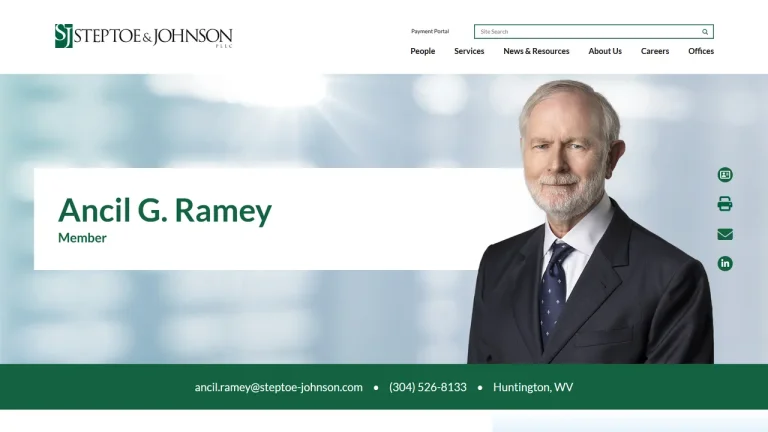
Ancil G. Ramey - Huntington, WV

Jonathan R. Marshall - Bailey & Glasser LLP - Charleston, WV

Dinsmore & Shohl LLP - Huntington, WV

MacCorkle Lavender & Sweeney, PLLC - Charleston, WV

Eric E. Kinder (Spilman Thomas & Battle, PLLC) - Charleston, WV
Ditrapano Law Firm PC - Charleston, WV
Carl J Roncaglione Law Office - Charleston, WV
Jenkins Fenstermaker, PLLC - Huntington, WV
Navigating Commercial Litigation and Court Venues in West Virginia
Commercial litigation in West Virginia requires a thorough understanding of state court procedures, commercial statutes, and local judicial culture. Whether your enterprise operates in the Kanawha Valley around Charleston, the manufacturing and healthcare corridors of Huntington, the technology hubs in Morgantown, or the growing commercial districts of Wheeling and Martinsburg, resolving contract disputes, partnership conflicts, and business torts demands strategic legal counsel familiar with local West Virginia practice.
In West Virginia, major commercial disputes are litigated in the West Virginia Circuit Courts, which serve as the state courts of general jurisdiction across thirty-one judicial circuits. For high-stakes or complex commercial matters, cases may be referred to the specialized West Virginia Business Court Division under Rule 29 of the West Virginia Trial Court Rules. This specialized docket features designated circuit judges who manage complex commercial, corporate governance, and intellectual property disputes with specialized commercial procedures. Appeals proceed through the Intermediate Court of Appeals of West Virginia or directly to the Supreme Court of Appeals of West Virginia in Charleston.
Engaging seasoned West Virginia commercial litigation attorneys enables businesses to explore early alternative dispute resolution, including commercial mediation and binding arbitration, before incurring the substantial costs of formal discovery. Local litigators provide essential guidance through discovery protocols, preliminary injunction hearings, and electronic discovery requirements under the West Virginia Rules of Civil Procedure.
Commercial Litigation Fee Structures and Estimated Legal Costs
| Case Scenario | Fee Structure | Estimated Cost (USD) | Key Cost Determinants |
|---|---|---|---|
| Pre-Suit Breach of Contract & Commercial Mediation | Hourly Billing or Structured Retainer | $3,500-$8,500 | Document review volume, depth of contract ambiguity, opposing party willingness to settle |
| Contested Commercial Litigation & Trial (Circuit Court) | Hourly Billing ($275-$550/hr) | $25,000-$120,000+ | Scope of e-discovery, expert accounting witnesses, summary judgment motions, trial duration |
| Commercial Plaintiff Action / Debt Recovery | Contingency Fee (25%-40%) or Hybrid Retainer | $0 upfront (or discounted hourly + percentage) | Defendant solvency, liquidity of assets, clarity of commercial liability, counterclaims |
| Emergency Injunction / Non-Compete Enforcement | Expedited Hourly Retainer | $7,500-$20,000 | Filing speed, temporary restraining order (TRO) hearings, evidence of irreparable harm |
Critical Legal Deadlines & Statutes in West Virginia
Commercial litigation in West Virginia is governed by strict statutory limitations set forth in the West Virginia Code. Actions founded on a breach of a written contract must be filed within ten years pursuant to W. Va. Code § 55-2-6. Conversely, actions on oral or implied contracts carry a five-year statute of limitations under the same provision. Contracts for the sale of goods governed by the Uniform Commercial Code carry a four-year limitations window under W. Va. Code § 46-2-725, which begins to run upon the tender of delivery regardless of the aggrieved party lack of knowledge.
Commercial torts, including business fraud, intentional interference with contractual relations, and unfair trade practices, are subject to a strict two-year statute of limitations under W. Va. Code § 55-2-12. Misappropriation of commercial trade secrets must be brought within three years after the misappropriation is discovered or reasonably should have been discovered pursuant to the West Virginia Uniform Trade Secrets Act, W. Va. Code § 47-22-6. Missing these statutory deadlines permanently bars legal recovery in West Virginia courts.
Small Claims Limits vs. Professional Representation
In West Virginia, minor financial controversies may be brought before the Magistrate Court, which maintains a civil jurisdictional ceiling of $10,000 under W. Va. Code § 50-2-1. Small commercial debt collections or simple invoice defaults under this threshold can be resolved through streamlined magistrate procedures where formal discovery is restricted and proceedings are prompt. While corporate officers may appear in Magistrate Court under limited circumstances, handling disputes without counsel carries significant procedural exposure.
For controversies exceeding $10,000, exclusive jurisdiction rests with the West Virginia Circuit Courts. Complex commercial matters involving equitable relief, such as emergency preliminary injunctions, shareholder derivative actions, non-compete enforcement, or judicial dissolutions, cannot be adjudicated in Magistrate Court. Corporations and limited liability companies are generally required to be represented by licensed legal counsel in Circuit Court and before the West Virginia Business Court Division. Retaining experienced business litigators ensures compliance with West Virginia civil rules, protects proprietary data, and structures effective pre-trial positioning.
Red Flags & Hiring Considerations for Business Litigators
- Vague Billing Practices: Avoid litigators who refuse to provide clear, itemized monthly billing statements specifying task increments, filing costs, and deposition expenses.
- Lack of Business Court Experience: Ensure your attorney has specific experience navigating the West Virginia Business Court Division and procedural motions under Trial Court Rule 29.
- Guaranteeing Trial Outcomes: Be cautious of counsel who guarantees a courtroom victory; ethical rules under the West Virginia Rules of Professional Conduct prohibit promising specific litigation outcomes.
- Unchecked Corporate Conflicts: Verify that prospective litigation counsel has conducted a comprehensive conflicts check to ensure they do not represent adverse regional competitors, vendors, or lenders.
Frequently Asked Questions
What is the West Virginia Business Court Division?
The West Virginia Business Court Division is a specialized statewide circuit court docket established to manage complex commercial, corporate governance, and business litigation cases using customized procedural management.
What is the statute of limitations for breach of contract in West Virginia?
Under West Virginia law, breach of a written contract carries a ten-year statute of limitations, while breach of an oral agreement carries a five-year limitations period.
What is the jurisdictional limit for small claims in West Virginia?
The civil jurisdictional limit for West Virginia Magistrate Courts is ten thousand dollars; disputes exceeding this amount must be filed in the appropriate county Circuit Court.
Can a West Virginia business litigation lawyer work on contingency?
Yes, business litigators may represent commercial plaintiffs on a full contingency or hybrid fee arrangement, provided the arrangement complies with West Virginia legal ethics rules.
Can a corporation represent itself in West Virginia Circuit Court?
No, corporations and limited liability companies must be represented by an attorney admitted to practice before the West Virginia State Bar in Circuit Court proceedings.