
Estate Planning Lawyers in Charleston, WV
Establishing an estate plan in Charleston, WV? Consult top Kanawha County estate planning attorneys to safeguard assets and protect your medical choices. Comprehensive legal planning coordinates wills, trusts, and healthcare directives under West Virginia law, mitigating familial stress and costly litigation. Browse our verified directory below to schedule an estate planning consultation with experienced Charleston practitioners.

Caldwell & Riffee, PLLC - Charleston, WV

Wooton, Davis, Hussell & Johnson, PLLC - Charleston, WV

Campbell Woods PLLC - Charleston, WV
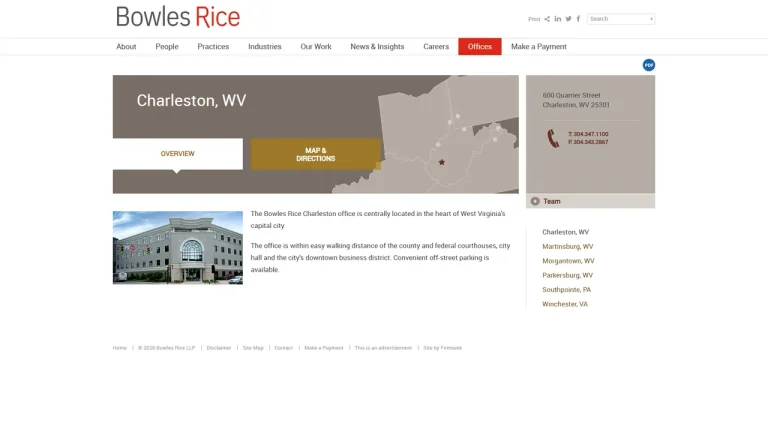
Bowles Rice LLP - Charleston, WV

Shaffer Law PLLC - Charleston, WV
Law Office of James T. Cooper - Charleston, WV

Gregory E. Elliott, Attorney at Law - Charleston, WV

Barth & Thompson - Charleston, WV

Kay Casto & Chaney PLLC - Charleston, WV

Hamilton Law Office (Charles R. Hamilton) - Charleston, WV

Raymond Keener III, Attorney at Law - Charleston, WV

Robinson & McElwee PLLC - Charleston, WV

Elizabeth Davis Law Office - Charleston, WV

Van Deysen Law Office - Charleston, WV
John F. Allevato - Charleston, WV
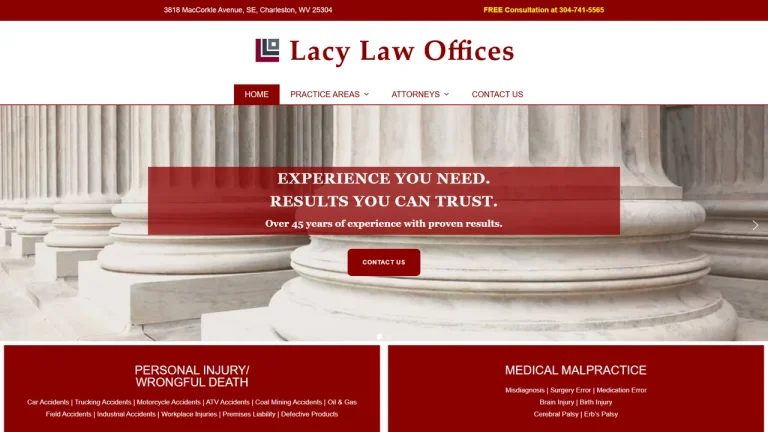
Lacy Law Offices - Charleston, WV

Lewis Gianola PLLC - Charleston, WV

Charnock and Charnock - Charleston, WV
C PAGE HAMRICK ATTORNEY AT LAW - Charleston, WV

Ray, Winton and Kelley, PLLC - Charleston, WV
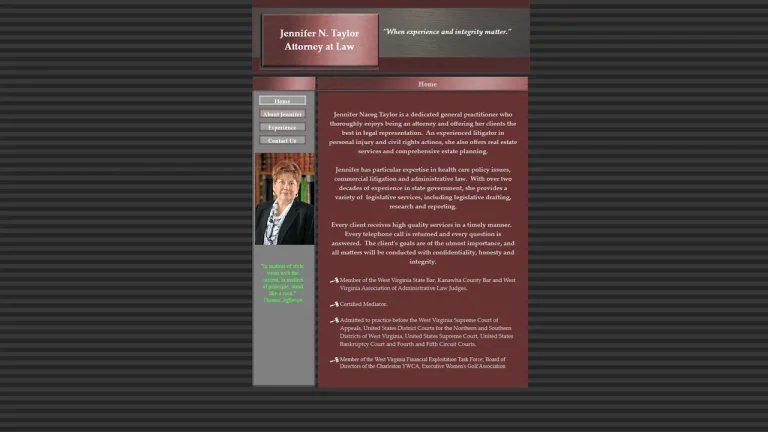
Jtaylor Law - Charleston, WV
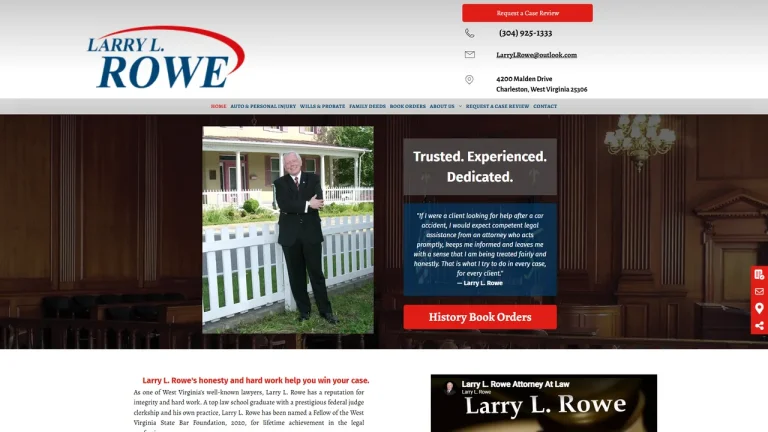
Larry L Rowe - Charleston, WV

Comprehensive Estate Planning Solutions in Kanawha County
Creating an integrated estate plan in Charleston safeguards your family, your healthcare autonomy, and your accumulated wealth against unforeseen disability or death. Serving residents from the East End to West Side and surrounding Kanawha Valley communities, experienced estate attorneys construct coordinated plans that align wills, trusts, and powers of attorney with West Virginia legal mandates.
An incomplete or fragmented estate strategy often leaves families navigating complex proceedings before the Kanawha County Commission's Fiduciary Supervisor or requires court-appointed conservatorships through the Kanawha County Circuit Court under the West Virginia Guardianship and Conservatorship Act.
Local Charleston estate planning lawyers ensure that your advanced medical directives, financial powers of attorney, and legacy instructions are legally sound, preventing public court intervention and preserving familial harmony across generations.
Estate Planning Package Structures & Cost Expectations
| Case Scenario | Fee Structure | Estimated Cost (USD) | Key Cost Determinants |
|---|---|---|---|
| Foundational Estate Package (Will & Directives) | Comprehensive Flat Fee | $1,100 - $2,200 | Last will, financial durable power of attorney, medical power of attorney, living will execution. |
| Comprehensive Trust-Based Plan | Flat Fee Package | $2,500 - $5,000 | Revocable living trust, pour-over will, healthcare directives, deed preparation for Kanawha County property. |
| High-Net-Worth / Business Succession Planning | Hourly ($300 - $500/hr) or Retainer | $4,500 - $12,000+ | Operating agreement transitions, family limited partnerships, estate tax minimization, generation-skipping trusts. |
| Guardianship & Conservatorship Proceedings | Retainer + Court Costs | $2,500 - $6,000 | Involuntary or voluntary protective petitions filed in Kanawha County Circuit Court for incapacitated adults. |
Critical Legal Deadlines & Statutes in West Virginia
An effective West Virginia estate plan coordinates multiple statutory mechanisms across personal and financial domains. Medical decision-making is governed by the West Virginia Health Care Decisions Act pursuant to W. Va. Code § 16-30-4. To be legally binding, a Medical Power of Attorney or Living Will must be executed in writing, signed in the presence of two adult witnesses, and acknowledged before a notary public under W. Va. Code § 16-30-5. Witnesses cannot be the appointed representative, attending physician, or an operator of a health facility providing care.
Financial decision-making during incapacity is governed by the Uniform Power of Attorney Act under W. Va. Code § 39B-1-105. To remain durable after mental incapacity, the document must contain explicit language and be properly acknowledged before a notary public. Absent a valid power of attorney, family members must initiate guardianship proceedings in the Kanawha County Circuit Court pursuant to W. Va. Code § 44A-2-1, which mandates independent physician evaluations and a formal hearing within strict procedural deadlines under W. Va. Code § 44A-2-9.
Following death, administration deadlines become immediate. The personal representative must submit a complete inventory and appraisement of assets to the Kanawha County Fiduciary Supervisor within 90 days of qualification pursuant to W. Va. Code § 44-1-14. Creditor claims are subsequently governed by statutory notification windows under W. Va. Code § 44-2-1.
Magistrate Court Limits vs. Integrated Circuit Court Estate Counsel
Although the Kanawha County Magistrate Court provides expedited dispute resolution for civil claims up to $20,000 under W. Va. Code § 50-2-1, magistrates have no legal authority to rule on protective proceedings, guardianship petitions, or equitable estate distributions. Attempting to manage family incapacity issues through informal magistrate processes is legally impossible.
When an individual becomes incapacitated without advance directives, relatives must petition the 13th Judicial Circuit Court of Kanawha County for the appointment of a guardian and conservator under W. Va. Code § 44A-1-1. This public court intervention requires formal hearings, court-appointed counsel, and ongoing annual fiduciary accountings. Retaining an estate planning lawyer in Charleston preempts this costly ordeal by drafting durable powers of attorney and revocable trusts that grant immediate, private authority to trusted relatives without courtroom litigation.
Red Flags When Hiring a Charleston Estate Planning Lawyer
- Incomplete Execution of Healthcare Directives: Avoid practitioners who neglect West Virginia's requirement for two witnesses plus a notary acknowledgment on living wills and medical powers of attorney under W. Va. Code § 16-30-5.
- Ignoring Non-Probate Asset Alignment: An estate plan that fails to coordinate beneficiary designations on life insurance policies, retirement accounts, and TOD deeds risks defeating the plan's objectives.
- Unfamiliarity with Kanawha County Probate Procedures: Non-local lawyers often overlook the specific documentation requirements established by the Kanawha County Fiduciary Supervisor's Department.
- Failure to Plan for Incapacity: Beware of basic document packages that only provide a will while ignoring financial durable powers of attorney and mental incapacity protections.
Frequently Asked Questions
What core documents are included in a West Virginia estate plan?
A comprehensive estate plan typically includes a Last Will and Testament, a Revocable Living Trust, a Durable Financial Power of Attorney, a Medical Power of Attorney, and a Living Will executed under W. Va. Code § 16-30-4.
Who can serve as a medical power of attorney representative in West Virginia?
Under W. Va. Code § 16-30-4, any competent adult age 18 or older can serve as your healthcare representative, provided they are not your treating healthcare provider or an employee of your treating care facility, unless related to you.
What happens if I become incapacitated without a durable power of attorney?
Without a valid durable power of attorney under W. Va. Code § 39B-1-105, your family must file a petition for guardianship and conservatorship in Kanawha County Circuit Court under W. Va. Code § 44A-2-1 to manage your financial and personal affairs.
Does a power of attorney continue after a principal's death in West Virginia?
No. Under W. Va. Code § 39B-1-110, a power of attorney terminates immediately upon the principal's death, at which point authority transfers to the personal representative or trustee.
When should I review and update my estate planning documents in Charleston?
You should review your estate plan every three to five years, or immediately following significant life events such as marriage, divorce, birth of children, acquisition of substantial property, or changes in state tax legislation.