
Employment & Labor Lawyers in West Virginia
Retaining an employment lawyer in West Virginia safeguards your workplace rights under state law. Skilled counsel resolves wage and termination claims through negotiation, avoiding prolonged courtroom litigation. Explore our verified directory below to schedule a case evaluation with a trusted West Virginia labor attorney.

Nelson Mullins Riley & Scarborough LLP - Huntington, WV

The Law Offices of Redman & Payne - Charleston, WV

Disability Rights of West Virginia - Charleston, WV

Warner Law Offices, PLLC - Charleston, WV

Joseph U. Leonoro (Steptoe & Johnson PLLC) - Charleston, WV
Hendrickson and Long PLLC - Charleston, WV

Kathy Brown Law, PLLC - Charleston, WV
Robinson & McElwee PLLC - Charleston, WV
Bowles Rice LLP - Charleston, WV
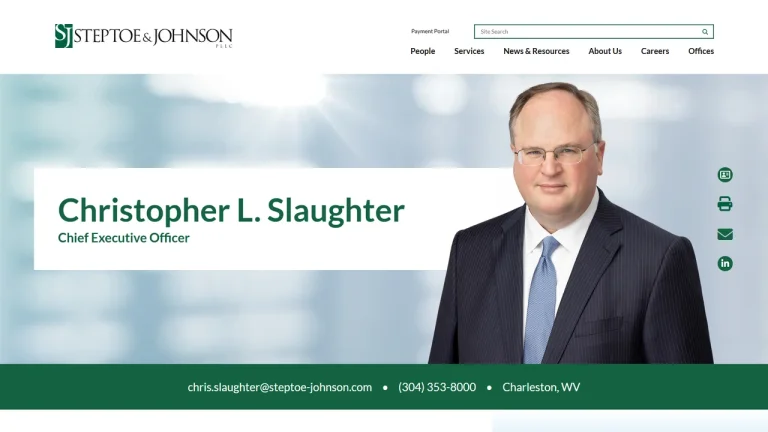
Slaughter Christopher - Huntington, WV

Addair Entsminger PLLC - Charleston, WV
Rosinsky Law Office - Huntington, WV

Lewis Brisbois Bisgaard & Smith LLP - Charleston, WV

Flaherty Sensabaugh & Bonasso - Charleston, WV

MacCorkle Lavender & Sweeney, PLLC - Charleston, WV

The Grubb Law Group - Charleston, WV

Dinsmore & Shohl LLP - Charleston, WV
Campbell & Smith, PLLC - Charleston, WV
DiPiero Simmons McGinley and Bastress, PLLC - Charleston, WV

Dinsmore & Shohl LLP - Huntington, WV

Littler Mendelson P.C. - Charleston, WV
Mountain State Justice Inc - Charleston, WV

Bryan R. Cokeley - Steptoe & Johnson PLLC - Charleston, WV

Enforcing Employee Rights Across West Virginia Jurisdictions
Employment relationships across West Virginia-whether in manufacturing and chemical facilities in Charleston and Huntington, energy and natural resource operations throughout the coalfields, healthcare systems in Morgantown, or commercial enterprises in the Eastern Panhandle-are governed by rigorous state labor statutes. While West Virginia is an employment-at-will state, employers must strictly comply with civil rights laws and statutory wage mandates.
Workplace disputes involving discriminatory treatment, sexual harassment, or unlawful retaliation are anchored in the West Virginia Human Rights Act under W. Va. Code § 5-11-1. Claims may be brought before the West Virginia Human Rights Commission or filed directly in the West Virginia Circuit Courts, which hold general jurisdiction over civil actions under W. Va. Code § 51-2-2, or the U.S. District Courts for the Northern or Southern District of West Virginia.
Retaining an attorney admitted to the West Virginia State Bar ensures wage claims and wrongful discharge actions are properly structured. Counsel assesses unpaid wages under the West Virginia Wage Payment and Collection Act, W. Va. Code § 21-5-1, prosecutes public policy retaliation claims, coordinates electronic filings through the state judiciary portal, and pursues statutory liquidated damages and attorney fees.
Legal Fee Structures for West Virginia Employment Claims
| Case Scenario | Fee Structure | Estimated Cost (USD) | Key Cost Determinants |
|---|---|---|---|
| Severance Agreement Review & Separation Negotiation | Flat Fee / Hourly | $450 - $1,500 (or $275 - $450/hr) | Executive compensation terms, non-compete covenants, and release agreements. |
| Wage Payment Act Violation & Unpaid Wages Demand | Contingency / Fee-Shifting | No Upfront Cost (Paid by Employer or 33.3%) | Statutory double liquidated damages under W. Va. Code § 21-5-4, paystub audits, and employer records. |
| Human Rights Commission Charge & Agency Conciliation | Hybrid / Contingency | $1,500 - $4,000 (or 25% - 33.3% of settlement) | Investigation scope before the WVHRC under W. Va. Code § 5-11-10 and position statements. |
| Circuit Court Wrongful Discharge or Retaliation Trial | Contingency / Fee-Shifting | 33.3% to 40% of verdict or shifted fees | Public policy violation proofs under Harless doctrine, supervisor depositions, and trial length. |
Critical Legal Deadlines & Statutes in West Virginia
Under W. Va. Code § 5-11-10, an administrative complaint alleging discrimination based on race, religion, sex, age, or disability must be filed with the West Virginia Human Rights Commission within 365 days of the alleged discriminatory act. If the Commission issues a right-to-sue letter, the worker has 90 days under W. Va. Code § 5-11-13 to file a complaint in Circuit Court.
West Virginia law also permits employees to bypass the Commission and file directly in Circuit Court under the Human Rights Act; such claims must be commenced within two years under the personal injury limitations statute, W. Va. Code § 55-2-12. Under the West Virginia Wage Payment and Collection Act, W. Va. Code § 21-5-4, separated employees must be paid all earned wages on or before the next regular payday. Failure to do so exposes the employer to liquidated damages equal to two times the unpaid amount. Private lawsuits to collect unpaid wages are authorized under W. Va. Code § 21-5-12, which also provides for mandatory assessment of costs and reasonable attorney fees. Common law claims for retaliatory discharge in violation of substantial public policy are subject to the two-year limitations period under W. Va. Code § 55-2-12.
Magistrate Court Small Claims vs. Circuit Court Employment Advocacy
In West Virginia, Magistrate Courts maintain limited civil jurisdiction capped at $10,000 under W. Va. Code § 50-2-1. While an employee with a simple, small final paycheck dispute could theoretically file in Magistrate Court, pursuing complex workplace grievances there carries severe limitations.
Magistrate Courts cannot award equitable relief, such as employee reinstatement, injunctions against workplace harassment, or formal policy changes authorized under W. Va. Code § 5-11-13. Furthermore, statutory liquidated damages, emotional distress awards, and attorney fee provisions often elevate the total value of employment claims well beyond the Magistrate Court jurisdictional cap. Initiating complex employment litigation in the West Virginia Circuit Courts or Federal District Courts provides full formal discovery, permitting counsel to subpoena internal corporate emails, depose managers, and compel compliance under the Wage Payment and Collection Act (W. Va. Code § 21-5-12) while shifting all legal fees to the liable employer.
Red Flags When Selecting a West Virginia Employment Lawyer
- Requiring large upfront retainers for straightforward wage claims, ignoring statutory fee-shifting provisions under W. Va. Code § 21-5-12.
- Missing the 365-day administrative filing deadline before the West Virginia Human Rights Commission under W. Va. Code § 5-11-10.
- Settling wage claims for mere base pay without demanding the statutory double liquidated damages mandated by W. Va. Code § 21-5-4.
- Lack of trial experience in the West Virginia Circuit Courts or the U.S. District Courts for the Northern and Southern Districts of West Virginia.
Frequently Asked Questions
What is the deadline for filing a workplace discrimination claim in West Virginia?
Under W. Va. Code § 5-11-10, an administrative complaint must be filed with the West Virginia Human Rights Commission within 365 days. Direct civil lawsuits filed in Circuit Court must be initiated within two years under W. Va. Code § 55-2-12.
When must an employer pay final wages after termination in West Virginia?
Under W. Va. Code § 21-5-4, an employer must pay all earned wages to a separated employee on or before the next regular payday, whether the worker was discharged or resigned.
What are liquidated damages under the West Virginia Wage Payment and Collection Act?
Under W. Va. Code § 21-5-4, an employer who fails to pay final wages on or before the next regular payday is liable for statutory liquidated damages equal to two times the unpaid amount in addition to the wages owed.
What is a Harless wrongful discharge claim in West Virginia?
A Harless claim is a recognized common law tort action in West Virginia that permits an at-will employee to sue for damages if their termination violated a substantial public policy, such as reporting safety or wage violations.
Can an employer be forced to pay my legal fees in a West Virginia wage lawsuit?
Yes. Under W. Va. Code § 21-5-12, if an employee prevails in a lawsuit under the Wage Payment and Collection Act, the court is authorized to assess costs and reasonable attorney fees against the employer.