
Workers' Compensation Lawyers in West Virginia
Retaining an experienced West Virginia workers' compensation lawyer ensures your medical coverage and wage-replacement benefits are fully safeguarded. Professional legal representation resolves claim denials efficiently through administrative mediation and out-of-court hearings, minimizing financial stress. Browse our statewide directory below to consult verified local attorneys who understand West Virginia compensation law.
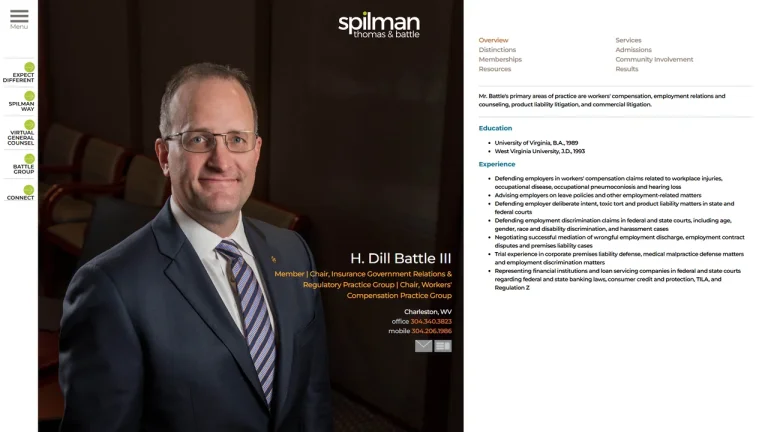
H. Dill Battle III - Charleston, WV

Monge & Associates Injury and Accident Attorneys - Charleston, WV
Cipriani & Werner, P.C. - Charleston, WV

James F. Humphreys & Associates (Jim Legal 24) - Charleston, WV

Morgan & Morgan - Charleston, WV

Segal & Amos PLLC - Charleston, WV
Hartley Law Group, PLLC - Charleston, WV

The Love Law Firm - Charleston, WV

Bailey & Wyant, PLLC - Charleston, WV
Farmer, Cline & Campbell Personal Injury Lawyers - Charleston, WV
WVLawyer - Charleston, WV

Warner Law Offices, PLLC - Charleston, WV
Bailey, Javins & Carter, L.C. - Charleston, WV

Mike Slocumb Law Firm - Charleston, WV

Warner Law Offices, PLLC - Huntington, WV

Maroney Williams Weaver & Pancake PLLC - Charleston, WV

Bradford Law Offices, PLLC - Charleston, WV

Stapleton Law Offices - Huntington, WV

West Law Firm LC - Charleston, WV
Johnstone & Gabhart, LLP - Charleston, WV

Hanna Law Office - Charleston, WV

Jan Dils Attorneys at Law - Charleston, WV

Griffith Law Center - Charleston, WV

The West Virginia Workers' Compensation Framework and Legal Jurisdiction
The workers' compensation system in West Virginia is a structured administrative program designed to provide prompt medical treatment and wage replacement for employees suffering workplace injuries or occupational illnesses. Although West Virginia privatized its direct workers' compensation insurance market, the entire system is strictly overseen by the Offices of the Insurance Commissioner of West Virginia (OIC), headquartered in Charleston. Insurers, third-party administrators, and employers must strictly adhere to state workers' compensation statutes and regulatory rules.
When disputes arise regarding claim compensability, medical authorization, or permanent partial disability ratings, proceedings occur within specialized administrative bodies. Contested claim orders are heard by the Workers' Compensation Board of Review (WCBR). Decisions rendered by the Board of Review can be formally appealed directly to the Intermediate Court of Appeals of West Virginia, with final discretionary review resting with the Supreme Court of Appeals of West Virginia.
Navigating these proceedings requires counsel admitted to The West Virginia State Bar who understands the procedural timelines governing administrative litigation. Whether your injury occurred in an industrial plant in Huntington, a mining site in southern West Virginia, a healthcare facility in Morgantown, or a commercial warehouse in Martinsburg, experienced legal representation ensures that insurance carriers adhere to statutory benefit obligations.
Workers' Compensation Fee Caps and Case Cost Expectations
| Service / Matter | Fee Structure | Statutory Fee Cap (USD) | Processing Timeline |
|---|---|---|---|
| Initial Compensability Dispute / Claim Denial | Contingency Fee on Accrued Benefits | Capped at 20% of awarded benefits | 3 to 9 months through administrative review |
| Permanent Partial Disability (PPD) Award | Contingency Fee on Additional Impairment | Capped at 20% (maximum 208 weeks of benefits) | 4 to 12 months including IME evaluations |
| Board of Review & Intermediate Court Appeal | Contingency Fee / Record Defense | Statutory 20% cap under state code | 6 to 18 months through appellate decision |
| Deliberate Intention Civil Lawsuit | Standard Civil Contingency Fee | 33.3% - 40% of civil recovery (no statutory 20% comp cap) | 12 to 24 months in Circuit Court |
Critical Legal Deadlines & Statutes in West Virginia
Workers' compensation matters in West Virginia are governed by strict procedural timelines. Under W. Va. Code § 23-4-15, an injured worker must provide immediate written notice of an injury to their employer, and a formal application for compensation must be filed within six months from the date of the injury. For occupational pneumoconiosis or gradual occupational diseases, claims must generally be submitted within three years of diagnosis or last exposure.
When a claims administrator or insurance carrier issues a decision, the window to contest it is extremely short. Under W. Va. Code § 23-5-1, an injured worker typically has either thirty or sixty days from the date of the decision (depending on the specific notice and issue) to file a formal protest with the Workers' Compensation Board of Review. Missing this statutory window renders the denial final and unappealable.
Appeals from the Workers' Compensation Board of Review must be filed with the Intermediate Court of Appeals within thirty days pursuant to W. Va. Code § 23-5-12a. Furthermore, attorney fees in standard workers' compensation claims are strictly regulated under W. Va. Code § 23-5-16, which limits contingency fees to no more than twenty percent of benefits awarded, up to a maximum period of 208 weeks. In situations involving egregious employer safety misconduct, injured workers may file a civil deliberate intention action under W. Va. Code § 23-4-2, which adheres to the standard two-year personal injury limitation under W. Va. Code § 55-2-12.
Administrative Resolution vs. Retaining Dedicated Legal Counsel
Workers who sustain minor, straightforward injuries that require short-term treatment and result in full wage reimbursement often manage their claims without legal representation. If the private claims administrator approves medical procedures without delay and pays temporary total disability (TTD) checks accurately, the administrative process functions smoothly.
However, when an insurer denies compensability, orders an independent medical examination (IME) with a conservative physician, terminates wage benefits prematurely, or issues an inadequate impairment rating, self-representation places the claimant at an acute disadvantage. Experienced counsel cross-examines medical evaluators, petitions for re-evaluation under state impairment guidelines, and prepares persuasive administrative briefs for the Workers' Compensation Board of Review. Moreover, counsel identifies whether third-party equipment manufacturers or contractors share liability, unlocking substantial civil compensation beyond baseline administrative limits.
Red Flags to Avoid When Selecting Workers' Compensation Counsel
- Attorneys attempting to charge upfront consultation fees or contingency percentages exceeding the strict twenty percent cap established by W. Va. Code § 23-5-16.
- Practitioners who fail to explain the distinction between administrative workers' compensation benefits and civil deliberate intention actions.
- Firms that do not maintain active administrative filing experience before the Workers' Compensation Board of Review and the Intermediate Court of Appeals.
- Lawyers who encourage accepting an initial settlement or impairment rating without seeking a qualified independent medical evaluation.
Frequently Asked Questions
What is the maximum attorney fee for a workers' comp lawyer in West Virginia?
Under W. Va. Code § 23-5-16, attorney fees are strictly capped at twenty percent of the benefits awarded to the claimant, and the fee cannot extend past 208 weeks of compensation. Lawyers cannot charge upfront retainers for administrative claims.
How long do I have to report a work injury in West Virginia?
You should report your injury to your employer immediately. Under W. Va. Code § 23-4-15, your formal workers' compensation claim application must be filed within six months from the date the injury occurred.
Can I sue my employer directly for a work injury in West Virginia?
While workers' compensation typically provides employers with immunity from civil lawsuits, West Virginia allows direct civil claims under W. Va. Code § 23-4-2 if the employer acted with deliberate intention by knowingly violating specific safety statutes or regulations.
What happens if the insurance company denies my claim?
If your claim is denied, you must file a formal protest with the Workers' Compensation Board of Review within the statutory deadline (usually thirty to sixty days) under W. Va. Code § 23-5-1 to preserve your right to benefits.
Where are workers' compensation appeals handled in West Virginia?
Disputed claims are heard initially by the Workers' Compensation Board of Review in Charleston. Appeals from the Board of Review proceed to the Intermediate Court of Appeals of West Virginia, with final discretionary review by the Supreme Court of Appeals.