
Business & Real Estate Lawyers in Wisconsin
Retaining a reputable Wisconsin business and real estate lawyer protects your commercial enterprise and property transactions against severe legal liabilities. Seasoned attorneys structure contracts, resolve zoning disputes, and negotiate lease agreements to mitigate operational risk prior to formal court intervention. Browse our verified directory below to consult an experienced Wisconsin attorney.

Eddington Law Office LLC - Milwaukee, WI

Friedrich & Fletcher, S.C. - Madison, WI

McCarty Law LLP - Appleton, WI

Weld Riley, S.C. - Eau Claire, WI
Legal Aid Society of Milwaukee, Inc. - Milwaukee, WI
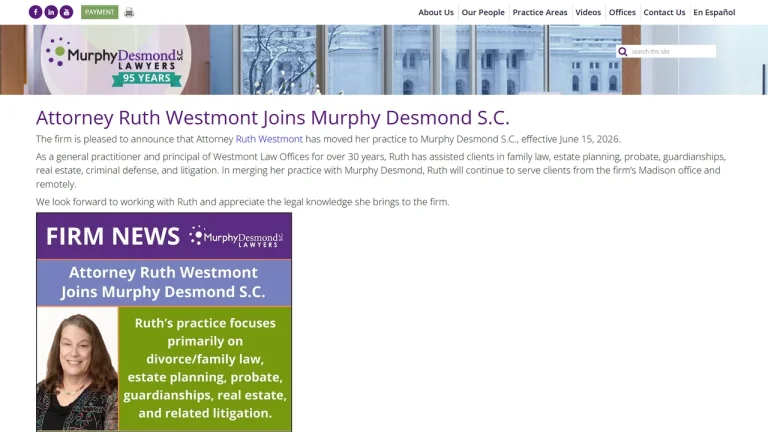
Westmont Law Offices, SC - Madison, WI

von Briesen & Roper, s.c. - Green Bay, WI
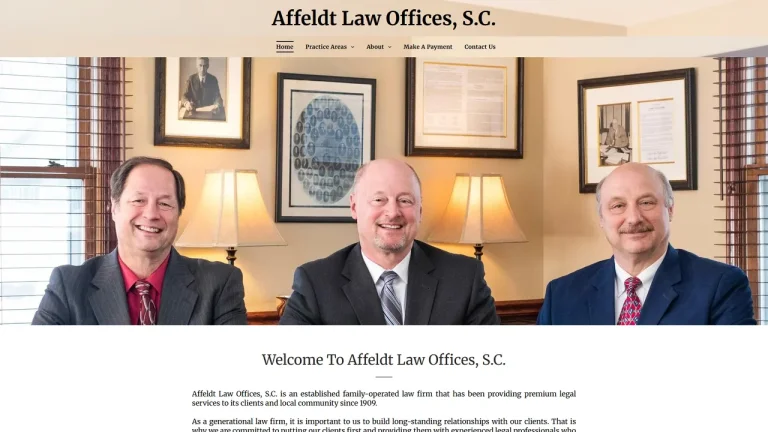
Affeldt Law Offices, S.C. - West Allis, WI

Jackson LLP Healthcare Lawyers - Madison, WI
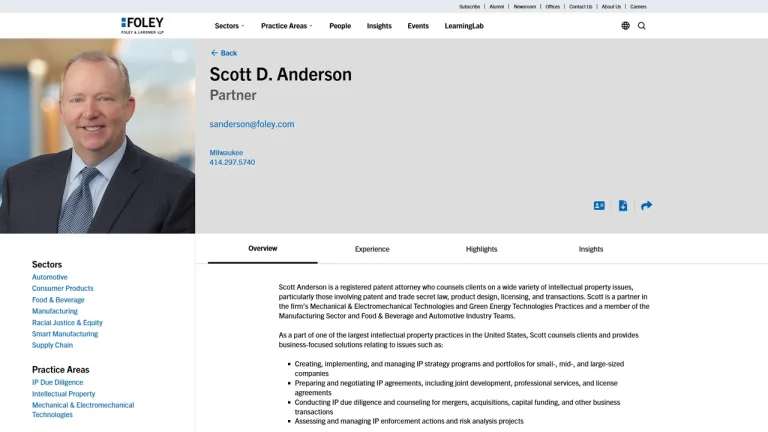
Foley & Lardner LLP: Scott D. Anderson - Milwaukee, WI
Kupfer Law Offices SC - Kenosha, WI

Dillon Grube, LLC - Janesville, WI

Hanson & Payne, LLC - Milwaukee, WI
Colque Law, LLC - Waukesha, WI
Vande Castle, S.C. - Green Bay, WI
Hoff Law Offices, LLC - Appleton, WI
Godfrey & Kahn, S.C. - Green Bay, WI
Pitts James A - Racine, WI

von Briesen & Roper, s.c. - Waukesha, WI
DeWitt LLP - Green Bay, WI

C.H. Law LLC - Milwaukee, WI

La Fleur Law Office, S.C. - Milwaukee, WI

Robert A. Mich Jr. - Madison, WI

Wisconsin Commercial Jurisprudence & Property Regulations
Wisconsin maintains a dynamic commercial climate anchored by manufacturing, agriculture, technology, and commercial real estate development. Operating an enterprise or managing property assets in the Badger State requires a comprehensive understanding of Wisconsin corporate structures, land use regulations, and municipal codes. From the corporate hubs of Milwaukee and Madison to expanding business corridors in Green Bay, the Fox Valley, and Eau Claire, legal transactions demand meticulous adherence to state statutes.
Corporate formation, entity filings, and annual reports are centrally regulated by the Wisconsin Department of Financial Institutions (DFI) under Chapters 180 and 183 of the Wisconsin Statutes. Meanwhile, commercial real estate transfers, title recordation, and mortgage liens fall under the jurisdiction of county Register of Deeds offices across Wisconsin's 72 counties. For commercial disputes, several Wisconsin circuit courts participate in dedicated Commercial Court Dockets, offering streamlined judicial resolution for complex commercial contract and corporate litigation.
Navigating commercial leasing, zoning compliance, brownfield redevelopment, and corporate governance requires counsel licensed by the State Bar of Wisconsin. Engaging experienced business and property attorneys ensures strict compliance with state regulatory bodies while drafting ironclad contracts that safeguard investments against costly breach-of-contract disputes.
Common Fee Structures for Wisconsin Business & Real Estate Legal Services
| Case Scenario | Fee Structure | Estimated Cost (USD) | Key Cost Determinants |
|---|---|---|---|
| LLC or Corporate Entity Formation | Flat Fee ($800 - $2,500) | $800 - $2,500 | Single-member vs. multi-member operating agreements, buy-sell provisions, Wisconsin DFI registration fees. |
| Commercial Real Estate Acquisition & Due Diligence | Flat Fee / Hourly ($300 - $500/hr) | $3,500 - $12,000 | Title examination, Phase I environmental reviews, survey evaluations, municipal zoning compliance verifications. |
| Commercial Lease Drafting & Negotiation | Hourly Retainer ($275 - $450/hr) | $1,800 - $6,000 | Triple net (NNN) lease complexities, tenant improvement allowances, subleasing covenants, personal guarantee terms. |
| Breach of Commercial Contract Litigation | Hourly Retainer ($325 - $550/hr) | $10,000 - $35,000+ | Document discovery volume, expert witness testimony, pretrial motion practice in Circuit Court, mediation attempts. |
Critical Legal Deadlines & Statutes in Wisconsin
Under Wis. Stat. § 893.43, Wisconsin enforces a strict six-year statute of limitations for actions upon any contract, obligation, or liability arising out of a contractual agreement. Failing to commence formal legal proceedings within six years of the alleged breach permanently bars recovery in Wisconsin circuit courts.
For real estate disputes involving adverse possession, Wis. Stat. § 893.25 mandates an uninterrupted 20-year period of continuous, adverse, exclusive, and hostile physical possession. However, if possession is founded on a recorded written instrument or judgment under color of title, the limitation period is reduced to 10 years under Wis. Stat. § 893.26.
Contractors and developers must note Wisconsin's construction statute of repose under Wis. Stat. § 893.89, which bars claims for property damage or personal injury arising out of a deficiency in improvements to real property after seven years from the date of substantial completion. Construction lien claimants must serve a notice of intent to file a claim for lien at least 30 days prior to filing under Wis. Stat. § 779.02, and file the formal lien within six months after last performing work under Wis. Stat. § 779.06.
Small Claims Limitations vs. Circuit Court Commercial Representation
Wisconsin small claims courts, operating under Wis. Stat. § 799.01, hold jurisdiction over civil actions seeking monetary damages of $10,000 or less, as well as residential and simple commercial eviction actions. While small claims procedures offer expedited resolution for minor invoice collections or straightforward security deposit disagreements, business entities are restricted in how they appear.
Under Wisconsin law, while a full-time authorized employee or member may represent an LLC in certain small claims proceedings, complex commercial matters exceeding $10,000 belong exclusively to the civil division of the Wisconsin Circuit Courts. Issues involving title defects, commercial lease enforcement, zoning variances, shareholder disputes, or intellectual property protection require sophisticated counsel to prevent catastrophic liability, preserve corporate veils, and navigate complex civil procedure rules.
Red Flags When Hiring a Wisconsin Business or Real Estate Attorney
- Attorneys who fail to conduct thorough environmental and municipal zoning due diligence for commercial land purchases, ignoring Wisconsin Department of Natural Resources (DNR) compliance guidelines.
- Lawyers offering generic, one-size-fits-all corporate operating agreements that neglect Wisconsin-specific statutory default rules under Chapter 183.
- Dual representation without informed written consent, such as attempting to represent both buyer and seller or landlord and tenant in a commercial closing.
- Lack of experience with Wisconsin construction lien timelines under Chapter 779, resulting in forfeited mechanics' lien rights.
Frequently Asked Questions
What is the difference between an LLC and a corporation in Wisconsin?
In Wisconsin, an LLC formed under Chapter 183 offers flexible management structures, pass-through taxation, and minimal formal recordkeeping. A corporation formed under Chapter 180 has a rigid governance structure with a board of directors and officers, and may be subject to corporate entity-level taxation unless S-corporation tax status is elected.
Are commercial real estate disclosures mandatory in Wisconsin?
Under Wis. Stat. § 709.01, real estate condition reports are required for residential property transfers involving one to four dwelling units. While vacant land and commercial sales are subject to different disclosure rules, sellers remain legally liable for fraudulent misrepresentation or intentional concealment of material property defects.
What is the timeline for filing a construction lien in Wisconsin?
Under Wis. Stat. § 779.06, a prime contractor or subcontractor must file a claim for lien with the clerk of circuit court within six months after the last date of furnishing labor or materials, provided proper preliminary notice was timely served.
Can a landlord immediately evict a commercial tenant in Wisconsin?
No. Landlords must follow statutory notice requirements under Wis. Stat. § 704.17 and file a formal eviction action in circuit court. Self-help evictions, such as changing locks or cutting off utilities, are unlawful in Wisconsin.
What is the Wisconsin Commercial Court Docket?
The Wisconsin Commercial Court Docket is a specialized judicial pilot program established in select circuit courts, including Milwaukee and Waukesha counties, dedicated to resolving complex business, corporate, and commercial transactions through judges with specialized business law expertise.