
Criminal Defense Lawyers in Wisconsin
Facing criminal allegations in Wisconsin requires immediate representation from a vetted defense attorney to protect your constitutional rights across circuit courts. Qualified legal counsel investigates police procedures, files motions to suppress evidence, and frequently resolves complex charges through pre-trial negotiations. Explore our verified directory to connect with reputable Wisconsin defense attorneys ready to safeguard your freedom.

Pittman & Pittman Law Offices - Madison, WI

Attorney Lester Pines (Pines Bach LLP) - Madison, WI

Forella Law Offices - Racine, WI

Manske Law Office - Oshkosh, WI
George E. Miller, Attorney at Law - Eau Claire, WI
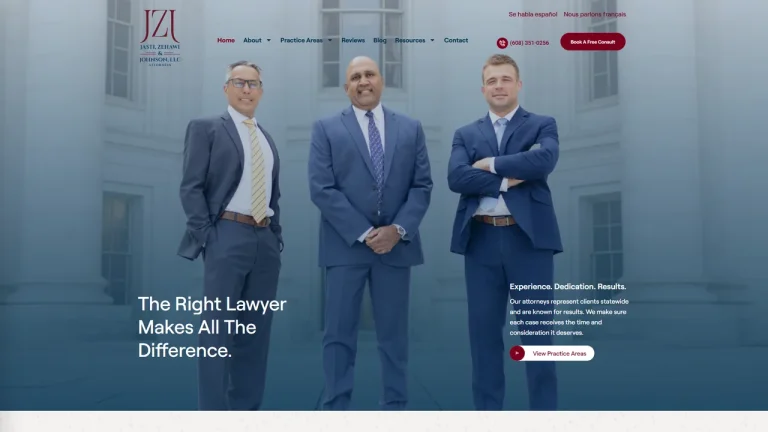
Jasti, Zehawi and Johnson, LLC - Madison, WI

Nathan J. Dineen Attorney At Law - Appleton, WI
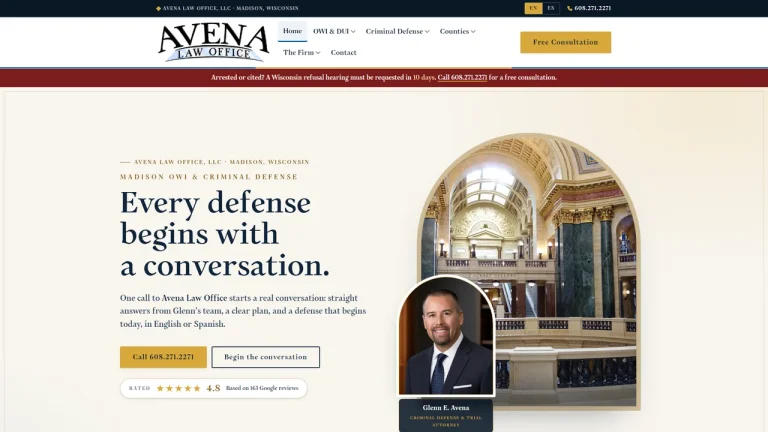
Avena Law Office, LLC - Madison, WI
Michael S Murphy Attorney At Law - Janesville, WI

Karp & Iancu, S.C. - Kenosha, WI

Fenton Law Office | Criminal Defense Attorney - Milwaukee, WI
Gregory Wright Law Offices, S.C. - Oshkosh, WI

O'Flaherty Law Racine - WI
Zetley Law Offices SC - Milwaukee, WI
John Paul Marchan Attorney at Law - Waukesha, WI
Martinez Law Office - Waukesha, WI

DK Anderson, S.C. - Madison, WI

Walden, Neitzke & Taylor, S.C. - Waukesha, WI
Garuz Legal Group - Waukesha, WI

Murphy Desmond S.C. - Madison, WI
Schilling Law - Eau Claire, WI
Scott D Connors Law Offices - Wauwatosa, WI

Law Office of Robert J. Sisson - Appleton, WI
Navigating Wisconsin Criminal Courts & Defense Representation
Criminal charges in Wisconsin originate within the state's 72 county circuit courts, spanning high-volume venues such as the Milwaukee County Courthouse, Dane County Courthouse in Madison, Brown County Courthouse in Green Bay, and Waukesha County Courthouse. Each county maintains distinct judicial calendars, local scheduling procedures, and prosecutorial policies enforced by elected District Attorneys.
All criminal proceedings, from initial appearances through final dispositions, are tracked publicly through the Wisconsin Circuit Court Access system, commonly known as CCAP. Effectively defending against criminal filings in this transparent record system requires seasoned trial lawyers who understand local bench tendencies across Wisconsin's four appellate court districts under the Supreme Court of Wisconsin in Madison.
Retaining a defense attorney licensed by the State Bar of Wisconsin ensures proper procedural handling, whether defending against operating while intoxicated (OWI) charges, domestic disputes, felony drug accusations, or federal indictments in the U.S. District Courts for the Eastern and Western Districts of Wisconsin.
Estimated Defense Legal Fees Across Wisconsin
| Case Scenario | Fee Structure | Estimated Cost (USD) | Key Cost Determinants |
|---|---|---|---|
| First-Offense OWI / Traffic Forfeiture | Flat Fee / Retainer | $1,500 - $4,500 | Breath or blood test challenges, administrative license suspension hearings, prior driving records. |
| Misdemeanor Defense (Disorderly Conduct, Battery, Theft) | Flat Fee or Hourly ($225 - $400/hr) | $2,500 - $7,500 | Deferred prosecution agreement eligibility, CCAP expungement potential, pre-trial motion practice. |
| Felony Charges (Drug Distribution, Burglary, Substantial Battery) | Substantial Retainer + Hourly ($300 - $600/hr) | $8,500 - $35,000+ | Preliminary hearing litigation, independent forensic testing, private investigator fees, multi-day jury trial. |
| Post-Conviction Relief & Appellate Review | Hourly or Project-Based Retainer | $5,000 - $20,000 | Trial transcript volume, constitutional claims, Machner evidentiary hearings, appellate brief preparation. |
Critical Legal Deadlines & Statutes in Wisconsin
Wisconsin enforces strict statutory time limits that govern the initiation and progression of criminal proceedings. Under Wis. Stat. § 939.74, the general statute of limitations is 3 years for misdemeanor offenses and 6 years for most felony classifications, though certain homicide and sexual assault charges carry no expiration date. Missing a statutory window can permanently bar defenses or forfeit key constitutional arguments.
Defendants possess statutory speedy trial rights under Wis. Stat. § 971.10, which mandate that a misdemeanor trial commence within 60 days of a written demand, while a felony trial must occur within 90 days following the filing of the information. For operating while intoxicated allegations, motorists subject to chemical test reviews face a strict 30-day statutory window under Wis. Stat. § 343.305 to request an administrative review hearing with the Wisconsin Department of Transportation to prevent automatic driving suspension.
Following a conviction or sentencing order in a Wisconsin circuit court, individuals seeking post-conviction relief must file a Notice of Intent to Pursue Post-Conviction Relief within 20 days under Wis. Stat. § 809.30. Preserving these expedited rights requires rapid coordination with knowledgeable counsel.
Self-Representation vs. Retaining Qualified Wisconsin Defense Counsel
While individuals can navigate civil disputes involving up to $10,000 in Wisconsin small claims actions under Wis. Stat. § 799.01, criminal allegations place personal liberty, constitutional protections, and clean public records at risk. Municipal courts permit self-representation for local non-criminal ordinance violations, but circuit court criminal prosecutions follow stringent evidence rules under Wis. Stat. § 904.03.
Self-represented defendants frequently fail to challenge improper vehicle stops, mishandle evidentiary objections, or inadvertently waive suppressed statements obtained in violation of constitutional safeguards. Furthermore, unrepresented individuals rarely possess the leverage needed to negotiate diversion agreements, charge reductions to non-criminal forfeitures, or deferred prosecution contracts with seasoned county prosecutors.
Retaining an experienced criminal defense lawyer ensures that your arrest report is scrutinized, constitutional violations are challenged via suppression motions, and plea bargaining is supported by factual and legal advocacy rather than procedural concessions.
Red Flags When Hiring a Wisconsin Criminal Defense Attorney
- Guarantees of specific case outcomes: Any lawyer promising a guaranteed dismissal, complete acquittal, or private judicial connections violates professional ethics under SCR 20:7.1.
- Plea-mill volume practices: Steer clear of attorneys who recommend a guilty or no-contest plea at your initial appearance before conducting thorough discovery reviews or reviewing police dashcam and bodycam footage.
- Unclear retainer contracts: Avoid law firms that do not provide detailed written fee agreements outlining whether trial preparation, investigator retainers, or motion hearings require additional payments.
- Unfamiliarity with local county circuit practices: Defense counsel should possess direct courtroom experience before the judges and prosecutors handling cases in your specific county of arrest.
Frequently Asked Questions
How do I verify if a criminal defense lawyer is in good standing in Wisconsin?
You can verify an attorney's license status and disciplinary history through the State Bar of Wisconsin public lawyer directory and the Office of Lawyer Regulation (OLR), an agency of the Supreme Court of Wisconsin.
Will my arrest and criminal charges appear publicly on CCAP in Wisconsin?
Yes, once criminal charges are formally filed by a District Attorney in Wisconsin Circuit Court, the case information becomes accessible online through the Wisconsin Circuit Court Access (CCAP) system, viewable by prospective employers, landlords, and the general public.
Can a criminal conviction be expunged in Wisconsin?
Under Wis. Stat. § 973.015, expungement must be ordered by the trial judge at the time of initial sentencing. The defendant must have been under the age of 25 at the commission of the offense, and the charge must be a qualifying misdemeanor or low-level non-violent felony.
What is the difference between a misdemeanor and a felony in Wisconsin?
In Wisconsin, misdemeanors carry a maximum incarceration period of up to 9 months in the county jail (up to 30 days for Class C, 90 days for Class B, and 9 months for Class A). Felonies carry sentences exceeding one year, served in the Wisconsin state prison system under bifurcated sentencing laws.
What should I do immediately if I am placed under arrest in Wisconsin?
Exercise your constitutional right to remain silent, refrain from answering investigative questions without counsel present, and explicitly request to contact a criminal defense attorney licensed in Wisconsin.