
Patent Attorneys in Wisconsin
Securing patent protection in Wisconsin requires registered legal counsel to transform technical innovations into enforceable intellectual property assets. Working with a dedicated Wisconsin patent attorney safeguards priority dates before the USPTO and preserves your competitive market advantage. Explore our verified statewide directory below to consult with top-rated patent counsel today.
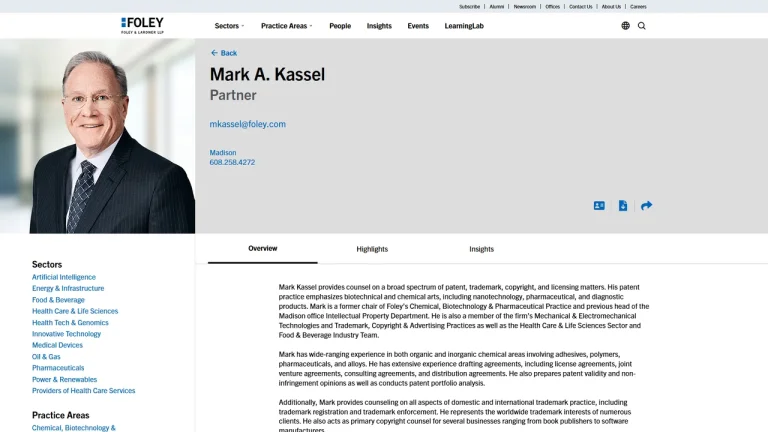
Foley & Lardner LLP: Mark A. Kassel - Madison, WI

Pugliese Patent Law LLC - Appleton, WI

Bourget Trademark and Patent Law - Eau Claire, WI
Perkins Coie LLP - Madison, WI

Lesavich High Tech Law Group: Lesavich Stephen - Kenosha, WI
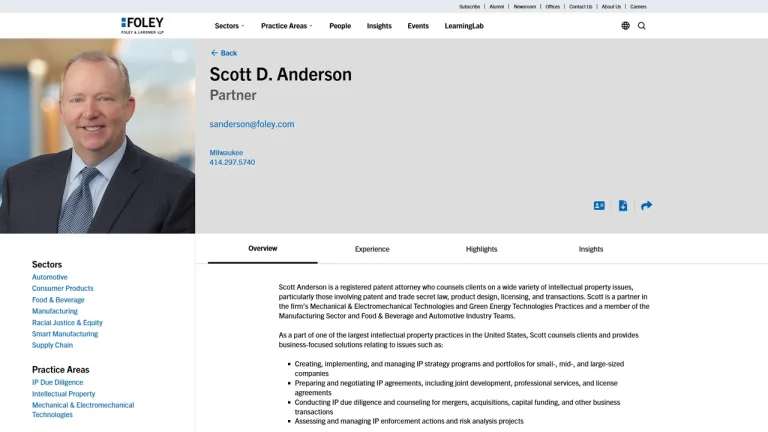
Foley & Lardner LLP: Scott D. Anderson - Milwaukee, WI
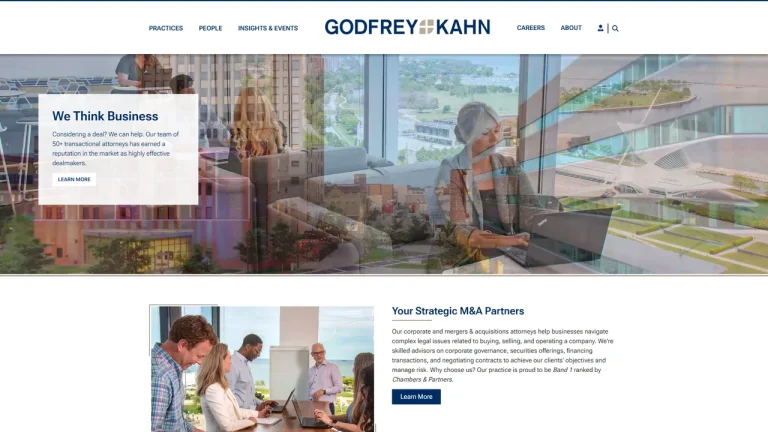
Godfrey & Kahn, S.C. - Madison, WI

Reinhart Boerner Van Deuren s.c. - Madison, WI
Stiennon & Stiennon - Madison, WI

Amundsen Davis, LLC - Green Bay, WI
Amundsen Davis, LLC - Appleton, WI
Boyle Fredrickson SC - Milwaukee, WI
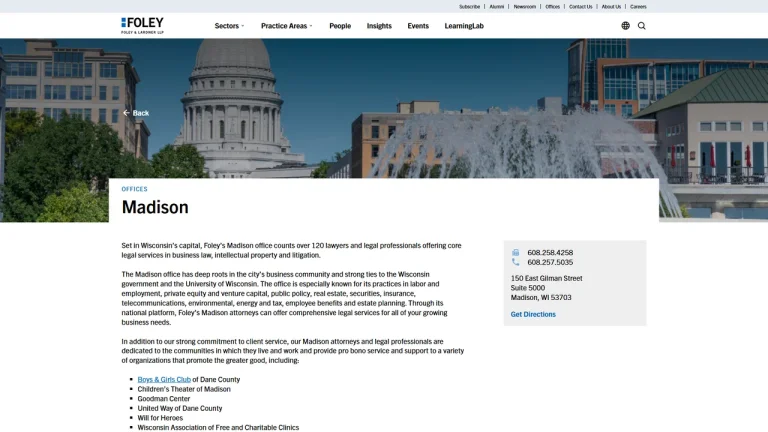
Foley & Lardner LLP - Madison, WI
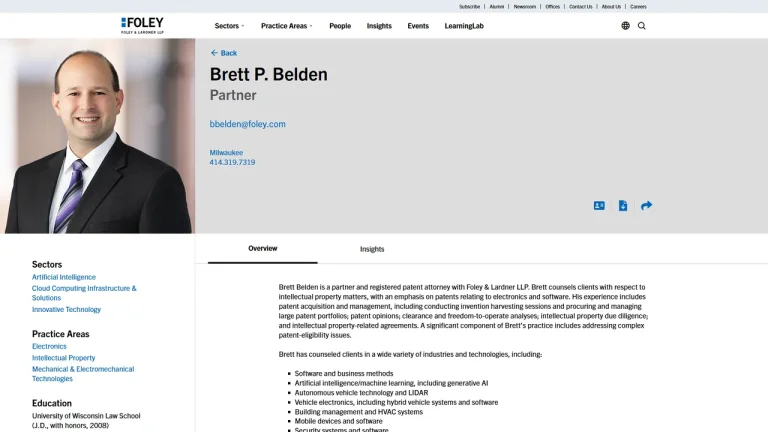
Brett P. Belden - Foley & Lardner LLP - Milwaukee, WI

DeWitt LLP - Madison, WI
Bell and Manning LLC - Madison, WI
Foley & Lardner LLP: Jeffrey S. Gundersen - Milwaukee, WI
Ruder Ware - Eau Claire, WI
Boardman & Clark LLP - Madison, WI
Rathe Lindenbaum LLP - Milwaukee, WI
Ryan Kromholz & Manion SC - Waukesha, WI
Foley & Lardner LLP: David Golub - Milwaukee, WI

von Briesen & Roper, s.c. - Green Bay, WI
Federal Patent Practice & Wisconsin Innovation Jurisdictions
Patent prosecution and intellectual property enforcement for Wisconsin innovators operate within exclusive federal legal boundaries. The procurement of utility, design, and plant patents is managed nationally by the United States Patent and Trademark Office (USPTO). In Wisconsin, major research institutions, including the University of Wisconsin-Madison and the Wisconsin Alumni Research Foundation (WARF), alongside vibrant manufacturing, biotechnology, and agricultural automation sectors across Milwaukee, Madison, Green Bay, and the Fox Valley, drive a heavy volume of patent filings.
When patent disputes lead to infringement litigation, cases are heard exclusively in federal courts. Wisconsin is home to two federal judicial venues: the United States District Court for the Eastern District of Wisconsin, with courthouses in Milwaukee and Green Bay, and the United States District Court for the Western District of Wisconsin, centered in Madison. The Western District of Wisconsin is historically recognized nationwide as a prominent, fast-moving forum for complex patent litigation, operating specialized local rules designed to streamline claim construction and patent trials.
Patent legal practice demands distinct dual credentials. Practitioners must be admitted to the State Bar of Wisconsin and formally registered with the USPTO under 37 C.F.R. § 11.6. Registered patent attorneys possess accredited scientific or engineering backgrounds, equipping them to draft detailed technical disclosures, navigate substantive rejections from USPTO patent examiners, and enforce patent claims in federal court.
Patent Legal Fee Structures & Cost Benchmarks in Wisconsin
| Case Scenario | Fee Structure | Estimated Cost (USD) | Key Cost Determinants |
|---|---|---|---|
| Comprehensive Patentability Search & Legal Opinion | Flat Fee | $1,500 - $3,000 | Depth of domestic and global prior art databases, technical field complexity, novelty assessment. |
| Provisional Patent Application Filing | Flat Fee | $2,500 - $5,500 | Detail of engineering drawings, breadth of technical disclosure, priority preservation scope. |
| Non-Provisional Utility Patent Application | Flat Fee / Milestone Retainer | $7,500 - $16,000 | Complexity of mechanical, chemical, or software claims, independent claim structures, USPTO fees. |
| Federal Patent Infringement Litigation (W.D. or E.D. Wis.) | Retainer + Hourly Rate | $50,000 - $250,000+ | Markman claim construction hearings, expert witness reports, discovery volume, rapid trial dockets. |
Critical Legal Deadlines & Statutes in Wisconsin
Patent law is strictly governed by statutory timelines where a missed filing date forfeits intellectual property rights forever. Under the America Invents Act codified in 35 U.S. Code § 102, the United States operates on a "first-inventor-to-file" system. Furthermore, inventors have a strict one-year grace period from the date their invention is publicly disclosed, sold, offered for sale, or used commercially anywhere in the world to file a United States patent application; failing to file within this 12-month window bars patent protection permanently.
When filing a provisional patent application to establish an early effective priority date, 35 U.S. Code § 119 mandates that the corresponding non-provisional application must be formally filed within exactly 12 months. This 12-month provisional timeline cannot be extended. Once a non-provisional application is pending and the USPTO issues an Office Action, applicants have a statutory deadline under 35 U.S. Code § 133 of three months (extendable up to six months upon payment of statutory extension fees) to submit a formal legal and technical response before the application becomes legally abandoned.
Small Claims Limitations vs. Retaining a Registered Patent Attorney
Wisconsin small claims courts, governed by Wis. Stat. § 799.01, have zero legal authority over patent matters. Under federal statutory mandate 28 U.S. Code § 1338, federal district courts exercise exclusive original jurisdiction over any civil action arising under any Act of Congress relating to patents. Wisconsin municipal or county circuit courts cannot adjudicate patent validity, infringement, or licensing ownership disputes involving patent titles.
Engaging a general business attorney or attempting to draft a patent application pro se carries grave risks. Patent drafting requires specialized legal and technical drafting skills where every word in an independent claim dictates the scope of legal exclusivity. A registered patent attorney conducts comprehensive clearance searches, crafts claims that resist anticipation or obviousness challenges, and ensures international patent options under the Patent Cooperation Treaty remain open.
Red Flags & Invention Promotion Scams
- Invention Promotion & Marketing Companies: Avoid entities promising to commercialize or patent your invention for large upfront fees without providing customized patent drafting by a USPTO-registered practitioner.
- Unregistered Practitioners: Ensure your representative is officially registered with the USPTO; general business attorneys without a USPTO registration number cannot legally prosecute patent applications.
- Guaranteed Patent Issuance: No ethical patent attorney can guarantee that the USPTO will issue a patent, as patentability depends strictly on prior art discoveries made by federal examiners.
- Failure to Conduct Prior Art Searches: Proceeding directly to drafting an expensive non-provisional application without first conducting a thorough prior art search creates an avoidable risk of rejection.
Frequently Asked Questions
What is the difference between a patent attorney and a patent agent?
Both patent attorneys and patent agents are licensed by the USPTO to draft and prosecute patent applications. However, patent attorneys are also licensed members of a state bar, enabling them to draft licensing contracts and litigate patent infringement in federal courts.
Why is the Western District of Wisconsin well known for patent litigation?
The U.S. District Court for the Western District of Wisconsin in Madison is historically recognized as a "rocket docket" because of its streamlined local patent rules and rapid progression from complaint filing to trial.
How long does patent protection last once a patent is granted?
Pursuant to 35 U.S. Code § 154, a utility patent remains in effect for 20 years from the earliest effective non-provisional filing date, subject to the timely payment of statutory maintenance fees.
What is the primary benefit of filing a provisional patent application?
Under 35 U.S. Code § 119, a provisional patent application establishes an immediate, legally recognized priority date and allows the inventor to label the product "patent pending" for 12 months while refining the technology.
Can a Wisconsin state court hear a patent infringement lawsuit?
No. Under 28 U.S. Code § 1338, federal courts have exclusive jurisdiction over patent infringement and validity claims. Wisconsin circuit courts and small claims courts cannot adjudicate federal patent controversies.