
Residential Real Estate Lawyers in Wisconsin
Retaining an experienced Wisconsin residential real estate lawyer protects your property investment against title defects and undisclosed liabilities. Qualified real estate counsel regularly resolves purchase contract disputes and boundary issues through structured negotiations before closing. Explore our verified statewide catalog below to select a knowledgeable Wisconsin property attorney.

Dempsey Law Firm LLP - Fond du Lac, WI

McAvoy Law Offices LLC - Waukesha, WI

Hoff Law Offices, LLC - Appleton, WI

DeHorse Law Office, LLC - Madison, WI
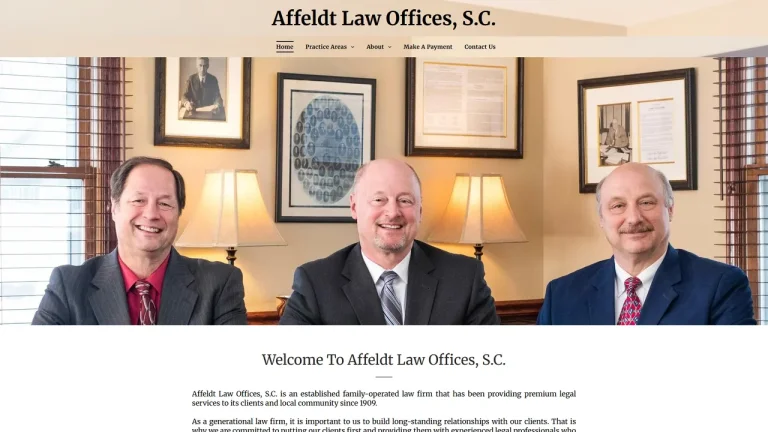
Affeldt Law Offices, S.C. - West Allis, WI
Kabara Christina J - Green Bay, WI

Dempsey Law Firm, LLP - Oshkosh, WI

Andrew Law Offices, S.C. - Fond du Lac, WI

Brandon J. Prinsen, Attorney at Law - La Crosse, WI
Riegelman & Mueckler Sc - Racine, WI
Riverwood Law & Tax, S.C. - Waukesha, WI

Community Justice Inc - Madison, WI
Hurtado Zimmerman SC - Wauwatosa, WI

Dunham Law, LLC - Oshkosh, WI
Lawyers At Work - La Crosse, WI

Turke & Steil LLP - Janesville, WI
Pruitt Zabkowicz S.C. - Racine, WI
Hippenmeyer Reilly Blum Schmitzer & Fabian S.C. - Waukesha, WI
Gonzalez Fernandini Law Office, LLC - Milwaukee, WI
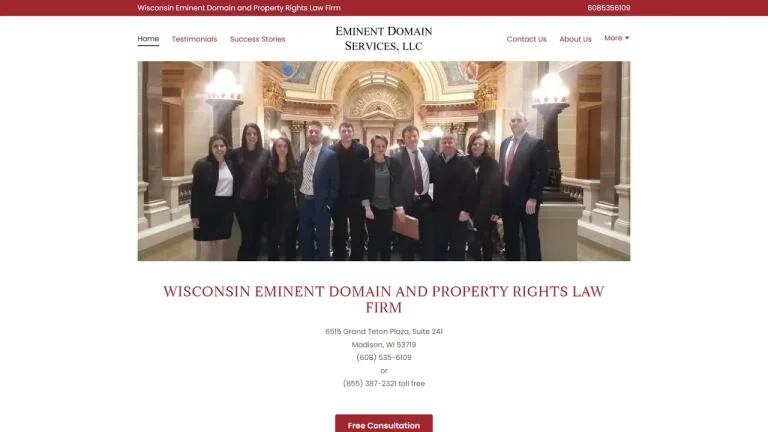
Eminent Domain Services, LLC - Madison, WI
Brookhouse Law Offices - Kenosha, WI
Vogel Law Firm, Ltd. - Janesville, WI
Bruner Law Offices SC - Racine, WI

The Role of Residential Real Estate Counsel in Wisconsin Transactions
Purchasing or selling residential property in Wisconsin represents one of the most substantial financial investments an individual or family makes. While real estate brokers facilitate marketing and standard contractual paperwork, licensed real estate attorneys provide indispensable legal protection when dealing with title defects, municipal zoning compliance, property disclosures, encumbrances, and private boundary agreements.
Real estate conveyances and property disputes are recorded and litigated within local county jurisdictions across Wisconsin. Property records, deeds, and mortgages are recorded with the local County Register of Deeds in offices such as Milwaukee County, Dane County, Brown County, and Waukesha County. Contested title actions, boundary encroachments, and partition lawsuits are heard before Wisconsin Circuit Courts, with appeals managed through the Wisconsin Court of Appeals and the Supreme Court of Wisconsin.
Attorneys licensed through the State Bar of Wisconsin review purchase documents, including the standard WB-11 Residential Offer to Purchase mandated by the Wisconsin Department of Safety and Professional Services (DSPS). Legal counsel ensures that contingency clauses, financing commitments, and inspection terms protect buyer and seller rights prior to final closing.
Residential Real Estate Legal Fee Structures in Wisconsin
| Service / Matter | Fee Structure | Estimated Cost (USD) | Key Cost Determinants |
|---|---|---|---|
| Residential Closing Document Review | Flat Fee | $650 - $1,500 | Single-family home versus condominium, title commitment exceptions, lender requirements. |
| For-Sale-By-Owner (FSBO) Representation | Flat Fee / Tiered | $1,200 - $3,000 | Drafting WB-11 offer, title coordination, deed preparation, closing statement attendance. |
| Title Defect Remediation & Quiet Title Action | Hourly Retainer | $2,500 - $10,000 | Heirship verification, unresolved liens, probate proceedings, formal Circuit Court complaints. |
| Seller Non-Disclosure Dispute Litigation | Hourly ($250 - $475/hr) | $8,000 - $35,000+ | Extent of physical water/foundation defects, structural expert reports, deposition schedule. |
Critical Legal Deadlines & Statutes in Wisconsin
Wisconsin real estate transactions and subsequent disputes are governed by strict statutory timetables. A central provision is the statutory Real Estate Condition Report mandated by Wis. Stat. § 709.02. Under this law, sellers of residential property consisting of one to four dwelling units must provide a completed condition report disclosing known structural, environmental, and mechanical defects to prospective buyers.
Timing is critical under Wis. Stat. § 709.05: if a seller provides the condition report after an offer to purchase is accepted, or if the report discloses a newly identified defect, the buyer holds the statutory right to rescind the contract within two business days after receipt. Failing to issue written notice of rescission within that statutory window results in the buyer forfeiting this termination remedy.
Conveyances of real estate must also comply with the formal execution standards established under Wis. Stat. § 706.02 to satisfy the Statute of Frauds. If a buyer subsequently discovers intentional property concealment after closing, claims alleging false advertising or deceptive practices under Wis. Stat. § 100.18 must be filed within three years of the unlawful act. General breach of contractual covenants must be brought within six years under Wis. Stat. § 893.43.
Small Claims Court vs. Circuit Court Real Estate Representation
Wisconsin Small Claims Court handles disputes where the requested money judgment does not exceed $10,000 pursuant to Wis. Stat. § 799.01. Typical residential issues handled pro se in small claims include minor earnest money escrow disputes, tenant security deposit recovery, or low-value contractor repair disagreements following a sale.
However, many residential property controversies exceed small claims jurisdiction. Actions seeking to quiet title under Wis. Stat. § 841.01, establish prescriptive easements under Wis. Stat. § 893.28, compel specific performance to complete a real estate sale, or partition co-owned real estate under Wis. Stat. § 842.02 must be litigated on the general civil docket of the Wisconsin Circuit Court. Furthermore, lawsuits alleging significant hidden foundation failures, toxic mold, or environmental contamination routinely involve damages exceeding $50,000, necessitating seasoned legal representation to subpoena contractor histories and conduct expert depositions.
Red Flags to Avoid When Selecting a Real Estate Lawyer
- Attorneys who do not regularly practice residential property law and are unfamiliar with the latest DSPS-approved contractual forms, including the WB-11.
- Firms that fail to examine title commitments thoroughly, overlooking municipal special assessments, unreleased private mortgages, or restrictive covenants.
- Lawyers who do not offer clear, transparent flat-fee pricing for standard residential closings or title reviews.
- Practitioners who downplay seller condition report disclosures or dismiss structural defects without advising on professional engineering evaluations.
Frequently Asked Questions
Is an attorney legally required to close a residential real estate deal in Wisconsin?
Wisconsin law does not mandate legal representation at closing; title companies frequently close transactions. However, retaining an attorney ensures that title commitments, deed drafting, tax prorations, and financing contingencies are reviewed solely in your legal interest.
What is the seller disclosure requirement under Wisconsin law?
Under Wis. Stat. § 709.02, sellers of residential property must complete and furnish a Real Estate Condition Report disclosing known defects affecting the structural integrity, mechanical systems, or environmental safety of the property.
What recourse does a buyer have if a Wisconsin seller conceals property defects?
Buyers may pursue damages or contract rescission by filing a lawsuit alleging statutory misrepresentation under Wis. Stat. § 100.18, common law fraud, or breach of contract under Wis. Stat. § 893.43, provided the action is initiated within applicable statutory deadlines.
Can earnest money disputes be resolved in Wisconsin Small Claims Court?
Yes, if the disputed earnest money deposit is $10,000 or less, the matter can be heard in small claims court under Wis. Stat. § 799.01. Disputes involving larger amounts or demands for specific performance must proceed to Circuit Court.
How does an attorney resolve a clouded title in Wisconsin?
Attorneys resolve title clouds through corrective deeds, title indemnity agreements, or by filing a formal quiet title action under Wis. Stat. § 841.01 in the local Circuit Court to permanently extinguish conflicting claims or outdated liens.