
Trademark Lawyers in Wisconsin
Protecting brand identity and commercial assets in Wisconsin requires experienced trademark attorneys versed in state registrations and USPTO prosecution. Local intellectual property counsel assists businesses across Milwaukee, Madison, and Green Bay with clearance searches, cease-and-desist actions, and federal trademark enforcement. Explore our verified directory below to consult an experienced Wisconsin trademark lawyer today.

Ryan Kromholz & Manion SC - Waukesha, WI

von Briesen & Roper, s.c. - Green Bay, WI
Bold Patents Law Firm - Milwaukee, WI

Michael Best & Friedrich LLP - Waukesha, WI
Gustafson Gervasi Law Office, LLC - Madison, WI

Brannen Law Office LLC - Fond du Lac, WI

Amundsen Davis, LLC - Appleton, WI
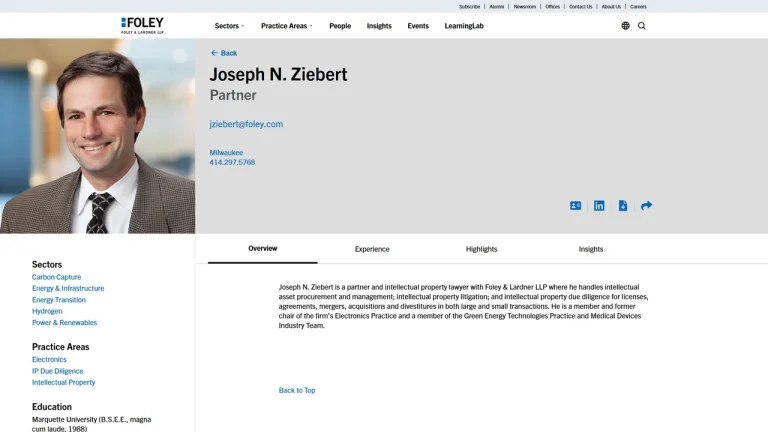
Foley & Lardner LLP: Joseph N. Ziebert - Milwaukee, WI

Godfrey & Kahn, S.C. - Madison, WI
Hurtado Zimmerman SC - Wauwatosa, WI
Progress Law - Kenosha, WI
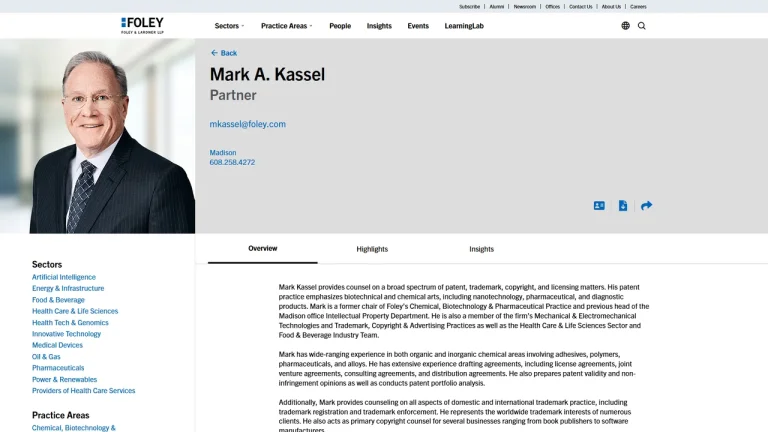
Foley & Lardner LLP: Mark A. Kassel - Madison, WI

Jansson Munger McKinley & Kirby Ltd. - Racine, WI
Bell and Manning LLC - Madison, WI

Michael Best & Friedrich LLP - Milwaukee, WI
Perkins Coie LLP - Madison, WI
Lesavich High Tech Law Group: Lesavich Stephen - Kenosha, WI
Jeffrey Leavell, S.C. - Racine, WI
Ruder Ware - Eau Claire, WI
Pugliese Patent Law LLC - Appleton, WI
Amundsen Davis, LLC - Green Bay, WI
DeWitt LLP - Madison, WI
Brett P. Belden - Foley & Lardner LLP - Milwaukee, WI
Protecting Brand Identity and Intellectual Property Across Wisconsin
Wisconsin represents a dynamic business landscape, from industrial manufacturing and consumer packaging in the Greater Milwaukee area to software innovators, craft breweries, and biotechnology ventures in Madison and the Fox Valley. Establishing exclusive commercial rights over trade names, logos, slogans, and distinctive product packaging is fundamental to safeguarding business goodwill across the state. Wisconsin businesses must navigate both state-level registrations and federal protections to secure comprehensive market exclusivity.
While local brand owners can register marks intrastate with the Wisconsin Department of Financial Institutions (DFI), federal registration with the United States Patent and Trademark Office (USPTO) provides vital nationwide protection. When infringement disputes escalate to litigation, actions are filed in federal district courts, specifically the U.S. District Court for the Eastern District of Wisconsin in Milwaukee and Green Bay, or the Western District of Wisconsin in Madison. Retaining counsel admitted to the State Bar of Wisconsin ensures your marks are thoroughly searched, properly prosecuted, and vigorously defended against bad-faith infringement.
Experienced trademark practitioners also guide Wisconsin enterprises through proceedings before the Trademark Trial and Appeal Board (TTAB), manage international portfolio expansion, and structure licensing agreements. Resolving brand conflicts early through strategic cease-and-desist negotiations prevents costly trial proceedings while securing lasting brand equity.
Typical Fee Structures for Wisconsin Trademark Legal Services
| Case Scenario | Fee Structure | Estimated Cost (USD) | Key Cost Determinants |
|---|---|---|---|
| Comprehensive Trademark Search & Clearance Opinion | Flat Legal Fee | $600 - $1,800 | Number of commercial classes, common law search depth, Wisconsin DFI corporate registry checks |
| Federal USPTO Trademark Application (Per Class) | Flat Legal Fee | $900 - $2,400 | Basis of filing (actual use vs. intent to use), specimen drafting, goods and services identification |
| Trademark Trial and Appeal Board (TTAB) Opposition | Hourly ($300 - $550/hr) or Retainer | $4,500 - $16,000 | Discovery scope, witness depositions, procedural motion practice, settlement negotiation timing |
| Federal Trademark Infringement & Injunction Litigation | Hourly ($350 - $650/hr) or Retainer | $8,000 - $38,000+ | Temporary restraining orders, consumer confusion surveys, damages accounting, trial duration |
Critical Legal Deadlines & Statutes in Wisconsin
Securing and maintaining trademark rights requires strict adherence to federal and state statutory timelines. At the federal level, marks registered under the Lanham Act must satisfy post-registration maintenance filings. Registrants must submit a Section 8 Declaration of Continued Use under 15 U.S. Code § 1058 strictly between the fifth and sixth year following registration. Subsequently, a joint Section 8 declaration and Section 9 renewal application must be submitted every ten years pursuant to 15 U.S. Code § 1059.
When the USPTO issues an examining attorney Office Action, applicants must respond within three months under federal regulations to avoid automatic abandonment of the application. For state-level marks registered with the Wisconsin DFI under Wis. Stat. § 132.01, registrations remain effective for ten years and must be renewed within six months prior to expiration under Wis. Stat. § 132.01(7). If a third party attempts to register a conflicting mark on the USPTO Principal Register, businesses have exactly thirty days from the publication date in the Official Gazette to file an opposition or request an extension under 15 U.S. Code § 1063.
For common law trademark infringement and unfair business practices litigated in Wisconsin courts, actions are subject to the six-year statutory limitations period governing property damage and statutory liabilities under Wis. Stat. § 893.52, or the three-year period under Wis. Stat. § 893.57 for intentional wrongs.
Small Claims Limitations vs. Federal Court Trademark Litigation
Under Wis. Stat. § 799.01, Wisconsin small claims courts maintain a jurisdictional recovery cap of $10,000 and handle matters such as basic debt recovery or minor contract breaches. However, small claims courts are entirely unequipped to resolve substantive trademark disputes. They lack subject-matter jurisdiction to adjudicate federal Lanham Act violations under 15 U.S. Code § 1121 and have no statutory authority to grant nationwide preliminary injunctions, order product recalls, or impound infringing packaging.
Engaging a qualified Wisconsin trademark lawyer is vital when a competitor misappropriates your trade name or brand design. Federal district courts in the Eastern and Western Districts of Wisconsin have the legal authority to grant emergency injunctive relief under 15 U.S. Code § 1116, seize counterfeits, and award trebled profits and attorney fees under 15 U.S. Code § 1117 in willful infringement matters. An attorney ensures that brand rights are prosecuted defensively before irreparable commercial dilution occurs.
Red Flags When Hiring a Trademark Attorney
- Guaranteeing Registration Approval: No ethical practitioner can promise 100% trademark registration, as final decisions rest entirely with USPTO examining attorneys and potential third-party oppositions.
- Bypassing Clearance Searches: Avoid attorneys or automated services that file trademark applications without conducting comprehensive common law, state business directory, and USPTO knockout searches first.
- Unregulated Trademark Renewal Solicitations: Be cautious of misleading notices mailed by non-lawyer agencies soliciting inflated fees for routine administrative filings with the Wisconsin DFI or USPTO.
- Attorneys Lacking Federal Litigation Experience: Trademark enforcement frequently requires appearance before the U.S. District Courts of Wisconsin or the TTAB; verify that your counsel has an active record in federal intellectual property disputes.
Frequently Asked Questions
What is the difference between a Wisconsin state trademark and a federal trademark?
A Wisconsin state trademark registered with the Department of Financial Institutions (DFI) protects your mark solely within the state's borders. A federal trademark registered with the USPTO under 15 U.S. Code § 1051 provides nationwide constructive use priority, legal presumption of ownership, and the exclusive right to use the mark across all fifty states in interstate commerce.
Does registering a business entity with the Wisconsin DFI protect my brand name?
No. Registering an LLC, corporation, or DBA with the Wisconsin Department of Financial Institutions merely grants permission to operate under that corporate entity name within the state. It does not provide substantive trademark rights or prevent others from using the name commercially under federal trademark law.
How does an 'Intent-to-Use' trademark application work?
Under 15 U.S. Code § 1051(b), an applicant can file an Intent-to-Use (ITU) application before launching a product or service. This establishes an early filing priority date. The applicant must later submit an acceptable specimen and Statement of Use under 15 U.S. Code § 1051(d) once commercial sales commence.
Can I recover attorney fees in a Wisconsin trademark lawsuit?
Under the Lanham Act, 15 U.S. Code § 1117(a) allows federal courts in Wisconsin to award reasonable attorney fees to the prevailing party in 'exceptional cases,' which typically involve willful, bad-faith, or fraudulent trademark infringement.
What should I do if I receive a trademark cease-and-desist letter?
Do not ignore the letter or immediately agree to abandon your brand. Consult a Wisconsin trademark attorney to evaluate the sender's priority date, assess likelihood of confusion, examine geographic usage, and explore settlement or concurrent use options before responding.