
Commercial Real Estate Lawyers in Wyoming
Secure your investment with leading Wyoming commercial real estate lawyers specializing in commercial leases, land acquisitions, zoning, and title diligence. Seasoned attorneys draft robust development agreements, address severed mineral rights, and resolve tenant disputes before costly litigation emerges. Explore our directory below to consult with an accomplished Wyoming commercial real estate attorney.
Patton and Davison LLC - Cheyenne, WY
The Lighthouse Law Firm, LLC: Bryan Rogers - Cheyenne, WY

Hacker, Hacker & Kendall, P.C. - Cheyenne, WY

Peter C Nicolaysen & Associates - Casper, WY

Welborn Sullivan Meck & Tooley, P.C. - Casper, WY

Lubnau Law - Cheyenne, WY

Crowley Fleck, PLLP - Casper, WY
Koch Law, P.C. - Cheyenne, WY

Scott W. Meier, P.C. - Cheyenne, WY
Sundahl, Powers, Kapp and Martin, LLC - Cheyenne, WY

Dixon & Dixon LLP - Casper, WY
Romsa Law Office, P.C. - CHEYENNE, WY
Bailey | Stock | Harmon | Cottam | Lopez LLP - Cheyenne, WY
Coal Creek Law - Cheyenne, WY

Bennett Law Group, P.C. - Cheyenne, WY

Crowley Fleck - Cheyenne, WY

Salisbury Reyes, P.C. - CHEYENNE, WY

Pence and MacMillan LLC - CHEYENNE, WY

Hill Law Firm - Cheyenne, WY
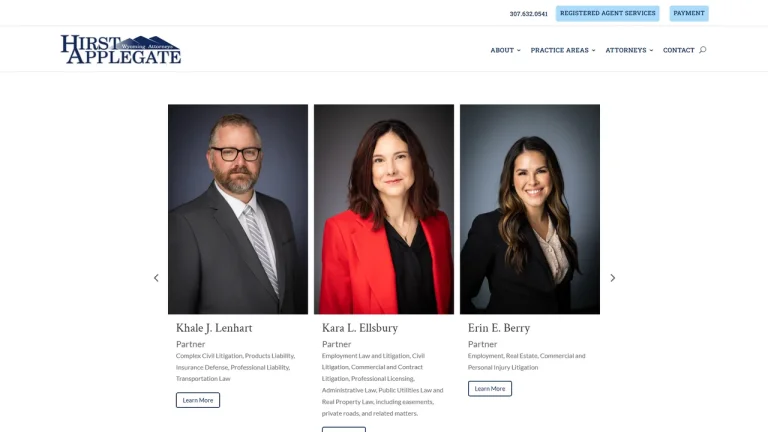
Hirst Applegate, LLP - Cheyenne, WY

Douglas R. McLaughlin, Attorney at Law - Casper, WY

Long Reimer Winegar Beppler LLP - Cheyenne, WY
Shanor Law Office, PC - Casper, WY
Navigating Commercial Property and Development Across Wyoming
Commercial real estate transactions in Wyoming demand thorough transactional planning, comprehensive title diligence, and rigorous statutory compliance. From logistics corridors and industrial hubs in Cheyenne (Laramie County) and energy operations in Casper (Natrona County) to retail centers in Gillette and luxury commercial real estate in Teton County (Jackson), commercial investments require proactive legal structures to minimize financial exposure.
Commercial transactions require precise coordination across municipal bodies, county boards of commissioners, and state regulatory agencies. Attorneys admitted to the Wyoming State Bar guide investors, developers, landlords, and corporate tenants through every phase of property development. Counsel negotiates complex acquisition agreements, drafts commercial leases, and resolves land use disputes before local zoning boards and county commissions across Wyoming's 23 counties.
Wyoming commercial real estate often involves complex intersections between surface ownership and natural resource utilization. Under state law, the mineral estate holds dominance over the surface estate, requiring specialized contractual protections, surface use agreements, and title endorsements. Complex disputes and commercial joint venture litigation proceed through the Wyoming Chancery Court in Cheyenne or local Wyoming District Courts. Review our statewide directory below to connect with vetted commercial real estate lawyers.
Legal Fee Structures for Wyoming Commercial Real Estate Matters
| Case Scenario | Fee Structure | Estimated Cost (USD) | Key Cost Determinants |
|---|---|---|---|
| Commercial Lease Negotiation (Triple Net / Retail) | Flat Fee or Hourly | $1,500 - $3,500 ($300 - $500/hr) | Common Area Maintenance (CAM) terms, personal guarantees, exclusive-use covenants |
| Commercial Acquisition Due Diligence & Closing | Flat Fee or Retainer | $3,500 - $10,000 | Phase I environmental review, survey endorsements, cross-easements, title curative work |
| Commercial Forcible Entry and Detainer (Eviction) | Flat Fee | $1,200 - $3,000 flat | Service of statutory notice, uncontested vs. contested Circuit Court hearing, writ of restitution |
| Zoning Variance, Reclassification & Land Use Permitting | Retainer / Hourly | $4,000 - $12,500 ($300 - $500/hr) | Public hearing appearances, municipal environmental reviews, neighborhood opposition |
Critical Legal Deadlines & Statutes in Wyoming
Strict compliance with procedural notice requirements and statutory deadlines is essential when managing commercial real estate in Wyoming. When a commercial tenant defaults on lease covenants or fails to pay rent, the landlord must adhere to the forcible entry and detainer procedures outlined in Wyo. Stat. § 1-21-1003. This statute mandates that a landlord serve a formal written notice to quit at least three (3) full days before filing an eviction action in court.
Contractors, suppliers, and developers must observe rigid statutory deadlines to preserve their payment security. Under Wyo. Stat. § 29-2-106, a prime contractor must record a formal lien statement with the County Clerk within one hundred fifty (150) days, while subcontractors must record within one hundred twenty (120) days from the date work ceased or materials were furnished. Furthermore, pursuant to Wyo. Stat. § 29-2-109, an action to foreclose the mechanic's lien must be commenced within one hundred eighty (180) days after filing the lien statement.
Surface and mineral estate interactions are governed by the Wyoming Surface Owner Accommodation Act, codified at Wyo. Stat. § 30-5-402. Under this statute, mineral developers must provide surface owners with written notice of proposed operations between thirty (30) and one hundred eighty (180) days prior to commencing surface-disturbing activities. In general title matters, Wyoming's race-notice framework under Wyo. Stat. § 34-1-118 ensures that recorded commercial deeds and leasehold memoranda establish legal priority over subsequent unrecorded interests.
Administrative Agency Procedures vs. Chancery Court Litigation
Routine commercial lease defaults and summary eviction matters are resolved swiftly in Wyoming Circuit Courts under statutory forcible entry and detainer rules. However, when real estate transactions involve multi-million-dollar purchase breaches, complex easement rights, or joint-venture disputes, litigation moves to the Wyoming District Courts or the specialized Wyoming Chancery Court.
Authorized under Wyo. Stat. § 5-13-115, the Wyoming Chancery Court provides an expedited digital forum specifically designed for commercial controversies exceeding $50,000. Commercial real estate attorneys utilize this specialized forum to litigate complex commercial contract breaches, quiet title actions, and partnership partitions. Experienced legal counsel coordinates Phase I environmental investigations, drafts enforceable subordination agreements (SNDAs), and protects developer equity against mechanic's lien foreclosures.
Red Flags to Avoid When Selecting a Commercial Property Lawyer
- Counsel failing to account for severed mineral estates and surface owner accommodation requirements under Wyo. Stat. § 30-5-402.
- Attorneys who use generic commercial lease templates that fail to define Common Area Maintenance (CAM) exclusions or audit rights.
- Firms lacking experience with municipal zoning commissions and local county comprehensive development plans.
- Practitioners who do not secure Subordination, Non-Disturbance, and Attornment Agreements (SNDAs) from commercial tenants' lenders during acquisitions.
Frequently Asked Questions
How does the mineral estate's dominance impact Wyoming commercial property?
In Wyoming, the mineral estate is dominant over the surface estate. However, under Wyo. Stat. § 30-5-402, mineral developers must accommodate surface commercial uses and provide advance written notice and fair compensation before commencing surface activities.
What is the notice requirement for evicting a commercial tenant in Wyoming?
Under Wyo. Stat. § 1-21-1003, a landlord must provide a written notice to quit giving the commercial tenant at least three full days to vacate before initiating a forcible entry and detainer action in court.
What are the deadlines for recording a commercial mechanic's lien?
Under Wyo. Stat. § 29-2-106, a prime contractor must record a lien statement with the County Clerk within 150 days of last performing work, while subcontractors must record within 120 days.
Can commercial real estate disputes be filed in the Wyoming Chancery Court?
Yes. Under Wyo. Stat. § 5-13-115, the Wyoming Chancery Court exercises jurisdiction over commercial property controversies, commercial lease litigation, and real estate development disputes exceeding $50,000 in controversy.
Why is a memorandum of lease recorded in commercial transactions?
Recording a memorandum of lease protects the tenant's leasehold rights under Wyoming's race-notice statute (Wyo. Stat. § 34-1-118), putting subsequent property buyers and lenders on legal notice of the tenant's possessory interest.